
Stages of Tooth Decay: From a White Spot to the Nerve
Tooth decay doesn't happen overnight. It moves through stages, and each stage needs a different treatment. The earlier you catch it, the simpler and cheaper the treatment is for your tooth.
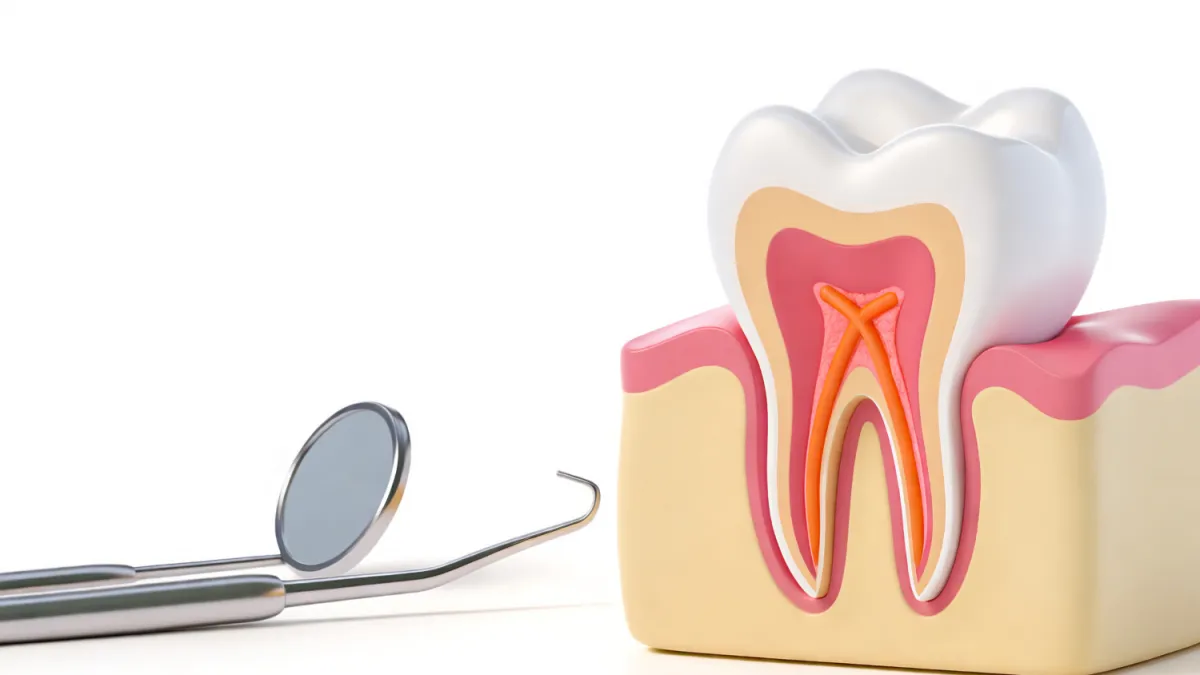
How does tooth decay start?
Your mouth has natural bacteria that feed on sugars and starches and produce acids. These acids gradually dissolve minerals from the tooth surface, known as the enamel. With frequent eating and drinking between meals and not cleaning well enough, plaque builds up on the teeth and the damage increases. It's not only the amount of sugar: how often your teeth are exposed to sugar during the day matters more than the amount in any single serving. You can learn more about this relationship with our Sugar and Tooth Decay Calculator.
Stage 1: The white spot
The first sign is usually a white or dull spot on the enamel, often with no pain at all. This is the mineral-loss stage, and it can still be reversed without drilling or a filling:
- Good cleaning: Brush twice a day with a toothpaste containing fluoride.
- Fewer sugar exposures: Especially between meals.
- Concentrated fluoride treatment: Your dentist may prescribe or apply fluoride varnish, depending on your case.
This stage often can't be noticed on your own, so regular check-ups are what detect it.
Stage 2: Decay in the enamel and dentin
When decay passes through the enamel, it reaches the dentin underneath, which is softer and breaks down faster. At this point you may notice:
- Sensitivity to sweet, cold, or hot things.
- The tooth changing color to brown or black.
- A small hole, or food getting stuck in the same spot.
The usual treatment is a cosmetic filling that removes the decayed part and restores the tooth's shape and color. The smaller the decay, the smaller the filling, and the more of your natural tooth structure is preserved.
Stage 3: Decay reaching the nerve
If decay is left untreated, it reaches the nerve and causes pulpitis (nerve inflammation). Symptoms are clearer at this stage:
- Throbbing pain that comes on its own or wakes you up at night.
- Pain that lingers after the trigger is gone (for example, after a cold drink).
- Pain when biting or applying pressure.
In this case a filling alone is often not enough, and you may need a root canal treatment. The decision depends on an examination and an X-ray, and your dentist is the one who decides.
The final stage: Abscess and complications
When the infection reaches the tip of the root, an abscess can form. This is a serious stage, so don't wait. See a dentist right away if you notice any of these signs:
- Swelling in the face, gum, or jaw.
- Fever or a general feeling of illness along with tooth pain.
- Difficulty swallowing or opening your mouth.
- A bad taste or smell with pus discharge.
In some cases the tooth can't be restored, and extraction becomes the solution. Preventing it from reaching this stage is much easier than treating it.
How can you protect your teeth from decay?
- Brush your teeth twice a day for two minutes with fluoride toothpaste. You can use a toothbrush timer to help.
- Use dental floss to clean between your teeth.
- Cut down on how often you eat and drink sweet things during the day, especially at night after brushing.
- Visit your dentist for regular check-ups, even if you have no pain.
- For children, check the right amount of toothpaste for their age with this tool.
If you notice a new spot, hole, or sensitivity, don't wait for pain. Book an examination and let your dentist assess your tooth.
🦷 Related services
Frequently asked questions
Can tooth decay reverse on its own?
Does tooth decay always hurt?
How do I know if I need a filling or a root canal?
Does a filling last a lifetime?
When should I go to the emergency room for a tooth problem?
Book a consultation or message us on WhatsApp.