
💊 Spironolactone (Spironolactone)
Spironolactone is an oral aldosterone antagonist used to treat advanced heart failure, as add-on therapy for hypertension, and to manage edema in patients with cirrhosis. Your doctor or pharmacist determines the dose that is right for you.
In Arabic: سبيرونولاكتون
🏷️ Brand names & manufacturers
Packages shown are US-market (DailyMed). Brands available in Palestine are in the price section below.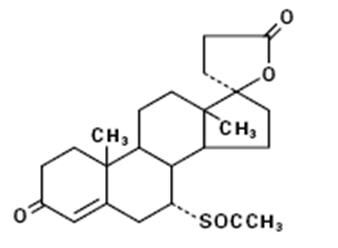 Aldactone🏭 Pfizer Laboratories Div Pfizer Inc
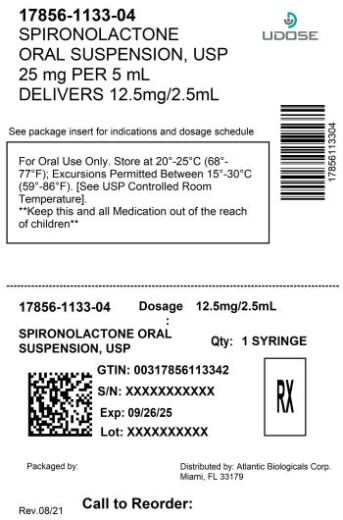 Spironolactone🏭 ATLANTIC BIOLOGICALS CORP.
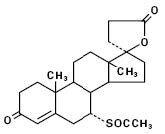 Spironolactone🏭 Amneal Pharmaceuticals NY LLC
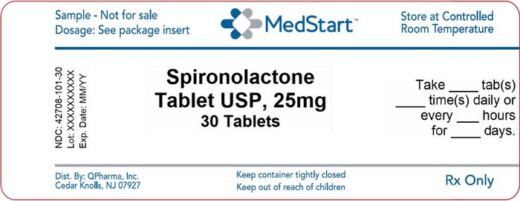 Spironolactone🏭 QPharma, Inc.
✅ What it is used for
- Treatment of NYHA Class III-IV heart failure with reduced ejection fraction to increase survival, manage edema, and reduce hospitalization for heart failure
- Add-on therapy for hypertension in adults not adequately controlled on other agents
- Management of edema in adult cirrhotic patients when edema is not responsive to fluid and sodium restriction
🧪 Active ingredient
Spironolactone and its active metabolites are specific aldosterone antagonists that increase sodium and water excretion while retaining potassium, producing diuretic and blood-pressure-lowering effects.
🌿 Benefits
- Increases survival and reduces hospitalization in heart failure
- Lowers blood pressure as add-on therapy
- Reduces edema and ascites associated with cirrhosis
📝 How to use
- Taken by mouth; your doctor or pharmacist sets the dose for your condition, and you should not change it on your own
- May be taken with or without food, but should be taken consistently with respect to food
- The oral suspension is not therapeutically equivalent to Aldactone tablets, so follow the dosing instructions for the suspension
- In cirrhosis, treatment is started in a hospital with slow dose titration
💊 Dosage forms
- Oral suspension 25 mg/5 mL (5 mg/mL); white to off-white, banana flavored
⚠️ Common side effects
- Gynecomastia (breast enlargement in men), the most common adverse reaction
- Nausea, vomiting, diarrhea, and cramping
- Headache, dizziness, drowsiness
- Leg cramps
- Decreased libido and erectile dysfunction
- Irregular menses or amenorrhea; breast and nipple pain
🚨 Serious — seek medical help
- Hyperkalemia (high blood potassium)
- Hypotension, dehydration, and worsening renal function
- Electrolyte and metabolic abnormalities: hyponatremia, hypomagnesemia, hypocalcemia, hyperglycemia, hyperuricemia (gout rarely precipitated)
- Gastric bleeding or ulceration
- Leukopenia (including agranulocytosis) and thrombocytopenia
- Severe hypersensitivity and skin reactions including SJS, TEN, and DRESS
- Impaired neurological function or coma in patients with cirrhosis and ascites
- Rare cases of mixed cholestatic/hepatocellular liver toxicity
⛔ Do not use if
- Hyperkalemia
- Addison's disease
- Concomitant use of eplerenone
❗ Warnings & precautions
- Monitor serum potassium within 1 week of starting or titrating and regularly thereafter
- Hyperkalemia risk is increased by renal impairment, potassium supplements, or potassium-containing salt substitutes
- Excessive diuresis may cause dehydration, hypotension, and worsening renal function, particularly in salt-depleted patients
- Monitor electrolytes, uric acid, and blood glucose periodically
- Monitor volume status and renal function periodically
- In patients with cirrhosis and ascites, sudden fluid and electrolyte shifts may precipitate hepatic encephalopathy and coma, so initiate in hospital
- If a dose above 100 mg is required, use another formulation
🔄 Drug interactions
- Potassium supplements and drugs that raise potassium (ACE inhibitors, ARBs, other aldosterone blockers, NSAIDs, heparin/LMWH, trimethoprim): risk of severe hyperkalemia
- Lithium: reduced lithium clearance and increased risk of toxicity; monitor levels
- NSAIDs: may reduce the diuretic, natriuretic, and antihypertensive effect
- Digoxin: may interfere with radioimmunologic digoxin assays; monitor concentrations
- Cholestyramine: hyperkalemic metabolic acidosis reported
- Acetylsalicylic acid (ASA): may reduce spironolactone efficacy
- Nephrotoxic drugs (e.g., aminoglycosides, cisplatin): may worsen renal function
- Eplerenone: contraindicated with spironolactone
🤰 Pregnancy
Based on animal studies, spironolactone may affect sex differentiation of the male fetus. Avoid use in pregnancy or counsel the pregnant woman about the potential risk to a male fetus. Consult your doctor.
🍼 Breastfeeding
The provided label text does not include information on breastfeeding. Consult your doctor or pharmacist.
🧒 Children
Safety and effectiveness in pediatric patients have not been established. It is not recommended for hypertension in children because of the potential risks of its antiandrogenic, progestogenic, and estrogenic properties.
👴 Older adults
The drug is substantially excreted by the kidney and elderly patients are more likely to have decreased renal function, so monitor renal function.
🆘 Overdose
Overdose may cause drowsiness, mental confusion, rash, nausea, vomiting, dizziness, or diarrhea; hyperkalemia may occur, especially with renal impairment. There is no specific antidote; treatment is supportive to maintain hydration, electrolyte balance, and vital functions. Seek medical help immediately.
💰 Price & brands in your area
🏛️ Official price in Palestine — Ministry of Health price list:
| Product | Company | Pack | Price |
|---|---|---|---|
| SPIRONE 25 MG 30 TAB SPIRONOLACTONE | BPC | 30 TAB | 17 ₪ |
| SPIRONE 100 MG 20 TAB SPIRONOLACTONE | BPC | 20 tab | 22 ₪ |
📍 Find the nearest pharmacy
Your location is used only in your browser to show nearby pharmacies — we don't store it.
Open in Google Maps👨⚕️ For healthcare professionals
Mechanism of action
Competitive antagonist of aldosterone receptors at the aldosterone-dependent sodium-potassium exchange site in the distal convoluted tubule, increasing sodium and water excretion while retaining potassium. At an equivalent dose, the oral suspension gives 15 to 37% higher serum concentrations than Aldactone tablets; a high-fat, high-calorie meal increased bioavailability (AUC) by about 90%.
Labeled dosing
Heart failure: initiate at 20 mg once daily (serum K+ ≤5.0 mEq/L and eGFR >50), may increase to 37.5 mg once daily; reduce to 20 mg every other day if hyperkalemia develops; consider 10 mg if eGFR 30-50. Hypertension: 20 to 75 mg daily in single or divided doses, titrated at two-week intervals; doses >75 mg/day generally give no additional BP reduction. Cirrhotic edema: initiate in hospital at 75 mg daily in single or divided doses, titrate slowly. Dose is set by the physician/pharmacist; use another formulation if more than 100 mg is needed.
- Monitor potassium within 1 week of initiation or titration, then regularly
- Check potassium when ACE inhibitor or ARB therapy is altered
- Generally discontinue potassium supplementation in heart failure patients starting spironolactone
- As sole diuretic in cirrhosis, give at least five days before increasing the dose
- Measure serum digoxin concentrations when co-administered
🎓 Key points for students
- Aldosterone antagonist: retains potassium, excretes sodium and water
- Key risk is hyperkalemia, increased by renal impairment, ACEIs, ARBs, and NSAIDs
- Most common adverse reaction: gynecomastia (about 9% of male patients in RALES at a mean dose of 26 mg daily)
- Contraindications: hyperkalemia, Addison's disease, eplerenone
- Interferes with radioimmunologic digoxin assays and increases lithium toxicity risk
EME runs your whole clinic: appointments with WhatsApp reminders, patient files, finance & inventory, a patient portal and a members-price medical store — with your data isolated and protected.
Try EME free How we protect your data❓ FAQ
What is spironolactone used for?
It is used for advanced heart failure, as add-on therapy for high blood pressure, and for edema in cirrhosis, as decided by your doctor.
Can I take it with food?
Yes, it can be taken with or without food, but you should take it consistently with respect to food.
Why does my doctor check my potassium?
The drug can raise blood potassium, so it is checked within a week of starting and regularly afterward.
Can I use salt substitutes or potassium supplements?
Not unless your doctor says so; they can raise potassium to dangerous levels with this drug.
Can it cause breast enlargement?
Yes, gynecomastia is the most common adverse reaction. Tell your doctor if you notice it.
⚕️ For education only — not a substitute for advice from your doctor or pharmacist. Do not start or stop any medicine without advice. Source: official FDA drug label via openFDA (2026-08), simplified. Updated: 2026-11-11.