
💊 Ranitidine (Ranitidine)
Ranitidine is a prescription medicine used to treat duodenal ulcer, benign gastric ulcer, gastroesophageal reflux disease (GERD) and erosive esophagitis. It works by blocking the action of histamine at H2 receptors on stomach cells. Your doctor or pharmacist sets the dose that is right for you.
In Arabic: رانيتيدين
🏷️ Brand names & manufacturers
Packages shown are US-market (DailyMed). Brands available in Palestine are in the price section below.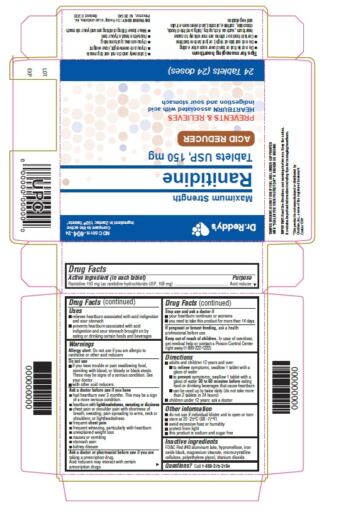 Ranitidine🏭 Dr. Reddy's Laboratories Limited
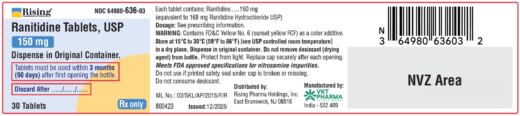 Ranitidine🏭 Rising Pharma Holdings, Inc.
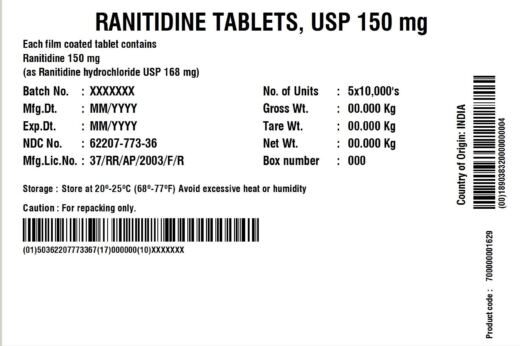 Ranitidine🏭 Granules India Ltd
✅ What it is used for
- Short-term treatment of active duodenal ulcer
- Maintenance therapy at a reduced dose after duodenal ulcer healing
- Treatment of pathological hypersecretory conditions (e.g., Zollinger-Ellison syndrome, systemic mastocytosis)
- Short-term treatment of active, benign gastric ulcer
- Maintenance therapy at a reduced dose after gastric ulcer healing
- Treatment of GERD
- Treatment and maintenance of healing of endoscopically diagnosed erosive esophagitis
🧪 Active ingredient
The active ingredient is ranitidine hydrochloride, a competitive, reversible inhibitor of histamine at H2 receptors, including those on gastric cells.
🌿 Benefits
- Most duodenal ulcer patients heal within 4 weeks
- Most benign gastric ulcer patients heal within 6 weeks
- Heartburn relief commonly occurs within 24 hours of starting therapy in GERD and erosive esophagitis
📝 How to use
- Taken by mouth as capsules.
- The dose is set by your doctor or pharmacist for your condition; do not change it on your own.
- Antacids may be given as needed for pain relief during treatment.
- Patients with reduced kidney function may need a dose or frequency adjustment.
💊 Dosage forms
- Capsules 150 mg
- Capsules 300 mg
⚠️ Common side effects
- Headache, sometimes severe
- Constipation or diarrhea
- Nausea/vomiting
- Abdominal discomfort/pain
- Rash
🚨 Serious — seek medical help
- Hepatitis (hepatocellular, cholestatic or mixed, with or without jaundice) and rare hepatic failure; discontinue immediately
- Arrhythmias such as tachycardia, bradycardia, AV block and premature ventricular beats
- Reversible mental confusion, agitation, depression and hallucinations, mainly in severely ill elderly patients
- Blood count changes (leukopenia, granulocytopenia, thrombocytopenia); rare agranulocytosis, pancytopenia and aplastic anemia
- Hypersensitivity reactions including anaphylaxis, angioneurotic edema and bronchospasm
- Pancreatitis
- Acute interstitial nephritis
- Erythema multiforme
⛔ Do not use if
- Known hypersensitivity to ranitidine or any ingredient of the product
❗ Warnings & precautions
- Stop the drug immediately and contact your doctor if signs of hepatitis such as jaundice appear.
- A large epidemiological study suggested an increased risk of pneumonia in current H2-blocker users, but a causal relationship has not been established.
- Use caution in patients with impaired kidney function and in the elderly, as the drug is substantially excreted by the kidney.
- Safety has not been assessed beyond 8 weeks in uncomplicated duodenal ulcer or beyond 6 weeks in uncomplicated benign gastric ulcer.
🔄 Drug interactions
- Warfarin: altered prothrombin time reported; close monitoring recommended.
- Procainamide: levels may increase with high ranitidine doses; monitor for toxicity at doses above 300 mg/day.
- Drugs with increased absorption: triazolam, midazolam, glipizide (glipizide exposure rose 34% in diabetic patients).
- Drugs with decreased absorption: ketoconazole, atazanavir, delavirdine, gefitinib (gefitinib exposure fell 44% with ranitidine plus sodium bicarbonate).
- Chronic use of H2-blockers with delavirdine is not recommended.
- Tell your doctor or pharmacist about all medicines you take.
🤰 Pregnancy
Pregnancy Category B. Animal studies showed no evidence of impaired fertility or fetal harm, but there are no adequate, well-controlled studies in pregnant women. Use only if clearly needed and under medical supervision.
🍼 Breastfeeding
Ranitidine is secreted in human milk. Caution should be exercised when it is given to a nursing mother; consult your doctor.
🧒 Children
Safety and effectiveness are established from 1 month to 16 years for duodenal and gastric ulcers, GERD, erosive esophagitis and maintenance of healed ulcers. They are not established in neonates (under 1 month), in pathological hypersecretory conditions, or for maintenance of healing of erosive esophagitis. Dosing is based on body weight and set by the doctor.
👴 Older adults
No overall differences in safety or effectiveness were observed versus younger patients, but greater sensitivity in some older individuals cannot be ruled out. Because the drug is excreted by the kidney and renal function is often reduced in the elderly, use caution in dose selection and consider monitoring renal function.
🌡️ Storage
Store at 20°C to 25°C (68°F to 77°F) in a dry place, protected from light. Replace the cap securely after each opening. Keep out of reach of children.
⏰ Missed dose
The label gives no specific instructions for a missed dose. Ask your doctor or pharmacist, and do not double a dose on your own.
🆘 Overdose
Reported acute ingestions of up to 18 g orally caused transient effects similar to usual adverse effects, plus abnormal gait and hypotension. In overdose seek emergency care; usual measures include removing unabsorbed drug from the GI tract, clinical monitoring and supportive therapy.
💰 Price & brands in your area
📍 Find the nearest pharmacy
Your location is used only in your browser to show nearby pharmacies — we don't store it.
Open in Google Maps👨⚕️ For healthcare professionals
Mechanism of action
Competitive, reversible inhibitor of histamine at H2 receptors, including gastric cell receptors; not an anticholinergic and does not lower serum calcium in hypercalcemic states. Oral bioavailability is about 50% with peak levels of 440-545 ng/mL at 2-3 hours after 150 mg. Volume of distribution ~1.4 L/kg; serum protein binding ~15%. Limited metabolism (N-oxide <4%); ~30% of an oral dose is excreted unchanged in urine within 24 hours; half-life 2.5-3 hours.
Labeled dosing
General adult dosing per label: active duodenal ulcer 150 mg twice daily or 300 mg once daily after the evening meal or at bedtime; maintenance of duodenal ulcer healing 150 mg at bedtime; hypersecretory conditions 150 mg twice daily, with more frequent dosing if needed (up to 6 g/day used in severe disease); benign gastric ulcer 150 mg twice daily and maintenance 150 mg at bedtime; GERD 150 mg twice daily; erosive esophagitis 150 mg four times daily and maintenance 150 mg twice daily. With creatinine clearance <50 mL/min: 150 mg every 24 hours, with cautious increase in frequency if needed. The final dose is determined by the prescribing physician.
- Pediatrics (1 month to 16 years): active duodenal/gastric ulcer 2-4 mg/kg twice daily (max 300 mg/day); maintenance 2-4 mg/kg once daily (max 150 mg/day); GERD/erosive esophagitis 5-10 mg/kg/day usually in two divided doses.
- Hemodialysis reduces circulating ranitidine; time dosing relative to dialysis.
- Monitor prothrombin time with warfarin and monitor for procainamide toxicity at doses above 300 mg/day.
- Consider monitoring renal function in elderly patients.
- Compensated cirrhosis causes minor, clinically insignificant changes in half-life, distribution, clearance and bioavailability.
🎓 Key points for students
- Mechanism: competitive, reversible H2-receptor antagonist acting on gastric cells.
- Oral bioavailability ~50%; absorption not significantly impaired by food or antacids.
- Principally renally eliminated (active tubular secretion, clearance ~410 mL/min); dose adjustment needed in renal impairment.
- Interactions occur through competition for renal tubular secretion, altered gastric pH and CYP450 inhibition.
- Key adverse effects: headache, hepatitis, blood dyscrasias, CNS effects in elderly patients.
EME runs your whole clinic: appointments with WhatsApp reminders, patient files, finance & inventory, a patient portal and a members-price medical store — with your data isolated and protected.
Try EME free How we protect your data❓ FAQ
What is ranitidine used for?
It treats duodenal ulcer, benign gastric ulcer, GERD, erosive esophagitis and hypersecretory conditions, and helps maintain ulcer healing.
How long does ulcer healing take?
According to the label, most patients heal within 4 weeks for duodenal ulcer and within 6 weeks for benign gastric ulcer.
What are the most common side effects?
Headache, constipation or diarrhea, nausea/vomiting, abdominal discomfort or pain, and rash.
Can I take it during pregnancy or breastfeeding?
Use in pregnancy only if clearly needed. It passes into breast milk, so caution is advised; talk to your doctor.
Can I decide my own dose?
No. The dose is set by your doctor or pharmacist based on your condition and kidney function and should not be changed without consulting them.
⚕️ For education only — not a substitute for advice from your doctor or pharmacist. Do not start or stop any medicine without advice. Source: official FDA drug label via openFDA (2021-11), simplified. Updated: 2026-11-11.