
💊 Omeprazole (Omeprazole)
Omeprazole reduces stomach acid by inhibiting the proton pump in gastric parietal cells. It is used to treat duodenal and gastric ulcers, GERD, erosive esophagitis and certain pathological hypersecretory conditions. It is a prescription medicine; the dose and duration are set by your doctor or pharmacist.
In Arabic: أوميبرازول
🏷️ Brand names & manufacturers
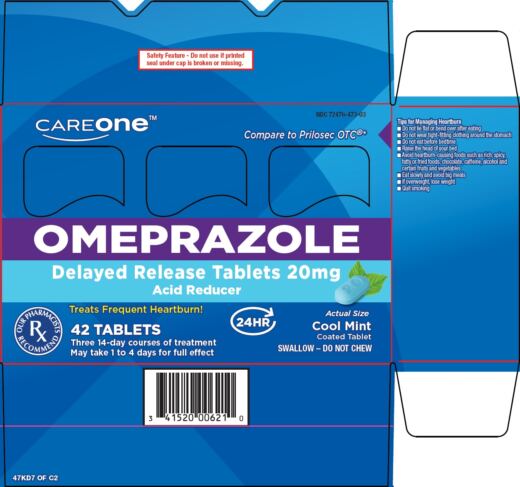 Careone Omeprazole🏭 Retail Business Services, LLCDailyMed
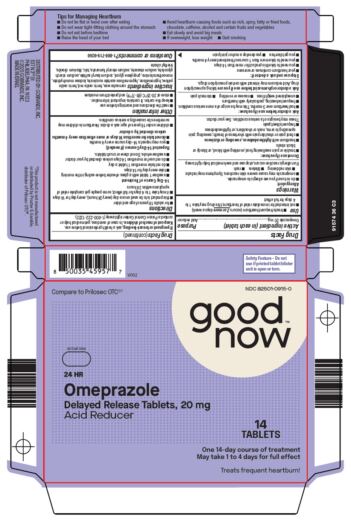 Good Now Omeprazole🏭 Gobrands, IncDailyMed
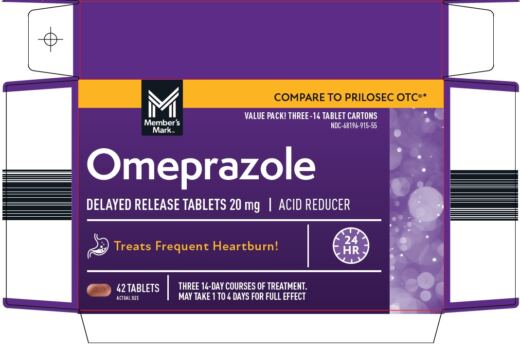 Members Mark Omeprazole🏭 Sam's West IncDailyMed
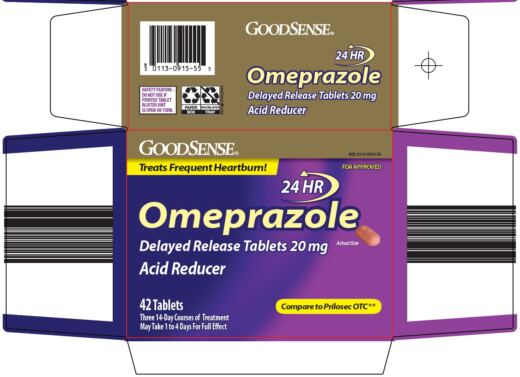 Good Sense Omeprazole🏭 L. Perrigo CompanyDailyMed
✅ What it is used for
- Treatment of active duodenal ulcer in adults
- Eradication of Helicobacter pylori to reduce the risk of duodenal ulcer recurrence in adults (in combination with antibiotics)
- Treatment of active benign gastric ulcer in adults
- Treatment of symptomatic GERD in patients 1 year of age and older
- Treatment of erosive esophagitis due to acid-mediated GERD in patients 1 month of age and older
- Maintenance of healing of erosive esophagitis in patients 1 year of age and older
- Treatment of pathological hypersecretory conditions in adults
🧪 Active ingredient
The active ingredient is omeprazole, a substituted benzimidazole. It inhibits the H+/K+ ATPase enzyme system (acid pump) in gastric parietal cells, blocking the final step of gastric acid production.
🌿 Benefits
- Reduces basal and stimulated gastric acid secretion
- Helps heal duodenal and gastric ulcers
- Relieves GERD symptoms such as heartburn
- Helps heal erosive esophagitis and maintain healing
📝 How to use
- Taken by mouth as delayed-release capsules.
- The dose and treatment duration are determined by your doctor or pharmacist based on your condition and age; do not change them without consulting them.
- For H. pylori eradication, omeprazole is taken with antibiotics (clarithromycin and amoxicillin, or clarithromycin alone) as prescribed.
- A lower dose may be needed in patients with liver impairment and in Asian patients, as decided by the doctor.
💊 Dosage forms
- Delayed-release capsules: 10 mg, 20 mg and 40 mg
⚠️ Common side effects
- Headache
- Abdominal pain
- Nausea
- Diarrhea
- Vomiting
- Flatulence
- Acid regurgitation
- Upper respiratory infection
- Constipation
- Dizziness
- Rash
- Weakness (asthenia)
- Back pain
- Cough
🚨 Serious — seek medical help
- Severe hypersensitivity reactions including anaphylaxis, angioedema, bronchospasm and urticaria
- Acute tubulointerstitial nephritis
- Clostridium difficile-associated diarrhea
- Severe cutaneous adverse reactions
- Cutaneous and systemic lupus erythematosus
- Vitamin B-12 deficiency with long-term use
- Low magnesium levels (hypomagnesemia)
- Fractures of the hip, wrist or spine with long-term or multiple daily dose therapy
- Fundic gland polyps with long-term use
⛔ Do not use if
- Known hypersensitivity to omeprazole, any substituted benzimidazole, or any component of the formulation
- Use with rilpivirine-containing products
- Refer to the contraindications of clarithromycin and amoxicillin when used in combination with omeprazole
❗ Warnings & precautions
- In adults, symptom improvement does not rule out gastric malignancy; further follow-up and testing may be needed.
- Discontinue and evaluate the patient if acute tubulointerstitial nephritis is suspected.
- May be associated with an increased risk of Clostridium difficile-associated diarrhea.
- Long-term therapy may increase the risk of osteoporosis-related fractures.
- Discontinue at the first signs of severe cutaneous reactions or other hypersensitivity.
- Lupus erythematosus: discontinue omeprazole and refer to a specialist if it occurs or worsens.
- Avoid concomitant use with clopidogrel.
- Daily long-term use (e.g., longer than 3 years) may cause vitamin B-12 deficiency.
- Hypomagnesemia has been reported rarely with prolonged treatment.
- Avoid concomitant use with St. John's Wort or rifampin.
- Omeprazole can raise Chromogranin A levels and interfere with neuroendocrine tumor testing; stop at least 14 days before CgA assessment.
- With high-dose methotrexate, consider temporary withdrawal of omeprazole.
- Use the shortest duration of therapy to limit fundic gland polyp risk.
🔄 Drug interactions
- Rilpivirine-containing products: contraindicated
- Atazanavir and nelfinavir: avoid concomitant use
- Saquinavir: potential increased toxicity; monitor
- Warfarin: increased INR and prothrombin time with risk of bleeding; monitor and adjust the dose
- Methotrexate: serum levels may be elevated or prolonged, possibly leading to toxicity
- Clopidogrel: avoid concomitant use
- St. John's Wort and rifampin: avoid concomitant use
- Chromogranin A testing: results may be affected
🤰 Pregnancy
There are no adequate and well-controlled studies in pregnant women. Available epidemiologic data have not shown an increased risk of major congenital malformations with first-trimester use. Consult your doctor before using omeprazole during pregnancy.
🍼 Breastfeeding
Limited data suggest omeprazole may be present in human milk. There are no clinical data on its effects on the breastfed infant or on milk production. The benefits of breastfeeding and the mother's need for the drug should be weighed by the doctor.
🧒 Children
Safety and effectiveness are established in patients 1 to 16 years for symptomatic GERD, erosive esophagitis and maintenance of healing, and in patients 1 month to under 1 year for erosive esophagitis. Not established in patients under 1 month for any indication. Respiratory events, otitis media, fever and accidental injuries were frequently reported in pediatric studies. Pediatric dosing is weight-based and set by the doctor.
👴 Older adults
No differences in safety and effectiveness were seen between elderly and younger patients, and no dose adjustment is necessary, although greater sensitivity in some older individuals cannot be ruled out.
🆘 Overdose
Overdoses up to 2400 mg have been reported. Symptoms may include confusion, drowsiness, blurred vision, rapid heartbeat, nausea, vomiting, sweating, flushing, headache and dry mouth, and are usually transient. There is no specific antidote; treatment is symptomatic and supportive. In case of overdose, seek emergency care or contact your Poison Control Center immediately.
💰 Price & brands in your area
Local prices are currently available for Palestine; more countries are coming. Ask your pharmacist for local price and alternatives.
📍 Find the nearest pharmacy
Your location is used only in your browser to show nearby pharmacies — we don't store it.
Open in Google Maps👨⚕️ For healthcare professionals
Mechanism of action
Omeprazole is a substituted benzimidazole that specifically inhibits the H+/K+ ATPase enzyme system at the secretory surface of the gastric parietal cell, blocking the final step of acid production. The effect is dose-related and inhibits both basal and stimulated acid secretion. Onset occurs within 1 hour with maximum effect within 2 hours; inhibition lasts up to 72 hours despite a plasma half-life under 1 hour, and secretory activity returns gradually over 3 to 5 days after discontinuation.
Labeled dosing
General adult dosing per the label: active duodenal ulcer 20 mg once daily for 4 weeks (some patients may need an additional 4 weeks). H. pylori eradication, triple therapy: omeprazole 20 mg + amoxicillin 1000 mg + clarithromycin 500 mg, each twice daily for 10 days; dual therapy: omeprazole 40 mg once daily + clarithromycin 500 mg three times daily for 14 days. Active benign gastric ulcer 40 mg once daily for 4 to 8 weeks. Symptomatic GERD 20 mg once daily for up to 4 weeks. Erosive esophagitis 20 mg once daily for 4 to 8 weeks. Maintenance of healing of EE 20 mg once daily. Pathological hypersecretory conditions: starting dose 60 mg once daily, varying with the individual patient. Reduce to 10 mg once daily in hepatic impairment (Child-Pugh A, B, C) and Asian patients for maintenance of healing of EE. Pediatric dosing is weight-based. Dosing should be set by the doctor or pharmacist.
- Efficacy beyond 8 weeks in EE is not established; an additional 4 weeks may be given if no response, and additional 4 to 8 week courses may be considered for recurrence.
- After failure of dual therapy with clarithromycin, clarithromycin resistance is more likely than with triple therapy; perform susceptibility testing.
- Hypersensitivity to benzimidazoles and rilpivirine co-administration are contraindications.
- Monitor INR with warfarin, and consider monitoring magnesium and vitamin B-12 with prolonged use.
🎓 Key points for students
- Class: proton pump inhibitor and CYP2C19 inhibitor.
- Mechanism: inhibition of H+/K+ ATPase in the parietal cell (final step of acid production).
- Long duration of effect despite a short plasma half-life (under 1 hour) due to prolonged binding to the enzyme.
- Key interactions to remember: rilpivirine (contraindicated), clopidogrel, warfarin, methotrexate, atazanavir.
- Long-term risks: B-12 and magnesium deficiency, fractures, fundic gland polyps, C. difficile.
EME runs your whole clinic: appointments with WhatsApp reminders, patient files, finance & inventory, a patient portal and a members-price medical store — with your data isolated and protected.
Try EME free How we protect your data❓ FAQ
What is omeprazole used for?
It is used to treat duodenal and gastric ulcers, GERD, erosive esophagitis and pathological hypersecretory conditions, and to eradicate H. pylori in combination with antibiotics.
Can I decide the dose myself?
No. The dose and duration are set by your doctor or pharmacist according to your condition.
What are the most common side effects?
Headache, abdominal pain, nausea, diarrhea, vomiting and flatulence.
Does long-term use affect the body?
It may be associated with vitamin B-12 and magnesium deficiency, increased fracture risk and fundic gland polyps, so it should be used for the shortest duration possible under medical supervision.
Can it be used during pregnancy or breastfeeding?
Consult your doctor first; available data have not shown increased major malformations with first-trimester use, and limited amounts may pass into breast milk.
⚕️ For education only — not a substitute for advice from your doctor or pharmacist. Do not start or stop any medicine without advice. Source: official FDA drug label via openFDA (2024-02), simplified. Updated: 2026-11-10.