
💊 Nitrofurantoin (Nitrofurantoin)
Nitrofurantoin is an antibacterial used to treat urinary tract infections caused by susceptible bacteria in adults and pediatric patients 1 month of age and older. It is not indicated for pyelonephritis or perinephric abscesses. It should be used only under medical supervision.
In Arabic: نيتروفورانتوين
🏷️ Brand names & manufacturers
Packages shown are US-market (DailyMed). Brands available in Palestine are in the price section below.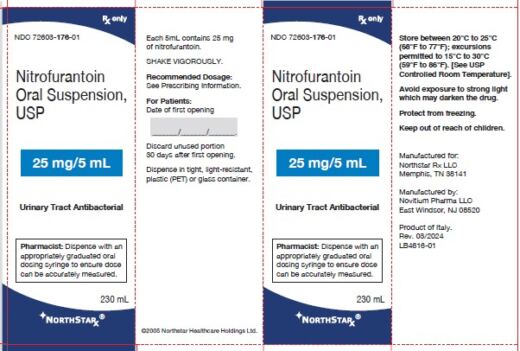 Nitrofurantoin🏭 NorthStar Rx LLC
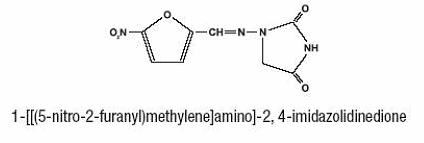 Nitrofurantoin🏭 Amneal Pharmaceuticals LLC
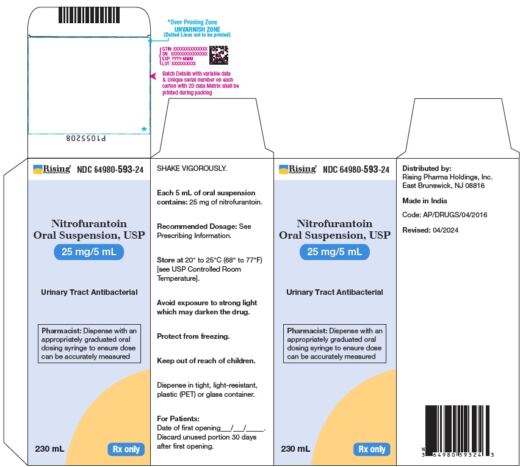 Nitrofurantoin🏭 Rising Pharma Holdings, Inc.
✅ What it is used for
- Treatment of urinary tract infections due to susceptible strains of Escherichia coli, Enterococcus species, Staphylococcus aureus, Klebsiella species and Enterobacter species
- For adults and pediatric patients 1 month of age and older
- Not indicated for pyelonephritis or perinephric abscesses
🧪 Active ingredient
The active ingredient is nitrofurantoin, a synthetic nitrofuran antibacterial agent specific for urinary tract infections. It is highly soluble in urine and rapidly excreted in urine, which it may color brown.
🌿 Benefits
- Treats urinary tract infections caused by susceptible bacteria
- Available as an oral suspension suitable for pediatric dosing
📝 How to use
- The dose and duration are set by your doctor or pharmacist; do not change them without consulting them
- Take with food to improve absorption and, in some patients, tolerance
- Shake the oral suspension vigorously before use
- For children: measure the oral suspension with an appropriately sized oral dosing syringe with graduations matching the prescribed volume
- Continue therapy as directed by your doctor; continued infection indicates the need for reevaluation
💊 Dosage forms
- Oral suspension 25 mg/5 mL: lemon-yellow, cherry-flavored liquid in a 230 mL amber PET bottle
⚠️ Common side effects
- Nausea and vomiting (vomiting reported in overdose)
- Headache, dizziness, drowsiness
- Brown discoloration of urine
- Weakness (asthenia)
🚨 Serious — seek medical help
- Serious and occasionally fatal hypersensitivity (anaphylactic) reactions: stop immediately and seek medical care
- Acute, subacute or chronic pulmonary reactions: fever, cough, shortness of breath, chest pain; chronic interstitial pneumonitis or pulmonary fibrosis may develop with therapy of six months or longer
- Hepatic reactions including hepatitis, cholestatic jaundice, chronic active hepatitis and hepatic necrosis; fatalities have been reported
- Peripheral neuropathy, which may become severe or irreversible
- Hemolytic anemia
- Clostridioides difficile-associated diarrhea
- Benign intracranial hypertension, confusion, depression, optic neuritis and psychotic reactions
⛔ Do not use if
- Known hypersensitivity to nitrofurantoin
- History of cholestatic jaundice/hepatic dysfunction associated with nitrofurantoin
- Anuria, oliguria, or significant renal impairment (creatinine clearance under 60 mL/min or clinically significant elevated serum creatinine)
- Pregnant patients at term (38 to 42 weeks gestation), during labor and delivery, or when labor onset is imminent
- Pediatric patients younger than 1 month of age
❗ Warnings & precautions
- Discontinue immediately if signs of hypersensitivity, pulmonary reactions, hepatitis or hemolysis occur
- Long-term therapy requires close monitoring of pulmonary condition and periodic liver function monitoring
- Peripheral neuropathy risk may increase with renal impairment, anemia, diabetes mellitus, electrolyte imbalance, vitamin B deficiency and debilitating diseases
- Evaluate patients if diarrhea occurs (possible C. difficile-associated diarrhea)
- Use only for infections proven or strongly suspected to be caused by susceptible bacteria, to reduce development of drug-resistant bacteria
- May cause false-positive urine glucose with Benedict's or Fehling's reactions; use enzymatic glucose oxidase tests
- Balance benefits of long-term suppressive therapy against systemic toxicity and antibacterial resistance
🔄 Drug interactions
- Antacids containing magnesium trisilicate: reduce rate and extent of nitrofurantoin absorption; monitor for lack of efficacy if coadministration cannot be avoided
- Uricosuric drugs (probenecid, sulfinpyrazone): inhibit renal tubular secretion, raising serum levels and toxicity and lowering urinary levels/efficacy; monitor for adverse reactions
- Tell your doctor or pharmacist about all medicines you take
🤰 Pregnancy
Nitrofurantoin is contraindicated in pregnant women at term (38–42 weeks), during labor and delivery, or when labor is imminent because of the possibility of hemolytic anemia in the infant. Published epidemiological studies on first-trimester use have reported inconsistent findings and cannot establish the presence or absence of risk of major birth defects; consult your doctor before use.
🍼 Breastfeeding
Breastfeeding is not recommended in infants under one month of age or with glucose-6-phosphate dehydrogenase (G6PD) deficiency. Consult your doctor.
🧒 Children
Used in children 1 month of age and older, with the dose determined by the doctor according to body weight. Contraindicated in infants under 1 month because of the possibility of hemolytic anemia. Doses are measured with a graduated oral dosing syringe.
👴 Older adults
The label states that pharmacokinetics in geriatric patients are unknown. Because significant renal impairment contraindicates use, consult your doctor to assess kidney function.
🌡️ Storage
Store at 20°C to 25°C (excursions 15°C to 30°C). Avoid strong light, which may darken the drug. Protect from freezing. Keep in a tight, light-resistant container. Use within 30 days. Keep out of reach of children.
⏰ Missed dose
The label gives no specific instructions for a missed dose; ask your doctor or pharmacist and do not double the dose on your own.
🆘 Overdose
Acute overdosage has resulted in symptoms such as vomiting. There is no specific antidote; maintain high fluid intake to promote urinary excretion. Nitrofurantoin is dialyzable. Seek medical help immediately.
💰 Price & brands in your area
Local prices are currently available for Palestine; more countries are coming. Ask your pharmacist for local price and alternatives.
📍 Find the nearest pharmacy
Your location is used only in your browser to show nearby pharmacies — we don't store it.
Open in Google Maps👨⚕️ For healthcare professionals
Mechanism of action
Nitrofurantoin is a nitrofuran antibacterial; the label does not detail its mechanism of action, and pharmacodynamic effects are unknown. It is readily absorbed orally with usually low blood concentrations; food or agents delaying gastric emptying increase bioavailability. It is highly soluble in urine, rapidly excreted renally, and dialyzable.
Labeled dosing
Adults: 50–100 mg four times daily (lower dose for uncomplicated UTI); long-term suppressive therapy may be reduced to 50–100 mg at bedtime. Pediatric patients ≥1 month: 5–7 mg/kg/24 hours in four divided doses (as low as 1 mg/kg/24 hours for long-term suppression). Administer with food. Continue for one week or at least 3 days after urine sterility is obtained. The dose is ultimately set by the prescriber/pharmacist.
- Not indicated for pyelonephritis or perinephric abscesses
- Consider culture/susceptibility data or local epidemiology when selecting therapy
- Monitor pulmonary status and liver function with long-term therapy
- Persistence or reappearance of bacteriuria may occur
🎓 Key points for students
- Nitrofuran antibacterial (EPC) specific for urinary tract infections
- Key contraindications: renal impairment (CrCl <60 mL/min), term pregnancy/labor, infants <1 month (hemolysis due to immature erythrocyte enzyme systems)
- Pulmonary reactions: acute (within first week, reversible on cessation) and chronic (≥6 months, interstitial pneumonitis/fibrosis)
- Hepatotoxicity and peripheral neuropathy may be severe or irreversible
- Interactions: magnesium trisilicate (↓ absorption), probenecid/sulfinpyrazone (↓ renal secretion, ↑ toxicity)
- Causes false-positive urine glucose with copper reduction methods
- Colors urine brown
EME runs your whole clinic: appointments with WhatsApp reminders, patient files, finance & inventory, a patient portal and a members-price medical store — with your data isolated and protected.
Try EME free How we protect your data❓ FAQ
What is nitrofurantoin used for?
It treats urinary tract infections caused by susceptible bacteria in adults and children 1 month and older. It is not used for pyelonephritis.
Should I take it with food?
Yes, taking it with food improves absorption and, in some patients, tolerance.
Does it change urine color?
It may turn urine brown, as it is rapidly excreted in urine.
Who should not take it?
People with hypersensitivity to it, a history of liver problems linked to it, significant kidney impairment, women at term pregnancy or in labor, and infants under 1 month.
When should I stop and call my doctor?
If you develop signs of severe allergy, cough with shortness of breath and fever, yellowing of the skin or eyes, numbness or tingling, or severe diarrhea.
Can I adjust the dose myself?
No. The dose and duration are determined by your doctor or pharmacist.
⚕️ For education only — not a substitute for advice from your doctor or pharmacist. Do not start or stop any medicine without advice. Source: official FDA drug label via openFDA (2024-03), simplified. Updated: 2026-11-10.