
💊 Naproxen (Naproxen)
Naproxen is a nonsteroidal anti-inflammatory drug used to relieve the signs and symptoms of rheumatoid arthritis, osteoarthritis, ankylosing spondylitis and polyarticular juvenile idiopathic arthritis. It carries a boxed warning for serious cardiovascular and gastrointestinal events. It is prescribed by a doctor and should be used at the lowest effective dose for the shortest duration.
In Arabic: نابروكسين
🏷️ Brand names & manufacturers
Packages shown are US-market (DailyMed). Brands available in Palestine are in the price section below.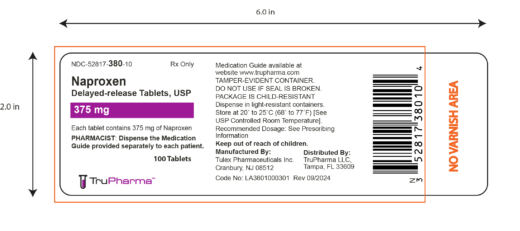 Naproxen🏭 TruPharma LLC
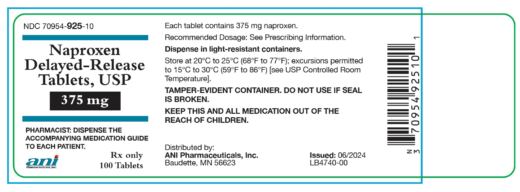 Naproxen🏭 ANI Pharmaceuticals, Inc.
 Naproxen🏭 Aurobindo Pharma Limited
✅ What it is used for
- Relief of signs and symptoms of rheumatoid arthritis
- Relief of signs and symptoms of osteoarthritis
- Relief of signs and symptoms of ankylosing spondylitis
- Relief of signs and symptoms of polyarticular juvenile idiopathic arthritis
🧪 Active ingredient
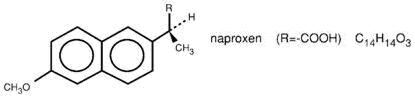
The active ingredient is naproxen, a propionic acid derivative. It inhibits cyclooxygenase (COX-1 and COX-2), reducing prostaglandin synthesis; prostaglandins are mediators of pain and inflammation, giving naproxen analgesic, anti-inflammatory and antipyretic properties.
🌿 Benefits
- Relief of pain and inflammation associated with joint diseases
- Improvement of symptoms of rheumatoid arthritis, osteoarthritis and ankylosing spondylitis
- A treatment option for children with polyarticular juvenile idiopathic arthritis
📝 How to use
- The dose and duration are set by your doctor or pharmacist; do not adjust them yourself.
- Delayed-release tablets are taken by mouth.
- Do not break, crush or chew the tablet, to preserve the enteric coating.
- Do not use together with other naproxen-containing products, as they all circulate in the blood as the naproxen anion.
- Delayed-release tablets are not recommended for acute gout because of delayed absorption.
💊 Dosage forms
- Delayed-release (enteric-coated) tablets 375 mg
- Delayed-release (enteric-coated) tablets 500 mg
⚠️ Common side effects
- Dyspepsia and heartburn
- Abdominal pain
- Nausea
- Constipation or diarrhea
- Headache, dizziness, drowsiness
- Rash, itching, bruising (ecchymosis)
- Edema (swelling)
- Tinnitus
- Shortness of breath
🚨 Serious — seek medical help
- Heart attack or stroke
- Gastrointestinal bleeding, ulceration or perforation, which can occur without warning symptoms
- Hepatotoxicity (discontinue if abnormal liver tests persist or worsen or signs of liver disease develop)
- Hypertension, heart failure and edema
- Renal toxicity and hyperkalemia
- Anaphylactic reactions
- Serious skin reactions and DRESS (stop at first sign of rash)
- Anemia and other hematologic toxicity
⛔ Do not use if
- Known hypersensitivity to naproxen or any component of the product
- History of asthma, urticaria or other allergic-type reactions after taking aspirin or other NSAIDs
- In the setting of coronary artery bypass graft (CABG) surgery
❗ Warnings & precautions
- Boxed warning: increased risk of serious cardiovascular thrombotic events (myocardial infarction, stroke); risk may increase with duration of use.
- Boxed warning: risk of GI bleeding, ulceration and perforation; elderly patients and those with prior peptic ulcer disease or GI bleeding are at greater risk.
- Avoid in severe heart failure unless benefits are expected to outweigh risks.
- Monitor renal function in patients with renal or hepatic impairment, heart failure, dehydration or hypovolemia; avoid in advanced renal disease unless benefits outweigh risks.
- Monitor blood pressure; response to some antihypertensives may be impaired.
- Monitor hemoglobin or hematocrit if signs or symptoms of anemia occur.
- Seek emergency help for anaphylactic reactions and stop the drug at first appearance of skin rash.
- NSAIDs are associated with reversible infertility; consider withdrawal in women having difficulty conceiving.
🔄 Drug interactions
- Anticoagulants such as warfarin: synergistic effect on bleeding and increased risk of serious bleeding
- Antiplatelet agents such as aspirin: naproxen may interfere with the antiplatelet effect of low-dose aspirin; combined use increases GI adverse reactions without added therapeutic benefit
- SSRIs and SNRIs: increased risk of bleeding
- Antihypertensive medications: response may be impaired
- Do not use with other naproxen-containing products
- Tell your doctor or pharmacist about all medicines you take
🤰 Pregnancy
NSAIDs, including naproxen, can cause premature closure of the fetal ductus arteriosus and fetal renal dysfunction leading to oligohydramnios and, in some cases, neonatal renal impairment. Limit dose and duration between about 20 and 30 weeks of gestation, and avoid use at about 30 weeks and later. Consult your doctor before use during pregnancy.
🍼 Breastfeeding
The label text provided does not contain sufficient information on breastfeeding; consult your doctor or pharmacist before use.
🧒 Children
Safety and effectiveness have not been established below 2 years of age. For polyarticular juvenile idiopathic arthritis, solid dosage forms may not allow flexible dose titration and a liquid formulation may be more appropriate. Pediatric dosing is weight-based and set by the doctor.
👴 Older adults
Elderly patients are at greater risk of NSAID-associated cardiovascular, gastrointestinal and renal adverse reactions. Start at the low end of the dosing range, monitor for adverse effects, use the lowest effective dose, and adjust the dose as required.
🌡️ Storage
Store at 20°C to 25°C (68°F to 77°F) in well-closed, light-resistant containers; excursions permitted to 15°C to 30°C (59°F to 86°F).
⏰ Missed dose
The label text provided gives no specific instruction for a missed dose; ask your doctor or pharmacist and do not double the dose on your own.
🆘 Overdose
Symptoms may include lethargy, drowsiness, nausea, vomiting and epigastric pain; GI bleeding can occur, and rarely hypertension, acute renal failure, respiratory depression or coma. There is no specific antidote and management is supportive. Contact a poison control center or seek medical care immediately.
💰 Price & brands in your area
🏛️ Official price in Palestine — Ministry of Health price list:
| Product | Company | Pack | Price |
|---|---|---|---|
| NAPROXAN 275 MG 10 TAB NAPROXEN SODIUM | BPC | 10 TAB. | 18 ₪ |
Locally made brands: Sodium naproxenate (raw/active material, brand name not stated) (Birzeit Pharmaceutical Company (West Bank, Palestine))
📍 Find the nearest pharmacy
Your location is used only in your browser to show nearby pharmacies — we don't store it.
Open in Google Maps👨⚕️ For healthcare professionals
Mechanism of action
Naproxen inhibits COX-1 and COX-2, decreasing prostaglandin synthesis in peripheral tissues, with analgesic, anti-inflammatory and antipyretic properties.
Labeled dosing
Per the label, adults with rheumatoid arthritis, osteoarthritis or ankylosing spondylitis: delayed-release tablets 375 mg or 500 mg twice daily, adjusted up or down according to clinical response. In patients who tolerate lower doses well, the dose may be increased to 1500 mg/day for up to 6 months when higher anti-inflammatory/analgesic activity is required. Polyarticular JIA: approximately 10 mg/kg/day in 2 divided doses (a liquid formulation may be preferable). Not recommended for acute gout or for initial treatment of acute pain because of delayed absorption. The final dose is determined by the prescriber.
- Use the lowest effective dose for the shortest duration consistent with treatment goals.
- Do not break, crush or chew tablets, to maintain enteric coating integrity.
- Do not combine with other naproxen products (e.g., Naprosyn, Anaprox DS).
- Morning and evening doses need not be equal; dosing more often than twice daily does not generally change response.
- Not recommended in moderate-to-severe and severe renal impairment (CrCl <30 mL/min).
- Monitor blood pressure, renal and hepatic function and hemoglobin/hematocrit as indicated.
🎓 Key points for students
- NSAID; propionic acid derivative.
- Mechanism: inhibition of COX-1 and COX-2, reducing prostaglandin synthesis.
- Boxed warning: serious cardiovascular thrombotic events and GI bleeding, ulceration and perforation.
- Contraindications: hypersensitivity, aspirin/NSAID-induced asthma or allergic reactions, and CABG surgery setting.
- Enteric coating is pH dependent: rapid dissolution above pH 6, none below pH 4.
- Key interactions: warfarin, aspirin, SSRIs/SNRIs, antihypertensives.
- Pregnancy: avoid at about 30 weeks and later due to ductus arteriosus closure and oligohydramnios.
EME runs your whole clinic: appointments with WhatsApp reminders, patient files, finance & inventory, a patient portal and a members-price medical store — with your data isolated and protected.
Try EME free How we protect your data❓ FAQ
What is naproxen used for?
It relieves signs and symptoms of rheumatoid arthritis, osteoarthritis, ankylosing spondylitis and polyarticular juvenile idiopathic arthritis.
Can I crush or chew the tablet?
No. Swallow it whole so the enteric coating that protects it stays intact.
What are the most serious side effects?
Increased risk of heart attack and stroke, and bleeding, ulcers or perforation of the stomach or intestines, which can occur without warning.
Can naproxen be used in pregnancy?
It should be avoided at about 30 weeks of gestation and later, and limited between about 20 and 30 weeks. Consult your doctor.
Can I take it with aspirin or warfarin?
Doing so may increase bleeding risk or interfere with aspirin's effect, so combine them only under your doctor's supervision.
⚕️ For education only — not a substitute for advice from your doctor or pharmacist. Do not start or stop any medicine without advice. Source: official FDA drug label via openFDA (2025-03), simplified. Updated: 2026-11-10.