
💊 Metoclopramide (Metoclopramide)
Metoclopramide is an oral medicine used in adults for symptomatic, documented gastroesophageal reflux that has not responded to conventional therapy, and for relief of symptoms of acute and recurrent diabetic gastroparesis. It carries a boxed warning for tardive dyskinesia, a potentially irreversible movement disorder, so it should be used for the shortest duration possible under medical supervision.
In Arabic: ميتوكلوبراميد
🏷️ Brand names & manufacturers
Packages shown are US-market (DailyMed). Brands available in Palestine are in the price section below.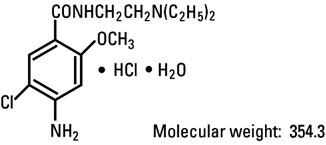 Metoclopramide🏭 Hospira, Inc.
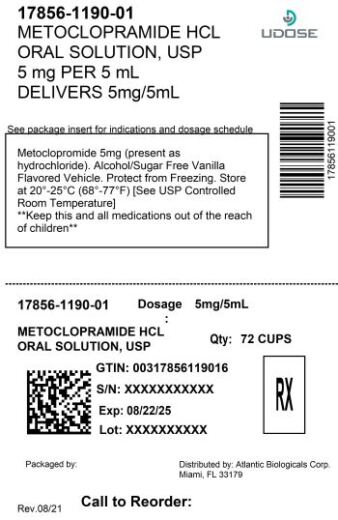 Metoclopramide🏭 ATLANTIC BIOLOGICALS CORP.
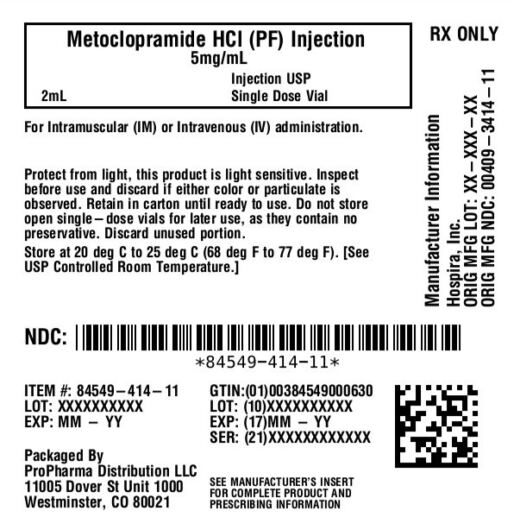 Metoclopramide🏭 ProPharma Distribution
✅ What it is used for
- Treatment (4 to 12 weeks) of symptomatic, documented gastroesophageal reflux in adults who fail to respond to conventional therapy
- Relief of symptoms in adults with acute and recurrent diabetic gastroparesis
🧪 Active ingredient
The active ingredient is metoclopramide (as the hydrochloride), a dopamine-2 receptor antagonist. It stimulates motility of the upper gastrointestinal tract without stimulating gastric, biliary, or pancreatic secretions, increases the strength of stomach contractions, relaxes the pyloric sphincter, and increases lower esophageal sphincter tone, resulting in faster gastric emptying and intestinal transit.
🌿 Benefits
- Speeds gastric emptying and intestinal transit
- Increases lower esophageal sphincter tone, helping reduce reflux
- Relieves symptoms of diabetic gastroparesis
📝 How to use
- Taken by mouth; the dose and duration are set by your doctor or pharmacist and should not be changed without consulting them
- It is usually taken 30 minutes before each meal and at bedtime, as directed by the doctor
- It should be used for the shortest duration of treatment, and your doctor should periodically reassess the need to continue
- It has not been shown to be safe and effective for gastroesophageal reflux for longer than 12 weeks
💊 Dosage forms
- 5 mg tablets (white, round, unscored)
- 10 mg tablets (white, round, scored)
⚠️ Common side effects
- Restlessness
- Drowsiness
- Fatigue
- Lassitude (about 10% of patients taking 10 mg four times daily)
- Insomnia, headache, confusion, or dizziness (less often)
- Nausea and bowel disturbances (primarily diarrhea)
🚨 Serious — seek medical help
- Tardive dyskinesia: potentially irreversible involuntary movements of the face or tongue, sometimes trunk or limbs
- Other extrapyramidal symptoms such as dystonic reactions, drug-induced parkinsonism, and akathisia
- Neuroleptic malignant syndrome (NMS)
- Depression with suicidal ideation
- Convulsive seizures and hallucinations
- Hypertension, acute congestive heart failure, bradycardia, supraventricular tachycardia, possible atrioventricular block
- Agranulocytosis, neutropenia, leukopenia, methemoglobinemia, sulfhemoglobinemia
- Hepatotoxicity (jaundice, altered liver tests) when given with other hepatotoxic drugs
- Hypersensitivity reactions: bronchospasm, urticaria, angioedema including glossal or laryngeal edema
- Fluid retention and hyperprolactinemia (galactorrhea, amenorrhea, gynecomastia, impotence)
⛔ Do not use if
- History of tardive dyskinesia or a dystonic reaction to metoclopramide
- When stimulation of GI motility might be dangerous (GI hemorrhage, mechanical obstruction, or perforation)
- Pheochromocytoma or other catecholamine-releasing paragangliomas
- Epilepsy
- Hypersensitivity to metoclopramide
❗ Warnings & precautions
- Tardive dyskinesia may be irreversible; risk increases with treatment duration and total cumulative dose, and is higher in elderly patients (especially women) and patients with diabetes
- Discontinue immediately and seek medical attention if signs or symptoms of tardive dyskinesia appear
- Avoid in patients with Parkinson's disease and with other drugs known to cause TD, EPS, or NMS
- Avoid use in patients with depression or suicidal ideation
- In diabetic gastroparesis, avoid treatment longer than 12 weeks; if longer use is unavoidable, routinely monitor for signs of TD
- May cause drowsiness and affect the ability to drive or operate machinery
- May cause hypertension, fluid retention, and elevated prolactin
- Dosage reductions may be needed in elderly patients, those with hepatic or renal impairment, and CYP2D6 poor metabolizers
🔄 Drug interactions
- Antipsychotics: additive effects including TD, EPS, and NMS; avoid concomitant use
- Strong CYP2D6 inhibitors (e.g., quinidine, bupropion, fluoxetine, paroxetine): raise metoclopramide levels; dose reduction needed
- Monoamine oxidase (MAO) inhibitors: increased risk of hypertension; avoid concomitant use
- CNS depressants (alcohol, sedatives, hypnotics, opiates, anxiolytics): increased risk of CNS depression
- Drugs that impair GI motility (antiperistaltic antidiarrheals, anticholinergics, opiates): may reduce metoclopramide absorption and effect
- Other interactions are listed in the full prescribing information; tell your doctor or pharmacist about all your medicines
🤰 Pregnancy
Published studies do not report an increased risk of adverse pregnancy outcomes with metoclopramide use during pregnancy. However, it crosses the placenta and may cause extrapyramidal signs and methemoglobinemia in neonates when given to the mother during delivery, so neonates should be monitored. Animal studies showed no adverse developmental effects. Consult your doctor before use.
🍼 Breastfeeding
Metoclopramide is present in human milk in variable amounts, and breastfed infants have experienced gastrointestinal effects such as intestinal discomfort and increased gas. The drug raises prolactin, but data are not adequate to determine its effect on milk production. Consult your doctor before use while breastfeeding.
🧒 Children
Not recommended in pediatric patients because of the risk of tardive dyskinesia and other extrapyramidal symptoms, and the risk of methemoglobinemia in neonates. Safety and effectiveness have not been established, and dystonias and other extrapyramidal symptoms are more common in children than in adults.
👴 Older adults
Elderly patients are more likely to have decreased renal function and may be more sensitive to therapeutic and adverse effects, with a higher risk of tardive dyskinesia (especially women); a reduced dosage should be considered under medical supervision.
🌡️ Storage
Store at 20° to 25°C (68° to 77°F). Protect from light, as the product is light sensitive. Keep in a tight, light-resistant container out of reach of children. Inspect before use and discard if color change or particulate is observed.
⏰ Missed dose
The label text provided does not give instructions for a missed dose; ask your doctor or pharmacist, and do not double the dose on your own.
🆘 Overdose
Overdose may cause drowsiness, disorientation, extrapyramidal reactions, methemoglobinemia, and sometimes death; neuroleptic malignant syndrome has been reported. There is no specific antidote. In case of overdose, contact your Poison Control Center or seek emergency medical care immediately. Hemodialysis does not remove significant amounts of the drug.
💰 Price & brands in your area
🏛️ Official price in Palestine — Ministry of Health price list:
| Product | Company | Pack | Price |
|---|---|---|---|
| METO-ALISON 10 MG/2ML 100 AMP Metoclopramide Hydrochloride | Alison pharmaceutical company | 100 AMP | 226 ₪ |
📍 Find the nearest pharmacy
Your location is used only in your browser to show nearby pharmacies — we don't store it.
Open in Google Maps👨⚕️ For healthcare professionals
Mechanism of action
Dopamine-2 receptor antagonist; stimulates upper GI motility without stimulating secretions, appears to sensitize tissues to acetylcholine, is independent of intact vagal innervation but abolished by anticholinergics. Increases tone and amplitude of gastric (especially antral) contractions, relaxes the pylorus and duodenal bulb, increases duodenal and jejunal peristalsis (accelerating gastric emptying and intestinal transit), and raises resting lower esophageal sphincter tone. Oral bioavailability is 80% ± 15.5%, with peak plasma concentration at about 1 to 2 hours.
Labeled dosing
GERD in adults: 10 to 15 mg orally four times daily, 30 minutes before meals and at bedtime (maximum 60 mg/day) for 4 to 12 weeks, or intermittently as a single dose up to 20 mg before the provoking situation. Diabetic gastroparesis: 10 mg orally 30 minutes before each meal and at bedtime (maximum 40 mg/day). Reduce dosage in elderly patients, hepatic or renal impairment, CYP2D6 poor metabolizers, and with strong CYP2D6 inhibitors (see full prescribing information). Dose is determined by the doctor or pharmacist.
- Boxed warning: tardive dyskinesia; risk rises with treatment duration and cumulative dose
- Maximum treatment duration in GERD is 12 weeks; in diabetic gastroparesis avoid more than 12 weeks and monitor for TD if longer use is unavoidable
- May mask signs of TD and delay its diagnosis
- Crosses the placenta; may cause EPS and methemoglobinemia in neonates
- Methemoglobinemia can be reversed with IV methylene blue, but this may cause hemolytic anemia in G6PD deficiency
🎓 Key points for students
- Dopamine-2 antagonist prokinetic of the upper GI tract
- Indications: refractory GERD and diabetic gastroparesis
- Boxed warning: tardive dyskinesia (may be irreversible)
- Contraindications: history of TD/dystonia, GI obstruction/hemorrhage/perforation, pheochromocytoma, epilepsy, hypersensitivity
- Key interactions: antipsychotics, CYP2D6 inhibitors, MAO inhibitors, CNS depressants
- Common adverse effects: restlessness, drowsiness, fatigue, lassitude
EME runs your whole clinic: appointments with WhatsApp reminders, patient files, finance & inventory, a patient portal and a members-price medical store — with your data isolated and protected.
Try EME free How we protect your data❓ FAQ
What is metoclopramide used for?
In adults it is used for gastroesophageal reflux that has not responded to conventional therapy and for relief of diabetic gastroparesis symptoms.
What is its most serious side effect?
Tardive dyskinesia, a movement disorder that may be permanent and becomes more likely with longer treatment. Stop the drug and seek medical attention right away if involuntary movements of the face or tongue appear.
How long can it be used?
For gastroesophageal reflux, no longer than 12 weeks; for diabetic gastroparesis, treatment beyond 12 weeks should be avoided.
Can I take it with alcohol or sedatives?
This should be avoided because alcohol and sedatives increase the risk of CNS depression, and the drug itself may cause drowsiness that affects driving.
Is it suitable for children?
It is not recommended in children because of the risk of tardive dyskinesia and other extrapyramidal symptoms, and methemoglobinemia in neonates.
⚕️ For education only — not a substitute for advice from your doctor or pharmacist. Do not start or stop any medicine without advice. Source: official FDA drug label via openFDA (2026-06), simplified. Updated: 2026-11-11.