
💊 Lamotrigine (Lamotrigine)
Lamotrigine is used to control certain types of epilepsy seizures and to delay mood episodes in bipolar I disorder. It carries a boxed warning for serious skin rashes and must be used under medical supervision, with the dose set only by your doctor.
In Arabic: لاموتريجين
🏷️ Brand names & manufacturers
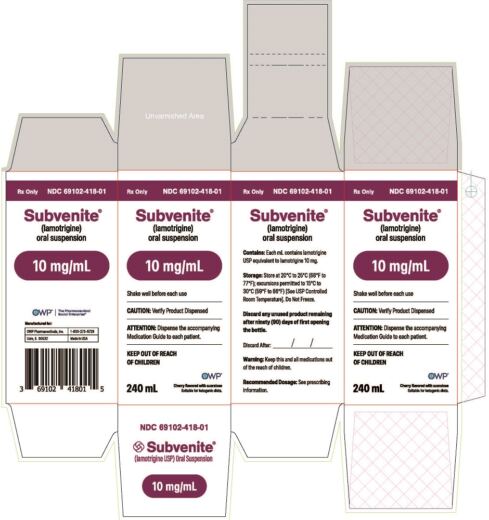 Subvenite🏭 OWP Pharmaceuticals, Inc.DailyMed
 Lamotrigine Kit🏭 OWP Pharmaceuticals, Inc.DailyMed
 Lamotrigine🏭 Par Health USA, LLCDailyMed
✅ What it is used for
- Adjunctive therapy for partial-onset seizures in patients aged 2 years and older
- Adjunctive therapy for primary generalized tonic-clonic (PGTC) seizures in patients aged 2 years and older
- Adjunctive therapy for generalized seizures of Lennox-Gastaut syndrome in patients aged 2 years and older
- Conversion to monotherapy in adults (16 years and older) with partial-onset seizures who are on a single antiepileptic drug: carbamazepine, phenytoin, phenobarbital, primidone, or valproate
- Maintenance treatment of bipolar I disorder to delay the time to mood episodes (depression, mania, hypomania, mixed) in patients treated for acute mood episodes with standard therapy
- Not recommended for treating acute manic or mixed episodes
🧪 Active ingredient
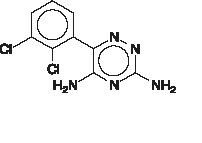
The active ingredient is lamotrigine, an anti-epileptic of the phenyltriazine class, chemically unrelated to other antiepileptic drugs. Its precise mechanism is unknown; it is proposed to inhibit voltage-sensitive sodium channels, stabilizing neuronal membranes and reducing release of excitatory amino acids such as glutamate and aspartate.
🌿 Benefits
- Helps control certain types of epileptic seizures
- Helps delay mood episodes in patients with bipolar I disorder
📝 How to use
- The dose is determined by your doctor or pharmacist based on concomitant medicines, indication, and age; do not change it yourself
- Do not exceed the recommended starting dose or rate of dose increase, as this raises the risk of rash
- If stopping, the dose should be tapered over at least 2 weeks (about a 50% reduction per week) as directed by your doctor
- Women may need dose adjustment when starting or stopping estrogen-containing products, including oral contraceptives
- Taken by mouth; visually inspect the tablets to verify you received the correct drug
💊 Dosage forms
- Tablets: 25, 50, 100, 150, 200, and 250 mg
- Tablets for oral suspension: 5 mg and 25 mg
⚠️ Common side effects
- Dizziness
- Headache
- Double vision and blurred vision
- Ataxia (loss of coordination)
- Nausea and vomiting
- Somnolence (drowsiness)
- Rhinitis and pharyngitis
- Rash
- In children: infection, fever, accidental injury, diarrhea, abdominal pain, tremor
- In bipolar disorder: insomnia, back pain, fatigue, abdominal pain, dry mouth
🚨 Serious — seek medical help
- Serious, life-threatening skin rash (including Stevens-Johnson syndrome and toxic epidermal necrolysis), which may be fatal
- Hemophagocytic lymphohistiocytosis (signs of systemic inflammation)
- Multiorgan hypersensitivity reaction (fever, lymphadenopathy, hepatitis, organ failure)
- Cardiac rhythm and conduction abnormalities
- Blood dyscrasias (neutropenia, thrombocytopenia, pancytopenia)
- Suicidal thoughts or behavior
- Aseptic meningitis
- Withdrawal seizures and status epilepticus when stopped abruptly
⛔ Do not use if
- Hypersensitivity to the drug or any of its ingredients (e.g., rash, angioedema, acute urticaria, extensive pruritus, mucosal ulceration)
❗ Warnings & precautions
- Boxed warning: discontinue at the first sign of rash unless clearly not drug related; most life-threatening rashes occur within 2 to 8 weeks of starting
- Rash risk is increased by coadministration with valproate, exceeding the recommended initial dose or dose escalation, presence of the HLA-B*1502 allele, and younger age
- Do not restart after discontinuation due to rash unless benefits clearly outweigh risks
- Monitor for signs of systemic inflammation, fever and lymphadenopathy, anemia, unexpected infection, or bleeding
- May cause serious arrhythmias in patients with certain underlying cardiac disorders; weigh benefit against risk
- Monitor for suicidal thoughts or behavior and report them immediately
- Monitor for signs of meningitis
- Do not stop abruptly because of the risk of withdrawal seizures
- Product name confusion can lead to medication errors; inspect tablets on dispensing
- Dose adjustment is needed in moderate and severe hepatic impairment; reduced maintenance doses may be effective in significant renal impairment
🔄 Drug interactions
- Valproate: increases lamotrigine concentrations more than 2-fold
- Carbamazepine, phenytoin, phenobarbital, primidone, rifampin: decrease concentrations by approximately 40%
- Estrogen-containing oral contraceptives: decrease concentrations by approximately 50% and may require dose adjustment
- Protease inhibitors lopinavir/ritonavir and atazanavir/ritonavir: decrease exposure by approximately 50% and 32%, respectively
- Coadministration with organic cationic transporter 2 substrates with a narrow therapeutic index is not recommended
- Tell your doctor or pharmacist about all medicines you take
🤰 Pregnancy
Data from pregnancy registries and epidemiological studies have not detected an increased frequency of major congenital malformations or a consistent pattern of malformations compared with the general population. Animal studies showed developmental toxicity at doses lower than clinical doses, and lamotrigine decreased fetal folate concentrations in rats. Women with epilepsy should not abruptly discontinue antiepileptic drugs during pregnancy due to the risk of status epilepticus. Dose adjustments may be needed during pregnancy and postpartum. Pregnant women are encouraged to enroll in the NAAED Pregnancy Registry (1-888-233-2334). Consult your doctor.
🧒 Children
Indicated as adjunctive therapy for epilepsy from age 2 years. Safety and efficacy were not demonstrated in very young pediatric patients (1 to 24 months) for partial-onset seizures, where it was associated with an increased risk of infectious and respiratory adverse reactions. Safety and efficacy were not established for bipolar disorder in patients aged 10 to 17 years. Risk of serious rash is higher in children (approximately 0.3% to 0.8%).
👴 Older adults
Clinical trials did not include enough patients aged 65 and older to determine whether they respond differently. Dose selection should be cautious, usually starting at the low end of the dosing range, reflecting greater frequency of decreased hepatic, renal, or cardiac function and of concomitant disease or drug therapy.
🌡️ Storage
Store at 20°C to 25°C (68°F to 77°F) in a dry place, in a tight, light-resistant container. Keep out of reach of children.
🆘 Overdose
Overdoses up to 15 g have been reported, some fatal, causing ataxia, nystagmus, seizures (including tonic-clonic seizures), decreased level of consciousness, coma, and intraventricular conduction delay. There is no specific antidote. If an overdose is suspected, seek hospital care immediately or contact a Poison Control Center.
💰 Price & brands in your area
🏛️ Official price in Palestine — Ministry of Health price list:
| Product | Company | Pack | Price |
|---|---|---|---|
| LAMAPHARM 25MG TABLETS Lamotrigine 25mg | Jepharm Co. | 30 tab | 25 ₪ |
| LAMAPHARM100MG TABLETS Lamotrigine 100 mg | Jepharm Co. | 30 tabs | 65 ₪ |
📍 Find the nearest pharmacy
Your location is used only in your browser to show nearby pharmacies — we don't store it.
Open in Google Maps👨⚕️ For healthcare professionals
Mechanism of action
Phenyltriazine antiepileptic; exact mechanism unknown. Proposed inhibition of voltage-sensitive sodium channels with modulation of presynaptic release of glutamate and aspartate (relevance in humans not established). Does not inhibit NMDA-mediated activity. Inhibits dihydrofolate reductase in vitro. Mechanism in bipolar disorder not established. Metabolized predominantly by glucuronic acid conjugation (UGT enzymes).
Labeled dosing
Dosing depends on concomitant medications (glucuronidation inducers/inhibitors), indication, and age, per label tables (Table 1 for patients over 12 years, Tables 2 and 3 for ages 2 to 12 years, Table 4 for conversion to monotherapy, Tables 5 and 6 for bipolar disorder). Do not exceed the recommended initial dose or escalation rate. On discontinuation, taper over at least 2 weeks. No established therapeutic plasma range; dosing is based on clinical response. The individual dose is set by the doctor or pharmacist.
- Do not restart after discontinuation due to rash unless benefits clearly outweigh risks; if off for more than 5 half-lives, follow initial dosing recommendations
- Maintenance dose adjustment is required when starting or stopping estrogen-containing products or atazanavir/ritonavir
- Safety and efficacy not established in infants under 2 years
- Safety and effectiveness not established as initial monotherapy or for simultaneous conversion from 2 or more concomitant AEDs
🎓 Key points for students
- Lamotrigine is a phenyltriazine antiepileptic and mood stabilizer that inhibits voltage-sensitive sodium channels and DHFR
- Boxed warning: serious rash (Stevens-Johnson syndrome, toxic epidermal necrolysis), increased with valproate, exceeding the initial dose or titration rate, HLA-B*1502, and younger age
- Valproate raises levels more than 2-fold; enzyme inducers and estrogen-containing contraceptives lower levels by about 40% and 50% respectively
- Other serious reactions: HLH, multiorgan hypersensitivity (DRESS), blood dyscrasias, aseptic meningitis, cardiac arrhythmias
- Key teaching point: slow titration at initiation and gradual taper over at least 2 weeks on discontinuation
EME runs your whole clinic: appointments with WhatsApp reminders, patient files, finance & inventory, a patient portal and a members-price medical store — with your data isolated and protected.
Try EME free How we protect your data❓ FAQ
What is the most important warning with lamotrigine?
The risk of a serious, potentially life-threatening skin rash. If any rash appears, contact your doctor immediately; the drug is usually stopped at the first sign of rash unless it is clearly not drug related.
Can I stop lamotrigine suddenly?
No. Abrupt discontinuation may cause withdrawal seizures. Stopping should be gradual over at least 2 weeks under your doctor's supervision.
Do birth control pills affect lamotrigine?
Yes. Estrogen-containing contraceptives lower lamotrigine levels by about 50%, and your doctor may need to adjust the dose when you start or stop them.
What are the most common side effects?
Dizziness, headache, double vision, loss of coordination, nausea, drowsiness, and rash.
Can it be used during pregnancy?
Registry data have not detected an increased frequency of major malformations, but do not stop the drug abruptly. Consult your doctor to weigh benefits and risks and to adjust the dose.
Is lamotrigine used to treat acute mania?
No. It is not recommended for acute manic or mixed episodes. It is used for maintenance treatment to delay mood episodes in bipolar I disorder.
⚕️ For education only — not a substitute for advice from your doctor or pharmacist. Do not start or stop any medicine without advice. Source: official FDA drug label via openFDA (2026-05), simplified. Updated: 2026-11-11.