
💊 Lactulose (Enulose)
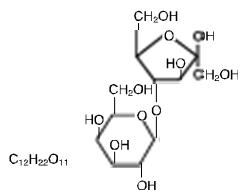
Lactulose is a synthetic disaccharide given as a solution by mouth or rectally. It is used to prevent and treat portal-systemic encephalopathy, including the stages of hepatic pre-coma and coma. It works by lowering blood ammonia levels and improving the patient's mental state.
In Arabic: لاكتولوز
🏷️ Brand names & manufacturers
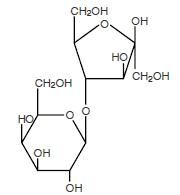 Enulose🏭 Actavis Pharma, Inc.DailyMed
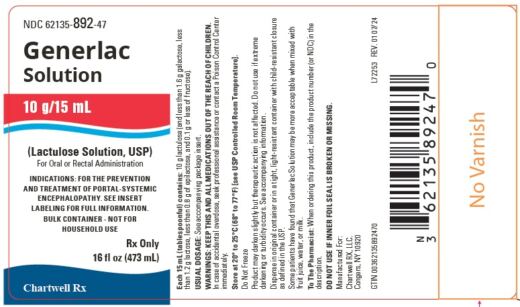 Generlac🏭 Chartwell RX, LLCDailyMed
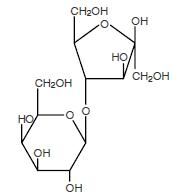 Constulose🏭 Actavis Pharma, Inc.DailyMed
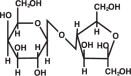 Kristalose🏭 Cumberland Pharmaceuticals Inc.DailyMed
 Lactulose Crystalline🏭 Cumberland Assured Products Inc.DailyMed
 Lactulose🏭 PAI Holdings, LLC dba PAI PharmaDailyMed
✅ What it is used for
- Prevention and treatment of portal-systemic (hepatic) encephalopathy
- Treatment of the hepatic pre-coma and coma stages
- Long-term therapy of chronic portal-systemic encephalopathy
🧪 Active ingredient
Lactulose is a synthetic disaccharide that reaches the colon essentially unchanged, where bacteria break it down into low molecular weight acids that acidify the colon contents. This acidification traps ammonia as the ammonium ion, preventing its absorption, and the laxative action then expels the trapped ammonium from the colon.
🌿 Benefits
- Reduces blood ammonia by 25 to 50% in controlled studies
- Improves mental state and EEG patterns
- Clinical response observed in about 75% of patients
- Frequently increases protein tolerance
📝 How to use
- The dose is set by your doctor or pharmacist and should not be changed without consulting them
- The solution is usually taken by mouth; your doctor may prescribe it as a retention enema in coma or when there is a danger of aspiration
- The goal of treatment is generally 2 to 3 soft stools per day
- Improvement may occur within 24 hours but may not begin before 48 hours or later
- If the initial dose causes diarrhea, tell your doctor right away so the dose can be reduced
- Cleansing enemas containing soapsuds or other alkaline agents should not be used
💊 Dosage forms
- Oral/rectal solution 10 g per 15 mL (473 mL bottle)
⚠️ Common side effects
- Gaseous distention with flatulence or belching
- Abdominal discomfort such as cramping (in about 20% of patients)
- Nausea and vomiting
- Diarrhea with excessive dosage
🚨 Serious — seek medical help
- Excessive diarrhea with fluid loss
- Low blood potassium (hypokalemia)
- High blood sodium (hypernatremia)
⛔ Do not use if
- Patients who require a low galactose diet, because the solution contains galactose (less than 1.6 g per 15 mL)
❗ Warnings & precautions
- A theoretical hazard exists with electrocautery during proctoscopy or colonoscopy: hydrogen gas may accumulate and cause an explosive reaction in the presence of an electrical spark. This has not been reported with lactulose, but patients should have a thorough bowel cleansing with a non-fermentable solution before such procedures
- Patients should be closely monitored when oral anti-infective therapy is used concomitantly
- Fluid and electrolyte loss should be considered if excessive diarrhea occurs
🔄 Drug interactions
- Neomycin and other anti-infectives: may eliminate the colonic bacteria needed to degrade lactulose and prevent acidification of colonic contents; close monitoring is needed
- Nonabsorbable antacids: may inhibit the desired lactulose-induced drop in colonic pH
- Other laxatives: should not be used, especially at the start of therapy, because the loose stools they cause may falsely suggest adequate lactulose dosage has been achieved
🤰 Pregnancy
Pregnancy category B. Reproduction studies in mice, rats, and rabbits at doses up to 2 to 4 times the usual human oral dose showed no evidence of impaired fertility or fetal harm, but there are no adequate and well-controlled studies in pregnant women. It should be used during pregnancy only if clearly needed and under medical supervision.
🍼 Breastfeeding
It is not known whether lactulose is excreted in human milk. Because many drugs are, caution should be exercised and a doctor consulted before use while breastfeeding.
🧒 Children
Very little information on use in children and adolescents has been recorded. As with adults, the goal is 2 to 3 soft stools daily. The dose is determined by the doctor; if diarrhea occurs the dose should be reduced immediately, and if it persists the drug should be discontinued.
👴 Older adults
The label contains no specific information for elderly patients. The dose is set by the doctor, with monitoring for diarrhea and fluid loss.
🌡️ Storage
Store between 2° and 30°C (36° to 86°F); do not freeze. A normal darkening of color may occur and does not affect therapeutic action. Do not use if extreme darkening or turbidity develops from prolonged exposure to temperatures above 30°C or direct light. Prolonged freezing may make it semi-solid and too viscous to pour; viscosity returns to normal on warming to room temperature. Keep in a tight, light-resistant container, out of reach of children.
⏰ Missed dose
The label gives no specific instructions for a missed dose. Consult your doctor or pharmacist and do not double the dose on your own.
🆘 Overdose
No accidental overdosage has been reported. Diarrhea and abdominal cramps are expected to be the major symptoms. The medication should be stopped and a doctor or pharmacist consulted.
💰 Price & brands in your area
🏛️ Official price in Palestine — Ministry of Health price list:
| Product | Company | Pack | Price |
|---|---|---|---|
| LACTUVER 66.7% SYRUP 667 mg lactulose | Jepharm Co. | BOTTLE OF 300 ML | 39 ₪ |
📍 Find the nearest pharmacy
Your location is used only in your browser to show nearby pharmacies — we don't store it.
Open in Google Maps👨⚕️ For healthcare professionals
Mechanism of action
Bacterial degradation of lactulose in the colon yields acids that acidify colonic contents, converting NH3 to the trapped, non-absorbable ammonium ion (NH4+); ammonia migrates from blood into the colon, and the laxative action of the metabolites then expels the trapped ammonium. Lactulose is poorly absorbed, with urinary excretion of 3% or less within 24 hours, and reaches the colon essentially unchanged.
Labeled dosing
Usual adult oral dose: 30 to 45 mL (20 to 30 g) three or four times daily, adjusted every day or two to produce 2 or 3 soft stools daily. Hourly doses of 30 to 45 mL may be used for rapid laxation in the initial phase, then reduced to the recommended daily dose. Continuous long-term therapy is indicated to prevent recurrence. Rectal: 300 mL of solution mixed with 700 mL water or physiologic saline as a retention enema for 30 to 60 minutes, repeatable every 4 to 6 hours. The dose is determined by the doctor or pharmacist.
- Contraindicated in patients requiring a low galactose diet
- Perform thorough bowel cleansing with a non-fermentable solution before electrocautery during endoscopy
- Monitor patients on concomitant oral anti-infectives or nonabsorbable antacids
- Overdose causes diarrhea and cramps; discontinue the drug. Dialysis data are unavailable, but molecular similarity to sucrose suggests it should be dialyzable
🎓 Key points for students
- Lactulose: 4-O-β-D-galactopyranosyl-D-fructofuranose, molecular weight 342.30
- Class: osmotic laxative and colonic acidifier
- Mechanism: bacterial degradation → acids → NH3 converted to NH4+ → trapping and expulsion
- Main indication: portal-systemic encephalopathy (pre-coma and coma)
- Common effects: bloating, flatulence, cramping; excess diarrhea may cause hypokalemia and hypernatremia
- Contraindication: low galactose diet
- Interactions: neomycin, nonabsorbable antacids, other laxatives
EME runs your whole clinic: appointments with WhatsApp reminders, patient files, finance & inventory, a patient portal and a members-price medical store — with your data isolated and protected.
Try EME free How we protect your data❓ FAQ
What is lactulose prescribed for?
It is used to prevent and treat portal-systemic (hepatic) encephalopathy by lowering blood ammonia levels.
How long does it take to work?
Improvement may occur within 24 hours but may not begin before 48 hours or even later.
What are the most common side effects?
Gas, bloating, belching, and abdominal cramping; diarrhea can occur if the dose is too high.
What should I do if I get diarrhea?
Tell your doctor right away so the dose can be reduced; if diarrhea persists, the drug should be discontinued.
Can I use other laxatives with lactulose?
This is not advised, especially at the start of therapy, because the loose stools may falsely suggest that the lactulose dose is adequate.
Does darkening of the solution affect it?
Normal darkening does not affect its action, but do not use it if extreme darkening or turbidity develops.
⚕️ For education only — not a substitute for advice from your doctor or pharmacist. Do not start or stop any medicine without advice. Source: official FDA drug label via openFDA (2022-06), simplified. Updated: 2026-11-11.