
💊 Insulin glargine (Basaglar Kwikpen)
Insulin glargine (e.g., BASAGLAR) is a long-acting human insulin analog injected under the skin to improve blood sugar control in adults and children with type 1 diabetes and in adults with type 2 diabetes. It is not recommended for treating diabetic ketoacidosis.
In Arabic: إنسولين جلارجين🏷️ Brand names & manufacturers
Packages shown are US-market (DailyMed). Brands available in Palestine are in the price section below.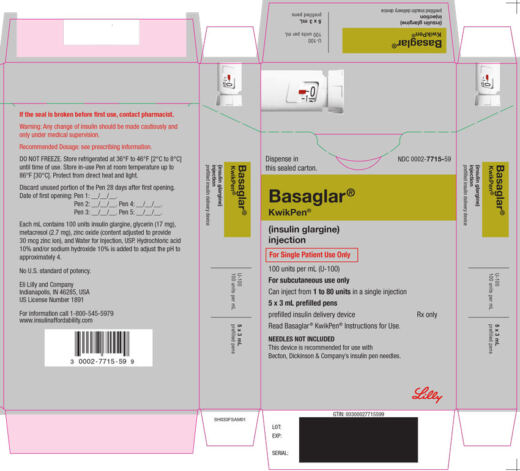 Basaglar Kwikpen🏭 Eli Lilly and Company
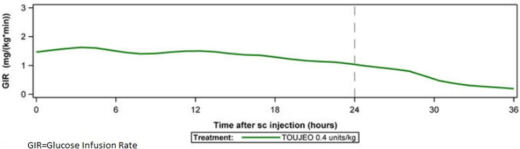 Toujeo🏭 Sanofi-Aventis U.S. LLC
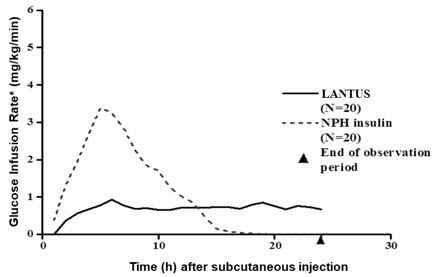 Lantus Solostar🏭 sanofi-aventis U.S. LLC
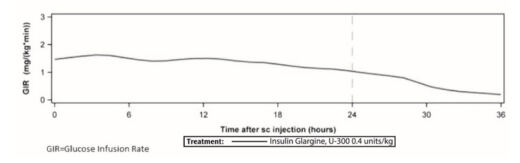 Insulin Glargine U-300 Max🏭 Sanofi-Aventis U.S. LLC
✅ What it is used for
- Improve glycemic control in adults and pediatric patients with type 1 diabetes mellitus
- Improve glycemic control in adults with type 2 diabetes mellitus
- Not recommended for the treatment of diabetic ketoacidosis
🧪 Active ingredient
The active substance is insulin glargine, a long-acting human insulin analog. It lowers blood glucose by stimulating glucose uptake in skeletal muscle and fat and by inhibiting glucose production in the liver.
🌿 Benefits
- Provides sustained glucose lowering over 24 hours with no pronounced peak
- Can be injected once daily
- Helps improve blood sugar control
📝 How to use
- Your doctor or pharmacist sets the dose based on your metabolic needs and blood glucose monitoring; do not change it on your own
- Inject subcutaneously once daily, at any time of day but at the same time every day
- Inject into the abdomen, thigh, or upper arm (deltoid) and rotate injection sites within the same region to reduce the risk of lipodystrophy and localized cutaneous amyloidosis
- Do not inject into areas of lipodystrophy or localized cutaneous amyloidosis
- Inspect the pen before use: the solution must be clear, colorless, and free of visible particles
- Do not dilute or mix with any other insulin or solution
- Do not give intravenously or via an insulin pump
- In type 1 diabetes, it must be used together with a short-acting insulin
- Never share a pen between people, even if the needle is changed
- Use with caution if you have visual impairment and rely on audible clicks to dial your dose
- Check your blood glucose more often when your insulin regimen changes
💊 Dosage forms
- Injection 100 units/mL (U-100), clear and colorless solution
- 3 mL single-patient-use BASAGLAR KwikPen
- 3 mL single-patient-use BASAGLAR Tempo Pen
⚠️ Common side effects
- Hypoglycemia (low blood sugar)
- Allergic reactions
- Injection site reactions
- Lipodystrophy
- Itching (pruritus)
- Rash
- Edema (swelling)
- Weight gain
- Infections (e.g., nasopharyngitis and upper respiratory tract infection)
🚨 Serious — seek medical help
- Severe, potentially life-threatening hypoglycemia
- Severe hypersensitivity reactions, including anaphylaxis
- Hypokalemia (low potassium), which may be life-threatening
- Fluid retention and heart failure when used with thiazolidinediones (TZDs)
⛔ Do not use if
- During episodes of hypoglycemia
- Hypersensitivity to insulin glargine or any of its excipients
❗ Warnings & precautions
- Never share a prefilled pen between patients; sharing poses a risk of transmitting blood-borne pathogens
- Any change in insulin regimen (strength, manufacturer, type, injection site, or method of administration) should be made under close medical supervision with more frequent glucose monitoring
- Hypoglycemia can occur with changes in dosage, glucose-lowering co-medications, meal pattern, or physical activity, and in patients with renal or hepatic impairment or hypoglycemia unawareness
- Always check the insulin label before injecting to avoid mix-ups between insulin products
- Monitor potassium levels in patients at risk of hypokalemia
- Watch for signs of heart failure when used with thiazolidinediones; dose reduction or discontinuation may be needed
- Repeated injections into areas of lipodystrophy or cutaneous amyloidosis can cause hyperglycemia, and a sudden switch to an unaffected area can cause hypoglycemia
🔄 Drug interactions
- Drugs that may increase the risk of hypoglycemia: other antidiabetic agents, ACE inhibitors, angiotensin II receptor blockers, disopyramide, fibrates, fluoxetine, monoamine oxidase inhibitors, pentoxifylline, pramlintide, salicylates, somatostatin analogs (e.g., octreotide), and sulfonamide antibiotics
- Drugs that may decrease the blood glucose lowering effect: atypical antipsychotics (e.g., olanzapine, clozapine), corticosteroids, danazol, diuretics, estrogens, glucagon, isoniazid, niacin, oral contraceptives, phenothiazines, progestogens, protease inhibitors, somatropin, sympathomimetics (e.g., albuterol, epinephrine, terbutaline), and thyroid hormones
- Drugs that may increase or decrease the effect: alcohol, beta-blockers, clonidine, and lithium salts; pentamidine may cause hypoglycemia, sometimes followed by hyperglycemia
- Drugs that may blunt signs of hypoglycemia: beta-blockers, clonidine, guanethidine, and reserpine
- Dose adjustment and more frequent glucose monitoring may be needed with these drugs; consult your doctor
🤰 Pregnancy
Published studies of insulin glargine products in pregnancy have not reported a clear association with adverse developmental outcomes, but these studies cannot definitively rule out risk. Poorly controlled diabetes in pregnancy increases the risk of diabetic ketoacidosis, pre-eclampsia, spontaneous abortion, preterm delivery, delivery complications, major birth defects, stillbirth, and macrosomia-related morbidity. Consult your doctor before use.
🧒 Children
Safety and effectiveness are established in pediatric patients aged 6 to 15 years with type 1 diabetes. They have not been established in children younger than 6 years with type 1 diabetes or in pediatric patients with type 2 diabetes. Pediatric patients had a higher incidence of severe symptomatic hypoglycemia compared with adults in type 1 diabetes trials.
👴 Older adults
Use caution in elderly patients: initial dosing, dose increments, and maintenance dosage should be conservative to avoid hypoglycemia, which may be difficult to recognize in the elderly. No overall differences in safety or effectiveness were observed, but greater sensitivity in some older individuals cannot be ruled out.
🌡️ Storage
Keep in the original sealed carton, protected from heat and light. Do not freeze. Unopened pens: room temperature (up to 86°F/30°C) for 28 days, or refrigerated (36°F–46°F/2°C–8°C) until the expiration date. In-use (opened) pens: room temperature (up to 30°C) for 28 days, do not refrigerate; discard after 28 days even if some insulin remains.
⏰ Missed dose
The label does not give specific instructions for a missed dose. The medicine is injected once daily at the same time each day; ask your doctor or pharmacist what to do if you miss a dose, and do not double the dose without medical advice.
🆘 Overdose
Excess insulin relative to food intake or energy expenditure may cause severe, prolonged, and life-threatening hypoglycemia and hypokalemia. Mild episodes can be treated with oral glucose. Severe episodes with coma, seizure, or neurologic impairment may be treated with emergency glucagon or concentrated intravenous glucose; sustained carbohydrate intake and observation may be needed because hypoglycemia may recur. Seek emergency care immediately.
💰 Price & brands in your area
Local prices are currently available for Palestine; more countries are coming. Ask your pharmacist for local price and alternatives.
📍 Find the nearest pharmacy
Your location is used only in your browser to show nearby pharmacies — we don't store it.
Open in Google Maps👨⚕️ For healthcare professionals
Mechanism of action
Long-acting human insulin analog produced by recombinant DNA technology in E. coli (K12). It regulates glucose metabolism by stimulating peripheral glucose uptake (especially skeletal muscle and fat) and inhibiting hepatic glucose production; it also inhibits lipolysis and proteolysis and enhances protein synthesis. Pharmacodynamics: median time to maximum effect approximately 12 hours, with sustained glucose lowering over 24 hours and no pronounced peak.
Labeled dosing
Dosage is individualized and adjusted by the physician based on metabolic needs, glucose monitoring results, and glycemic goals. Administered subcutaneously once daily at the same time each day. Type 1 diabetes: starting dose approximately one-third of total daily insulin requirements, with short- or rapid-acting pre-meal insulin for the remainder. Type 2 diabetes: starting dose 0.2 units/kg or up to 10 units once daily. When changing from another insulin glargine 100 units/mL product, use the same dose; from once-daily insulin glargine 300 units/mL, the initial dose is 80% of that dose. Pens dial in 1-unit increments, maximum 80 units per injection.
- Not indicated for treatment of diabetic ketoacidosis
- Do not administer intravenously or via insulin pump; do not dilute or mix
- Dose adjustments may be needed with changes in physical activity, meal patterns, acute illness, or renal/hepatic function
- Increase glucose monitoring frequency when converting from another insulin regimen and during the initial weeks
- Common adverse reactions (≥5%): hypoglycemia, allergic reactions, injection site reactions, lipodystrophy, pruritus, rash, edema, weight gain
- To report suspected adverse reactions: Eli Lilly at 1-800-LillyRx or FDA at 1-800-FDA-1088
🎓 Key points for students
- Long-acting insulin analog: asparagine at A21 replaced by glycine, plus two arginines added to the C-terminus of the B-chain
- Empirical formula C267H404N72O78S6; molecular weight approximately 6.063 kDa
- Solution pH is approximately 4; it is a clear solution that must not be mixed with other insulins
- Slow, prolonged absorption with no pronounced peak and glucose lowering over 24 hours
- Contraindications: episodes of hypoglycemia and hypersensitivity
- Key warnings: hypokalemia and heart failure with thiazolidinediones
- Know the interactions: drugs that raise hypoglycemia risk, drugs that blunt its effect, and beta-blockers that mask hypoglycemia symptoms
EME runs your whole clinic: appointments with WhatsApp reminders, patient files, finance & inventory, a patient portal and a members-price medical store — with your data isolated and protected.
Try EME free How we protect your data❓ FAQ
What is insulin glargine and what is it used for?
It is a long-acting insulin injected under the skin to improve blood sugar control in adults and children with type 1 diabetes and in adults with type 2 diabetes.
When and how is it injected?
It is injected subcutaneously once daily at the same time every day, rotating injection sites. Your doctor or pharmacist sets the dose; do not adjust it without their supervision.
Can I share my pen with someone else?
No. Never share a pen, even if the needle is changed, because it risks transmitting blood-borne infections.
What are the main side effects?
The most important is low blood sugar (hypoglycemia). Others include allergic reactions, injection site reactions, lipodystrophy, itching, rash, swelling, and weight gain.
How should I store the pen?
Protect it from heat and light and do not freeze it. An opened pen should be used within 28 days at room temperature and not refrigerated.
Can it be used to treat diabetic ketoacidosis?
No. It is not recommended for the treatment of diabetic ketoacidosis.
⚕️ For education only — not a substitute for advice from your doctor or pharmacist. Do not start or stop any medicine without advice. Source: official FDA drug label via openFDA (2026-06), simplified. Updated: 2026-11-10.