
💊 Hydrochlorothiazide (Hydrochlorothiazide)
Hydrochlorothiazide is an oral diuretic and antihypertensive medicine. It is used to treat edema (swelling from fluid retention) and high blood pressure, alone or with other medicines. The dose must be set by your doctor or pharmacist.
In Arabic: هيدروكلوروثيازيد
🏷️ Brand names & manufacturers
Packages shown are US-market (DailyMed). Brands available in Palestine are in the price section below.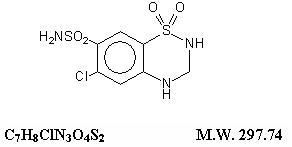 Hydrochlorothiazide🏭 Aurobindo Pharma Limited
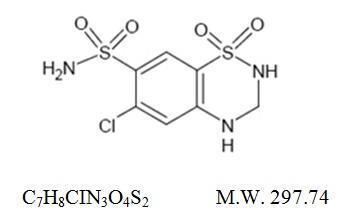 Hydrochlorothiazide🏭 ScieGen Pharmaceuticals, Inc.
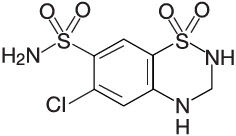 Hydrochlorothiazide🏭 Westminster Pharmaceuticals, LLC
✅ What it is used for
- Adjunctive therapy in edema associated with congestive heart failure, hepatic cirrhosis, and corticosteroid and estrogen therapy
- Edema due to various forms of renal dysfunction such as nephrotic syndrome, acute glomerulonephritis, and chronic renal failure
- Management of hypertension, alone or to enhance the effectiveness of other antihypertensive drugs in more severe forms
- Edema during pregnancy when due to pathologic causes (not routine use in normal pregnancy)
🧪 Active ingredient
Hydrochlorothiazide: acts on the distal renal tubule to increase excretion of sodium and chloride, producing diuresis. Some potassium and bicarbonate loss may accompany this.
🌿 Benefits
- Reduces swelling caused by fluid retention
- Lowers high blood pressure
- Diuresis begins within about 2 hours, peaks in about 4 hours, and lasts about 6 to 12 hours
📝 How to use
- Tablets are taken by mouth
- Your doctor or pharmacist sets the dose according to your response, using the smallest dose needed
- For edema, your doctor may prescribe daily or intermittent dosing (e.g., alternate days or 3 to 5 days a week)
- Do not change the dose or stop the medicine on your own
💊 Dosage forms
- Tablets of 12.5 mg, 25 mg and 50 mg (the product described here is a peach, round 12.5 mg tablet)
⚠️ Common side effects
- Weakness
- Dizziness and headache
- Nausea, vomiting, diarrhea, constipation, cramping, gastric irritation, loss of appetite
- Muscle spasm
- Paresthesias (tingling)
- Restlessness
- Electrolyte imbalance
- High blood sugar and high uric acid
- Low blood pressure, including on standing (may be worsened by alcohol)
- Photosensitivity, rash, itching, fever
- Transient blurred vision
🚨 Serious — seek medical help
- Eye pain or sudden decrease in vision (possible acute myopia or angle-closure glaucoma) — seek medical attention promptly
- Pancreatitis and jaundice
- Blood disorders: aplastic anemia, agranulocytosis, leucopenia, hemolytic anemia, thrombocytopenia
- Severe allergic reactions (anaphylaxis), vasculitis, respiratory distress including pneumonitis and pulmonary edema
- Stevens-Johnson syndrome, toxic epidermal necrolysis, exfoliative dermatitis
- Renal failure and interstitial nephritis
- Increased risk of non-melanoma skin cancer (mainly squamous cell carcinoma) with large cumulative doses
⛔ Do not use if
- Anuria
- Hypersensitivity to this product or to other sulfonamide-derived drugs
❗ Warnings & precautions
- Use with caution in severe renal disease; thiazides may precipitate azotemia and cumulative effects may develop in impaired renal function
- Use with caution in impaired hepatic function or progressive liver disease, since minor fluid and electrolyte changes may precipitate hepatic coma
- May add to or potentiate other antihypertensive drugs
- Sensitivity reactions may occur with or without a history of allergy or bronchial asthma
- Exacerbation or activation of systemic lupus erythematosus has been reported
- Lithium generally should not be given with diuretics
- Risk of acute myopia and secondary angle-closure glaucoma; risk factors may include history of sulfonamide or penicillin allergy
- Associated with an increased risk of non-melanoma skin cancer
- Doses above 50 mg are often associated with marked reductions in serum potassium
- If adverse reactions are moderate or severe, the dose should be reduced or therapy withdrawn by your doctor
🔄 Drug interactions
- Lithium: generally should not be given with diuretics
- Other antihypertensive drugs: effect may be increased
- Alcohol, barbiturates, narcotics: may aggravate orthostatic hypotension
- Digitalis: hypokalemia may accentuate cardiac arrhythmias
- Tell your doctor or pharmacist about all medicines you take
🤰 Pregnancy
Routine use of diuretics during normal pregnancy is inappropriate and exposes mother and fetus to unnecessary hazard; diuretics do not prevent toxemia of pregnancy. Thiazides are indicated in pregnancy only when edema is due to pathologic causes, under medical supervision. Hydrochlorothiazide crosses the placenta.
🍼 Breastfeeding
Hydrochlorothiazide is excreted in breast milk. Consult your doctor before use while breastfeeding.
🧒 Children
Pediatric dosing is individualized by the doctor based on body weight and age, with daily maximums for infants and children. Give to a child only as directed by a doctor.
👴 Older adults
The provided label text contains no specific information for the elderly. The doctor sets the dose based on response and kidney/liver function.
🌡️ Storage
Store at 20° to 25°C (68° to 77°F) in a well-closed container, and keep out of the reach of children.
⏰ Missed dose
The label text does not give specific instructions for a missed dose. Ask your doctor or pharmacist, and do not double the dose on your own.
🆘 Overdose
The most common signs are those of electrolyte depletion (low potassium, chloride, sodium) and dehydration from excessive diuresis. Seek medical help immediately if overdose is suspected; treatment is symptomatic and supportive, with correction of dehydration and electrolyte imbalance.
💰 Price & brands in your area
🏛️ Official price in Palestine — Ministry of Health price list:
| Product | Company | Pack | Price |
|---|---|---|---|
| VALZAN-HCT 80/12.5 TABLETS(30 TAB) Valsartan 80mg and 12.5 mg hydrochlorothiazide | Pharmacare Company | 30 TABLETS / BOX | 26 ₪ |
| ATACAND PLUS 16/12.5 MG-28 TAB Candesartan Cilexetil & Hydrochlorothiazide | TRANSMED PHARMA | 28 TAB | 35 ₪ |
| VALZAN-HCT 160/25 TABLETS (30 TAB) Valsartan 160mg and 25 mg hydrochlorothiazide | Pharmacare Company | 30 TABLETS / BOX | 35 ₪ |
| VALZAN-HCT 160/12.5 TABLETS (30 TAB) Valsartan 160 mg and 12.5 mg hydrochlorothiazide | Pharmacare Company | 30 TABLETS / BOX | 36 ₪ |
| Co-Diovan 160/25 ( film- coated ) Tab VALSARTAN (160mg)HYDROCHLOROTHIAZIDE (25mg) | MASROUJI CO. | 28 Tab. | 36 ₪ |
| Co-Diovan160/12.5 (film-coated) Tab VALSARTAN (160mg)HYDROCHLOROTHIAZIDE (12.5mg) | MASROUJI CO. | 28 Tab. | 37 ₪ |
| CANDEPLUS 32/25 - 30 TAB Candesartan Cilexetil & Hydrochlorothiazide | Jepharm Co. | 30 TAB | 60 ₪ |
📍 Find the nearest pharmacy
Your location is used only in your browser to show nearby pharmacies — we don't store it.
Open in Google Maps👨⚕️ For healthcare professionals
Mechanism of action
Affects the distal renal tubular mechanism of electrolyte reabsorption, increasing sodium and chloride excretion in approximately equivalent amounts; natriuresis may be accompanied by loss of potassium and bicarbonate. The mechanism of the antihypertensive effect is unknown, and it does not usually affect normal blood pressure. Not metabolized; eliminated rapidly by the kidney (at least 61% unchanged within 24 hours); plasma half-life 5.6 to 14.8 hours. Crosses the placenta but not the blood-brain barrier; excreted in breast milk.
Labeled dosing
Adults: edema 25–100 mg daily as a single or divided dose, with intermittent schedules possible. Hypertension: initial 25 mg daily, which may be increased to 50 mg daily as a single or two divided doses; doses above 50 mg are often associated with marked reductions in serum potassium. Therapy is individualized by response and the dose is set by the doctor/pharmacist.
- Children: 1–2 mg/kg/day in one or two doses, not exceeding 37.5 mg/day in infants up to 2 years or 100 mg/day in children 2–12 years; up to 3 mg/kg/day in two divided doses may be required in infants under 6 months
- Monitor electrolytes, especially at higher doses
- Intermittent dosing makes excessive response and electrolyte imbalance less likely
- In overdose: induce emesis or perform gastric lavage; correct dehydration, electrolyte imbalance, hepatic coma and hypotension; the degree of removal by hemodialysis has not been established
🎓 Key points for students
- Class: thiazide diuretic
- Increases Na+ and Cl- excretion with possible K+ and HCO3- loss
- Onset ~2 h, peak ~4 h, duration 6–12 h
- Not metabolized; renally eliminated
- Contraindications: anuria, sulfonamide hypersensitivity
- Warnings: acute myopia/angle-closure glaucoma, non-melanoma skin cancer, lupus, hepatic coma
- Lithium generally should not be given with diuretics
EME runs your whole clinic: appointments with WhatsApp reminders, patient files, finance & inventory, a patient portal and a members-price medical store — with your data isolated and protected.
Try EME free How we protect your data❓ FAQ
What is hydrochlorothiazide used for?
It is used to treat edema (swelling) associated with heart, liver, and kidney conditions and some hormone therapies, and to treat high blood pressure.
How quickly does it work?
Diuresis begins within about 2 hours, peaks at about 4 hours, and lasts about 6 to 12 hours.
Can I take it if I am allergic to sulfonamides?
No. Hypersensitivity to sulfonamide-derived drugs is a contraindication. Tell your doctor about any allergy history.
Which symptoms need urgent medical attention?
Eye pain or sudden vision changes, severe rash or peeling skin, difficulty breathing, jaundice, or severe abdominal pain.
Is it safe in pregnancy?
It is not routinely used in normal pregnancy; it is used only when edema has pathologic causes and under medical supervision.
Does it increase cancer risk?
It is associated with an increased risk of non-melanoma skin cancer, particularly with large cumulative doses; discuss this with your doctor.
⚕️ For education only — not a substitute for advice from your doctor or pharmacist. Do not start or stop any medicine without advice. Source: official FDA drug label via openFDA (2026-07), simplified. Updated: 2026-11-11.