
💊 Fluoxetine (Fluoxetine)
Fluoxetine is an oral selective serotonin reuptake inhibitor (SSRI) used to treat major depressive disorder, obsessive compulsive disorder, bulimia nervosa and panic disorder. The medicine and its dose must be set by your doctor or pharmacist. This product is available only in a 60 mg tablet.
In Arabic: فلوكسيتين
🏷️ Brand names & manufacturers
Packages shown are US-market (DailyMed). Brands available in Palestine are in the price section below.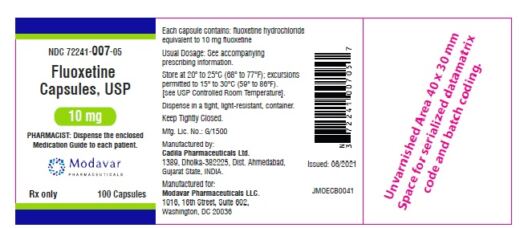 Fluoxetine🏭 Modavar Pharmaceuticals LLC
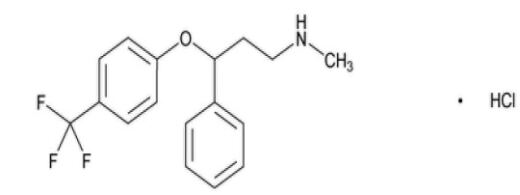 Fluoxetine🏭 Teva Pharmaceuticals USA, Inc.
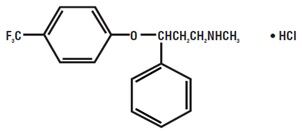 Fluoxetine🏭 Aurobindo Pharma Limited
✅ What it is used for
- Treatment of major depressive disorder (MDD) in adults and in pediatric patients 8 to 18 years of age
- Treatment of obsessions and compulsions in obsessive compulsive disorder (OCD) in adults and in pediatric patients 7 to 17 years of age
- Treatment of binge-eating and vomiting behaviors in moderate to severe bulimia nervosa (adults)
- Treatment of panic disorder, with or without agoraphobia (adults)
🧪 Active ingredient
The active ingredient is fluoxetine hydrochloride, a selective serotonin reuptake inhibitor. Its effect is presumed to be linked to inhibition of CNS neuronal uptake of serotonin, although the exact mechanism is unknown.
🌿 Benefits
- Improves symptoms of major depressive disorder in adults and children aged 8 and older
- Reduces obsessions and compulsions in OCD
- Reduces binge-eating and vomiting in bulimia nervosa
- Treats panic disorder in adults
📝 How to use
- Take by mouth; the dose and duration are set by your doctor or pharmacist.
- This product is available only as a 60 mg tablet; a 30 mg dose may be achieved with one-half of the scored tablet. Initial titration and doses of 10 to 20 mg/day require another fluoxetine product.
- It can be taken with or without food; food does not appear to affect absorption significantly.
- In depression, the full effect may be delayed until 4 weeks of treatment or longer.
- Do not stop the medicine or change the dose without consulting your doctor.
💊 Dosage forms
- 60 mg tablets (fluoxetine base equivalent): white to off-white, film-coated, capsule-shaped, functionally scored
⚠️ Common side effects
- Nausea
- Diarrhea
- Asthenia (weakness)
- Insomnia
- Somnolence
- Nervousness and anxiety
- Dry mouth and dyspepsia
- Anorexia (loss of appetite)
- Tremor
- Sweating
- Abnormal dreams
- Decreased libido, impotence, abnormal ejaculation
- Rash
- Vasodilatation and yawning
- Pharyngitis, sinusitis and flu syndrome
🚨 Serious — seek medical help
- Suicidal thoughts and behaviors, particularly in children, adolescents and young adults
- Serotonin syndrome, especially with other serotonergic drugs
- Severe allergic reactions (bronchospasm, angioedema, laryngospasm, urticaria)
- Mania or hypomania
- Seizures
- Increased risk of bleeding
- Angle-closure glaucoma
- Hyponatremia (possibly with SIADH)
- QT prolongation and ventricular arrhythmia including Torsades de Pointes
- Significant weight loss
- Discontinuation adverse reactions
⛔ Do not use if
- Use of MAOIs intended to treat psychiatric disorders with fluoxetine or within 5 weeks of stopping fluoxetine
- Use of fluoxetine within 14 days of stopping an MAOI intended to treat psychiatric disorders
- Starting fluoxetine in a patient being treated with linezolid or intravenous methylene blue
- Concomitant use with pimozide
- Concomitant use with thioridazine or within 5 weeks of discontinuing fluoxetine
- Known hypersensitivity to fluoxetine
❗ Warnings & precautions
- Boxed warning: antidepressants increased the risk of suicidal thoughts and behavior in children, adolescents and young adults; monitor closely for worsening and emergence of suicidal thoughts, and families/caregivers should stay in close communication with the prescriber.
- Fluoxetine is not approved for use in children less than 7 years of age.
- Screen for bipolar disorder and monitor for mania/hypomania.
- Use cautiously in patients with a history of seizures or conditions that lower the seizure threshold.
- May increase risk of bleeding, especially with NSAIDs, aspirin, warfarin or other drugs affecting coagulation.
- Use cautiously in patients with conditions predisposing to arrhythmias or risk factors for QT prolongation.
- Long half-life: dose changes are not fully reflected in plasma for several weeks.
- May cause symptoms of sexual dysfunction.
- May impair cognitive and motor performance; use caution when driving or operating machinery.
- In children and adolescents, decreased weight and height gain has been observed versus placebo; regular monitoring for mania/hypomania is recommended.
- Use a lower or less frequent dosage in hepatic impairment, the elderly, and patients with concurrent disease or on multiple medications.
🔄 Drug interactions
- MAOIs (including linezolid and IV methylene blue): contraindicated due to risk of serotonin syndrome
- Pimozide and thioridazine: contraindicated; both prolong QT and their levels may rise through fluoxetine's CYP2D6 inhibition
- Other serotonergic drugs (other SSRIs/SNRIs, triptans, tricyclic antidepressants, opioids, lithium, buspirone, amphetamines, tryptophan, St. John's Wort): increased risk of serotonin syndrome
- Tricyclic antidepressants: TCA dose may need reduction and plasma levels monitoring
- Benzodiazepines: increased half-life of diazepam; alprazolam levels increase with further psychomotor impairment
- Antipsychotics: potential elevation of haloperidol and clozapine levels
- Anticonvulsants: potential elevation of phenytoin and carbamazepine levels with clinical anticonvulsant toxicity
- Drugs affecting hemostasis (NSAIDs, aspirin, warfarin): may increase bleeding risk
- Other QT-prolonging drugs: use with caution
- Other CNS-acting drugs: use caution, consider lower initial doses and conservative titration with clinical monitoring
🤰 Pregnancy
Available epidemiologic data and postmarketing reports have not established an increased risk of major birth defects or miscarriage; some studies reported increased cardiovascular malformations without establishing causality. SSRI use, particularly later in pregnancy, may increase the risk of persistent pulmonary hypertension of the newborn and symptoms of poor neonatal adaptation (respiratory distress, temperature instability, feeding difficulty, hypotonia, tremor, irritability). SSRI exposure in the month before delivery has been associated with a less than 2-fold increase in postpartum hemorrhage risk. Untreated depression in pregnancy also carries risks, so discuss with your doctor. A pregnancy registry exists (1-866-961-2388).
🍼 Breastfeeding
The provided label text does not include a lactation section; consult your doctor or pharmacist before use while breastfeeding.
🧒 Children
Efficacy was demonstrated for MDD in patients 8 to 18 years and for OCD in patients 7 to 17 years; safety and effectiveness have not been established below 8 years (MDD) and 7 years (OCD). Decreased weight gain and height were observed (on average 1.1 cm and 1.1 kg less after 19 weeks) along with decreased alkaline phosphatase, and mania/hypomania was reported, so regular monitoring is recommended. This 60 mg product does not allow the 10–20 mg doses used in pediatric MDD; another formulation is required.
👴 Older adults
No overall differences in safety or effectiveness were observed between older and younger patients, but greater sensitivity in some older individuals cannot be ruled out. SSRIs/SNRIs have been associated with clinically significant hyponatremia in elderly patients, who may be at greater risk. A lower or less frequent dosage is used in the elderly.
🌡️ Storage
Store at 20° to 25°C (68° to 77°F); protect from light.
⏰ Missed dose
The provided label text does not give specific missed-dose instructions; ask your doctor or pharmacist and do not double the dose without guidance.
🆘 Overdose
Reported effects include seizures (which may be delayed), altered mental status including coma, delayed cardiovascular toxicity (QRS/QTc prolongation, wide complex tachyarrhythmias, torsade de pointes, cardiac arrest), usually hypertension, and serotonin syndrome. Seek emergency medical help immediately or contact a Poison Center (US: 1-800-221-2222). Activated charcoal may be considered in patients presenting early.
💰 Price & brands in your area
🏛️ Official price in Palestine — Ministry of Health price list:
| Product | Company | Pack | Price |
|---|---|---|---|
| FLUOXETINE G.L 20 MG FLUOXETINE HCL | Al Bayan Drug Store | 28 TAB | 22 ₪ |
| FLUTINE 20MG 30 CAP Fluoxetine | Teva | 30 CAP | 25 ₪ |
📍 Find the nearest pharmacy
Your location is used only in your browser to show nearby pharmacies — we don't store it.
Open in Google Maps👨⚕️ For healthcare professionals
Mechanism of action
Effect presumed linked to inhibition of CNS neuronal serotonin uptake; blocks serotonin uptake into human platelets and is a much more potent inhibitor of serotonin than norepinephrine uptake. Binds muscarinic, histaminergic and α1-adrenergic receptors much less potently than tricyclics. Racemic (50/50) R-/S-fluoxetine; ~94.5% protein bound in vitro. After a single oral 60 mg tablet: Cmax 49.6 ± 10.0 ng/mL, Tmax 7.20 ± 1.41 h. Food may delay absorption by 1–2 h without clinical significance. Potent CYP2D6 inhibitor.
Labeled dosing
MDD (adult): start 20 mg/day in the morning; consider increase after several weeks; doses above 20 mg/day may be given once daily in the morning or twice daily (morning and noon); maximum 80 mg/day. OCD (adult): start 20 mg/day in the morning; target 20–60 mg/day. Bulimia nervosa: 60 mg/day in the morning. Panic disorder: initial 10 mg/day, target 20 mg/day, maximum studied 60 mg/day. No additional benefit seen above 20 mg/day in MDD. This product is 60 mg only (30 mg via half scored tablet) and requires initial titration with another fluoxetine product. Final dosing is determined by the prescriber/pharmacist.
- Use a lower or less frequent dosage in hepatic impairment, the elderly, and patients with concurrent disease or multiple concomitant medications.
- When switching to/from a TCA, the TCA dose may need to be reduced and plasma TCA concentrations monitored.
- Full antidepressant effect may be delayed 4 weeks or longer; periodically reassess need for maintenance treatment.
- Due to the long half-life, dose changes are not fully reflected in plasma for several weeks.
- Report suspected adverse reactions: Par Pharmaceutical 1-800-828-9393 or FDA 1-800-FDA-1088.
🎓 Key points for students
- Class: selective serotonin reuptake inhibitor (SSRI).
- Indications: MDD, OCD, bulimia nervosa, panic disorder.
- Potent CYP2D6 inhibitor, raising levels of TCAs, pimozide, thioridazine and others.
- Key contraindications: MAOIs (5-week and 14-day washouts), pimozide, thioridazine, hypersensitivity.
- Boxed warning: suicidal thoughts and behaviors in children, adolescents and young adults.
- Warnings: serotonin syndrome, mania, seizures, bleeding, angle-closure glaucoma, hyponatremia, QT prolongation.
- Long half-life means slow reflection of dose changes and importance of washout periods.
- Common adverse effects: nausea, diarrhea, insomnia, somnolence, sexual dysfunction, tremor, sweating.
EME runs your whole clinic: appointments with WhatsApp reminders, patient files, finance & inventory, a patient portal and a members-price medical store — with your data isolated and protected.
Try EME free How we protect your data❓ FAQ
What is fluoxetine used for?
It is used to treat major depressive disorder, obsessive compulsive disorder, bulimia nervosa and panic disorder, as decided by your doctor.
How long does fluoxetine take to work?
In depression, the full effect may not appear until 4 weeks of treatment or longer.
Can it be taken with food?
Yes, it can be taken with or without food; food does not significantly affect absorption.
Can children take fluoxetine?
It is used for depression from age 8 and OCD from age 7 under a doctor's supervision, with monitoring for suicidal thoughts and mania. Safety and effectiveness have not been established below these ages.
Can I take it with other medicines?
Not always. There are serious interactions with MAOIs, pimozide, thioridazine, other serotonergic drugs and blood-thinning agents; tell your doctor about everything you take.
What should I do if suicidal thoughts appear?
Contact your doctor or seek emergency help immediately; the medicine may increase this risk in children, adolescents and young adults, and families should watch for any change.
⚕️ For education only — not a substitute for advice from your doctor or pharmacist. Do not start or stop any medicine without advice. Source: official FDA drug label via openFDA (2024-05), simplified. Updated: 2026-11-11.