
💊 Escitalopram (Escitalopram)
Escitalopram is a prescription medicine used to treat major depressive disorder and generalized anxiety disorder. It comes as tablets taken once daily. Your doctor or pharmacist determines the right dose for you; do not change it without consulting them.
In Arabic: إسيتالوبرام
🏷️ Brand names & manufacturers
Packages shown are US-market (DailyMed). Brands available in Palestine are in the price section below.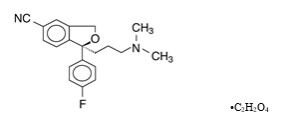 Lexapro🏭 Allergan, Inc.
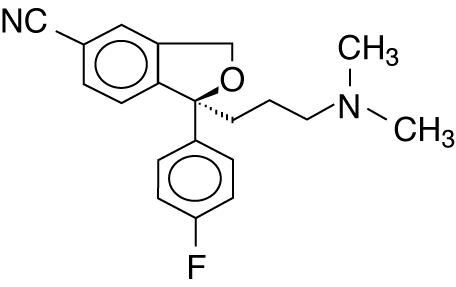 Escitalopram Oxalate🏭 Amneal Pharmaceuticals LLC
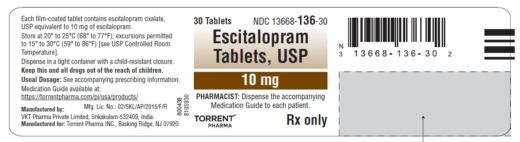 Escitalopram🏭 Torrent Pharmaceuticals Limited
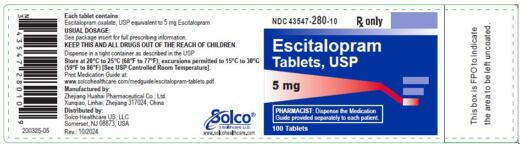 Escitalopram🏭 SOLCO HEALTHCARE US, LLC
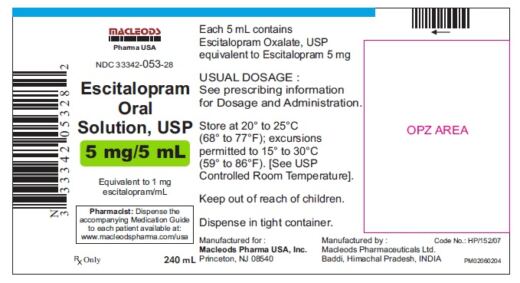 Escitalopram🏭 Macleods Pharmaceuticals Limited
✅ What it is used for
- Treatment of major depressive disorder (MDD) in adults and pediatric patients 12 years of age and older
- Treatment of generalized anxiety disorder (GAD) in adults and pediatric patients 7 years of age and older
🧪 Active ingredient
The active substance is escitalopram (as escitalopram oxalate), a selective serotonin reuptake inhibitor. Its antidepressant action is presumed to be linked to increased serotonergic activity in the central nervous system through blocking the neuronal reuptake of serotonin.
🌿 Benefits
- Relief of major depressive disorder symptoms
- Relief of generalized anxiety disorder symptoms
- Once-daily dosing at any time of day, with or without food
📝 How to use
- Take by mouth once daily, in the morning or evening, with or without food
- The dose is set by your doctor or pharmacist based on your condition, response, and tolerability
- Do not stop suddenly; discuss a gradual tapering plan with your healthcare provider
- Do not adjust the dose on your own
💊 Dosage forms
- Tablets 5 mg
- Tablets 10 mg (scored)
- Tablets 20 mg (scored)
⚠️ Common side effects
- Insomnia
- Ejaculation disorder (primarily ejaculatory delay)
- Nausea
- Increased sweating
- Fatigue and somnolence
- Decreased libido
- Anorgasmia
🚨 Serious — seek medical help
- Suicidal thoughts and behaviors, especially in adolescents and young adults
- Serotonin syndrome
- Discontinuation syndrome
- Seizures
- Activation of mania or hypomania
- Hyponatremia
- Increased risk of bleeding
- Angle-closure glaucoma
- Sexual dysfunction
⛔ Do not use if
- Taking MAOIs, or within 14 days of stopping an MAOI
- Starting escitalopram in a patient being treated with linezolid or intravenous methylene blue
- Taking pimozide
- Hypersensitivity to escitalopram, citalopram, or any inactive ingredient
❗ Warnings & precautions
- Boxed warning: antidepressants increased the risk of suicidal thoughts and behaviors in pediatric and young adult patients; closely monitor all patients for clinical worsening and emergence of suicidal thoughts, especially at treatment start and dose changes
- Not approved for use in pediatric patients younger than 7 years
- Screen for a personal or family history of bipolar disorder, mania, or hypomania before starting
- Use with caution in patients with a history of seizures
- Use caution when operating machinery because of possible interference with cognitive and motor performance
- Angle-closure glaucoma has occurred in patients with untreated anatomically narrow angles
- Monitor weight and growth regularly in children and adolescents, as decreased appetite and weight loss have been observed with SSRIs
- Contact your healthcare provider immediately if signs of serotonin syndrome or any suicidal thoughts appear
🔄 Drug interactions
- MAOIs (including linezolid and intravenous methylene blue): contraindicated due to risk of serotonin syndrome
- Pimozide: contraindicated
- Other serotonergic drugs (other SSRIs, SNRIs, triptans, tricyclic antidepressants, opioids, lithium, buspirone, amphetamines, tryptophan, St. John's Wort): increased risk of serotonin syndrome
- NSAIDs, aspirin, antiplatelets, warfarin, and other anticoagulants: increased risk of bleeding; monitor INR in patients taking warfarin
- Sumatriptan: postmarketing reports of weakness, hyperreflexia, and incoordination with SSRI use
🤰 Pregnancy
Available data have not established an increased risk of major birth defects or miscarriage. However, SSRI exposure, particularly in the month before delivery, has been associated with a less than 2-fold increase in the risk of postpartum hemorrhage, and SSRI use later in pregnancy may increase the risk of persistent pulmonary hypertension of the newborn and poor neonatal adaptation (respiratory distress, temperature instability, feeding difficulties, hypotonia, tremor, irritability). Women who discontinue antidepressants during pregnancy are more likely to relapse into major depression. Consult your doctor before starting or stopping treatment.
🍼 Breastfeeding
The label text provided does not include information on breastfeeding. Consult your doctor or pharmacist before using this medicine while breastfeeding.
🧒 Children
Approved for MDD from 12 years of age and for GAD from 7 years of age. Not approved for children younger than 7 years. Antidepressants increase the risk of suicidal thoughts and behaviors in pediatric patients, and weight and growth should be monitored regularly.
👴 Older adults
Some elderly individuals may be more sensitive to the effects of escitalopram, and its half-life was increased by approximately 50% in subjects 65 years and older. The recommended dosage for most elderly patients is 10 mg daily, as set by the prescriber. SSRIs have been associated with clinically significant hyponatremia in elderly patients.
🌡️ Storage
Store at 20°C to 25°C (68°F to 77°F); excursions permitted to 15°C to 30°C (59°F to 86°F).
⏰ Missed dose
The label text provided does not include instructions for a missed dose. Consult your doctor or pharmacist, and do not double the dose on your own.
🆘 Overdose
Overdose may cause seizures (which may be delayed), altered mental status including coma, cardiovascular toxicity (which may be delayed) including QRS and QTc prolongation, wide complex tachyarrhythmias and torsade de pointes, hypertension, and serotonin syndrome. Seek emergency medical help or contact the Poison Help line (1-800-222-1222) immediately; prolonged cardiac monitoring is recommended.
💰 Price & brands in your area
🏛️ Official price in Palestine — Ministry of Health price list:
| Product | Company | Pack | Price |
|---|---|---|---|
| Purlex 5 mg Escitalopram as Oxalate | Pharmacare Store | 30 tab | 19 ₪ |
| PURLEX 10 mg Escitalopram as Oxalate | Pharmacare Store | 30 tab | 36 ₪ |
| ESCITALOPRAM TEVA 10 mg ESCITALOPRAM | Teva | 30 Tab | 36 ₪ |
| Purlex 20 mg Escitalopram as Oxalate | Pharmacare Store | 30 tab | 52 ₪ |
📍 Find the nearest pharmacy
Your location is used only in your browser to show nearby pharmacies — we don't store it.
Open in Google Maps👨⚕️ For healthcare professionals
Mechanism of action
Escitalopram is the S-enantiomer of racemic citalopram. Its antidepressant action is presumed to be linked to potentiation of serotonergic activity in the CNS resulting from inhibition of neuronal reuptake of serotonin (5-HT). It is a highly selective SSRI with minimal effects on norepinephrine and dopamine reuptake, and has no or very low affinity for other receptors.
Labeled dosing
Adults (MDD and GAD): initial and recommended dosage 10 mg once daily; may be increased based on clinical response and tolerability to a maximum of 20 mg once daily at an interval of no less than 1 week. Administer once daily, morning or evening, with or without food. The final dose is determined by the prescriber or pharmacist.
- Recommended dosage for most elderly patients and for patients with hepatic impairment: 10 mg once daily
- No dosage adjustment for mild or moderate renal impairment; dosage not determined for creatinine clearance below 20 mL/minute
- When discontinuing, reduce dose gradually whenever possible and monitor for discontinuation symptoms
- Screen for bipolar disorder, mania, or hypomania history before initiation
- Pediatric: MDD from age 12 (maximum 20 mg, titration interval of at least 3 weeks); GAD from age 7 (titration interval of at least 2 weeks)
🎓 Key points for students
- Class: selective serotonin reuptake inhibitor (SSRI); pure S-enantiomer of citalopram
- Pharmacokinetics: linear and dose-proportional over 10-30 mg/day; steady state within about one week; citalopram absolute bioavailability about 80%; peak levels at about 5 hours; absorption not affected by food
- Key interactions: MAOIs (contraindicated, serotonin syndrome risk) and pimozide (contraindicated)
- Boxed warning: increased risk of suicidal thoughts and behaviors in patients aged 24 years and younger
- Common adverse reactions (incidence ≥5% and at least twice placebo): insomnia, ejaculation disorder, nausea, increased sweating, fatigue, somnolence, decreased libido, anorgasmia
- Overdose: seizures, QRS/QTc prolongation, arrhythmias including torsade de pointes, serotonin syndrome; consider activated charcoal if presenting early
EME runs your whole clinic: appointments with WhatsApp reminders, patient files, finance & inventory, a patient portal and a members-price medical store — with your data isolated and protected.
Try EME free How we protect your data❓ FAQ
What is escitalopram used for?
It is used to treat major depressive disorder in adults and patients 12 years and older, and generalized anxiety disorder in adults and patients 7 years and older.
Can I stop taking it suddenly?
No. Symptoms can occur when the medicine is discontinued, so discuss a gradual tapering plan with your healthcare provider.
Should I take it with food?
It can be taken once daily, in the morning or evening, with or without food.
Which symptoms need immediate medical attention?
Any suicidal thoughts, sudden changes in mood or behavior, signs of serotonin syndrome, or unusual bleeding.
Does it affect driving?
It may interfere with cognitive and motor performance, so use caution when driving or operating machinery.
⚕️ For education only — not a substitute for advice from your doctor or pharmacist. Do not start or stop any medicine without advice. Source: official FDA drug label via openFDA (2026-05), simplified. Updated: 2026-11-11.