
💊 Enalapril (Enalapril Maleate)
Enalapril is an oral medicine used to treat hypertension, symptomatic congestive heart failure, and asymptomatic left ventricular dysfunction. It works by inhibiting angiotensin-converting enzyme, reducing blood vessel constriction. It is prescribed by a doctor, who determines the dose for each patient.
In Arabic: إنالابريل (إنالابريل مالئات)
🏷️ Brand names & manufacturers
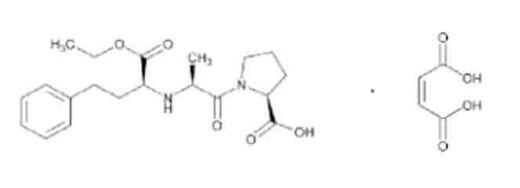 Enalapril Maleate🏭 Amneal Pharmaceuticals NY LLCDailyMed
✅ What it is used for
- Treatment of hypertension, alone or with other antihypertensive agents, especially thiazide-type diuretics
- Treatment of symptomatic congestive heart failure, usually with diuretics and digitalis
- Decreasing the rate of development of overt heart failure and hospitalization for heart failure in clinically stable patients with asymptomatic left ventricular dysfunction (ejection fraction ≤35%)
🧪 Active ingredient
The active ingredient is enalapril maleate, a pro-drug converted in the body to enalaprilat, the active ACE inhibitor. It lowers angiotensin II levels, which reduces vasoconstriction and aldosterone secretion.
🌿 Benefits
- Lowers blood pressure
- Improves symptoms, increases survival and decreases hospitalization in heart failure
- Reduces the development of overt heart failure in asymptomatic left ventricular dysfunction
📝 How to use
- Taken by mouth; the dose is set by your doctor or pharmacist and must not be changed on your own
- May be taken once daily or divided into two doses, as directed by your doctor
- If you take a diuretic, tell your doctor before starting; it may be stopped temporarily or you may be monitored after the first dose
- In heart failure, you are observed under medical supervision for at least two hours after the first dose
- The dose may differ in patients with kidney impairment or on dialysis
💊 Dosage forms
- Oral tablets in strengths of 2.5 mg, 5 mg, 10 mg and 20 mg
⚠️ Common side effects
- Fatigue
- Dizziness
- Headache
- Cough
- Nausea and diarrhea
- Rash
- Low blood pressure on standing (orthostatic effects)
- Weakness (asthenia)
🚨 Serious — seek medical help
- Angioedema: swelling of the face, lips, tongue, throat or limbs, which can be fatal if the larynx is involved — stop the medicine and seek emergency care immediately
- Intestinal angioedema: abdominal pain with or without nausea or vomiting
- Significant low blood pressure, which may lead to fainting
- Anaphylactoid (severe allergic-type) reactions
- High blood potassium
⛔ Do not use if
- Hypersensitivity to enalapril
- History of angioedema related to previous ACE inhibitor treatment
- Hereditary or idiopathic angioedema
- Coadministration of aliskiren in patients with diabetes
- Combination with a neprilysin inhibitor (e.g., sacubitril); do not give within 36 hours of switching to or from sacubitril/valsartan
❗ Warnings & precautions
- Boxed warning: fetal toxicity — when pregnancy is detected, discontinue as soon as possible; drugs acting directly on the renin-angiotensin system can cause injury and death to the developing fetus
- Risk of angioedema, possibly increased with concomitant mTOR inhibitors (e.g., temsirolimus, sirolimus, everolimus) or neprilysin inhibitors
- ACE inhibitors have a smaller blood-pressure effect in black patients, who also have a reported higher incidence of angioedema
- Neutropenia/agranulocytosis: seen with captopril (another ACE inhibitor); available data are insufficient to show enalapril lacks a similar risk, particularly in patients with renal impairment or collagen vascular disease
- Hypotension may occur after the first dose, especially in patients on diuretics
- Dose adjustment is needed in renal impairment
🔄 Drug interactions
- Neprilysin inhibitors (e.g., sacubitril): increased risk of angioedema
- Dual blockade of the renin-angiotensin system (ARBs, ACE inhibitors, aliskiren): increased risk of hypotension, hyperkalemia and renal changes; do not coadminister aliskiren with enalapril in diabetes and avoid in renal impairment (GFR <60 mL/min)
- Diuretics: may cause excessive blood pressure reduction when starting enalapril
- Potassium supplements, potassium salt substitutes, potassium-sparing diuretics: may raise serum potassium
- NSAIDs including COX-2 inhibitors: may worsen renal function in elderly, volume-depleted or renally compromised patients
- mTOR inhibitors (e.g., temsirolimus, sirolimus, everolimus): increased risk of angioedema
- Antihypertensive agents that cause renin release (e.g., diuretics): additive blood-pressure lowering effect
🤰 Pregnancy
The label carries a boxed warning for fetal toxicity. When pregnancy is detected, enalapril should be discontinued as soon as possible and your doctor consulted immediately, because drugs that act directly on the renin-angiotensin system can cause injury and death to the developing fetus.
🍼 Breastfeeding
Enalapril and enalaprilat have been detected in human breast milk. Because of the potential for serious adverse reactions in nursing infants, a decision should be made whether to discontinue nursing or the drug, taking into account the importance of the drug to the mother.
🧒 Children
Antihypertensive effects have been established in hypertensive pediatric patients aged 1 month to 16 years. Enalapril is not recommended in neonates or pediatric patients with glomerular filtration rate <30 mL/min/1.73 m² because no data are available. Neonates with in utero exposure who develop oliguria or hypotension need support of blood pressure and renal perfusion.
👴 Older adults
The provided label text has no dedicated elderly section; however, NSAID coadministration may worsen kidney function in elderly patients. Ask your doctor about appropriate monitoring.
🌡️ Storage
Store at 20–25 °C (excursions permitted 15–30 °C). Keep the container tightly closed and protect from moisture.
⏰ Missed dose
The provided label text gives no specific instruction for a missed dose. Ask your doctor or pharmacist, and do not double the dose on your own.
🆘 Overdose
The most likely manifestation is low blood pressure, usually treated with intravenous normal saline. Seek medical help immediately if an overdose is suspected. Enalaprilat can be removed by hemodialysis.
💰 Price & brands in your area
📍 Find the nearest pharmacy
Your location is used only in your browser to show nearby pharmacies — we don't store it.
Open in Google Maps👨⚕️ For healthcare professionals
Mechanism of action
Enalapril is a pro-drug hydrolyzed to enalaprilat, which inhibits ACE, lowering angiotensin II and thereby decreasing vasopressor activity and aldosterone secretion, with small increases in serum potassium (about 0.2 mEq/L) and increased plasma renin activity. ACE is identical to kininase (bradykinin degradation). Oral absorption is about 60%, with peak serum concentrations within about one hour.
Labeled dosing
Hypertension: usual initial adult dose in patients not on diuretics is 5 mg once daily; usual range 10–40 mg/day as a single dose or two divided doses; 2.5 mg initially if the diuretic cannot be discontinued, with at least 2 hours of supervision. Heart failure: initial 2.5 mg; recommended range 2.5–20 mg twice daily, titrated upward; maximum in trials 40 mg/day in divided doses. Renal impairment (CrCl ≤30 mL/min): initial 2.5 mg once daily. Dialysis: 2.5 mg on dialysis days. Final dosing is determined by the physician or pharmacist.
- Monitor blood pressure, renal function and electrolytes (especially potassium)
- Generally avoid combined use of RAS inhibitors
- Consider intestinal angioedema in the differential diagnosis of abdominal pain in patients on ACE inhibitors
- Discontinue as soon as pregnancy is detected
🎓 Key points for students
- Enalapril is a pro-drug activated by hydrolysis to enalaprilat
- ACE inhibitors block conversion of angiotensin I to angiotensin II and reduce aldosterone
- Characteristic effects: cough; serious: angioedema (linked to bradykinin accumulation)
- Hyperkalemia is expected with potassium-sparing diuretics
- Fetal toxicity: boxed warning
- Contraindications: prior angioedema, sacubitril, aliskiren in diabetes
EME runs your whole clinic: appointments with WhatsApp reminders, patient files, finance & inventory, a patient portal and a members-price medical store — with your data isolated and protected.
Try EME free How we protect your data❓ FAQ
What is enalapril used for?
It is used to treat hypertension, symptomatic congestive heart failure, and asymptomatic left ventricular dysfunction, as prescribed by your doctor.
Can I take it during pregnancy?
No. It carries a boxed warning for fetal toxicity and should be discontinued as soon as possible when pregnancy is detected; consult your doctor.
Which symptoms need me to stop and seek emergency help?
Swelling of the face, lips, tongue or throat, or difficulty breathing or swallowing, which may be serious angioedema.
Does kidney disease change the dose?
Yes, patients with kidney impairment may need a lower starting dose; your doctor will determine the appropriate dose.
Can I take potassium supplements with it?
Not without asking your doctor, as they may raise blood potassium levels.
⚕️ For education only — not a substitute for advice from your doctor or pharmacist. Do not start or stop any medicine without advice. Source: official FDA drug label via openFDA (2026-01), simplified. Updated: 2026-11-10.