
💊 Duloxetine (Duloxetine)
Duloxetine is a prescription serotonin and norepinephrine reuptake inhibitor used to treat depression, generalized anxiety disorder and several types of chronic pain. It is taken as a delayed-release capsule once daily, and your doctor sets the dose that is right for you.
In Arabic: دولوكسيتين
🏷️ Brand names & manufacturers
Packages shown are US-market (DailyMed). Brands available in Palestine are in the price section below.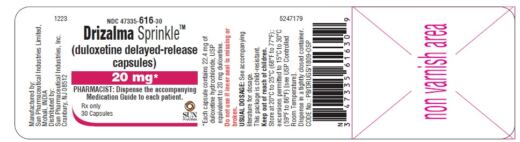 Drizalma Sprinkle🏭 SUN PHARMACEUTICAL INDUSTRIES, INC.
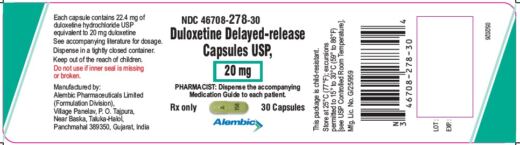 Duloxetine Hydrochloride🏭 Alembic Pharmaceuticals Limited
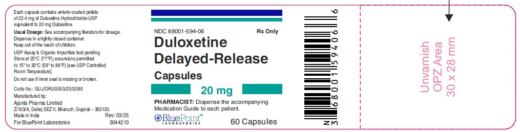 Duloxetine🏭 BluePoint Laboratories
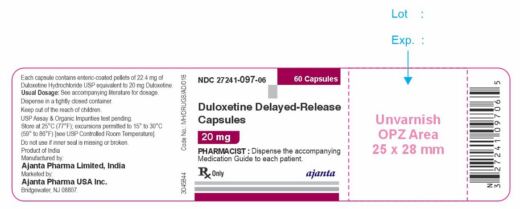 Duloxetine🏭 Ajanta Pharma USA Inc.
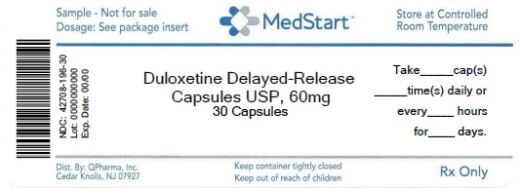 Duloxetine🏭 QPharma, Inc.
✅ What it is used for
- Major depressive disorder in adults
- Generalized anxiety disorder in adults and children 7 years and older
- Diabetic peripheral neuropathic pain in adults
- Fibromyalgia in adults and children 13 years and older
- Chronic musculoskeletal pain in adults
🧪 Active ingredient
The active ingredient is duloxetine (as the hydrochloride), a selective serotonin and norepinephrine reuptake inhibitor. Its antidepressant, anxiety-relieving and central pain-inhibiting actions are believed to be related to enhancing serotonin and norepinephrine activity in the central nervous system.
🌿 Benefits
- Relieves symptoms of depression and generalized anxiety disorder
- Helps relieve pain from diabetic neuropathy, fibromyalgia and chronic musculoskeletal pain
- Taken once daily
📝 How to use
- Take the capsule by mouth once daily, with or without food
- Swallow the capsule whole; do not crush, chew or open it, and do not sprinkle the contents on food or mix with liquids, as this may affect the enteric coating
- The dose is set by your doctor or pharmacist based on your condition; do not change it without consulting them
- Do not stop suddenly; your doctor will reduce the dose gradually to avoid discontinuation symptoms
💊 Dosage forms
- Delayed-release capsules: 20 mg, 30 mg, 40 mg and 60 mg
⚠️ Common side effects
- Nausea
- Dry mouth
- Somnolence (drowsiness)
- Constipation
- Decreased appetite
- Increased sweating (hyperhidrosis)
- In children: decreased weight, vomiting, fatigue, diarrhea
🚨 Serious — seek medical help
- Suicidal thoughts and behaviors, especially in children, adolescents and young adults
- Liver toxicity and liver failure (sometimes fatal); signs include jaundice
- Orthostatic hypotension, falls and fainting
- Serotonin syndrome
- Increased risk of bleeding
- Severe skin reactions such as erythema multiforme and Stevens-Johnson syndrome
- Discontinuation syndrome
- Activation of mania or hypomania
- Angle-closure glaucoma
- Seizures
- Increased blood pressure
- Low blood sodium (hyponatremia)
- Urinary hesitation and retention
- Sexual dysfunction
⛔ Do not use if
- Use of MAOIs intended to treat psychiatric disorders with duloxetine or within 5 days of stopping duloxetine
- Use of duloxetine within 14 days of stopping an MAOI
- Starting duloxetine in a patient being treated with MAOIs such as linezolid or intravenous methylene blue
❗ Warnings & precautions
- Boxed warning: increased risk of suicidal thoughts and behaviors in children, adolescents and young adults; monitor closely for worsening or new suicidal thoughts and tell the doctor
- Avoid in patients with substantial alcohol use or chronic liver disease or cirrhosis
- Avoid in severe renal impairment (GFR less than 30 mL/minute)
- Screen for personal or family history of bipolar disorder, mania or hypomania before starting
- Use with care in patients with a history of seizure disorder
- Blood pressure should be checked before starting and periodically during treatment
- Fasting blood glucose and HbA1c may increase in patients with diabetic neuropathic pain
- Use cautiously in conditions that slow gastric emptying
- Weight and growth should be monitored regularly in children
- Stop the drug and contact the doctor if jaundice, blisters, peeling rash or mucosal sores occur
🔄 Drug interactions
- MAOIs (contraindicated, as above)
- Potent CYP1A2 inhibitors such as fluvoxamine, cimetidine and quinolones (ciprofloxacin, enoxacin); avoid, as they raise duloxetine levels
- Potent CYP2D6 inhibitors such as paroxetine, fluoxetine and quinidine may increase duloxetine levels
- Thioridazine: avoid co-administration
- Other serotonergic drugs increase the risk of serotonin syndrome
- Antiplatelets, anticoagulants, NSAIDs, aspirin and warfarin may increase bleeding risk
- Duloxetine is a moderate CYP2D6 inhibitor and may affect levels of other drugs
🤰 Pregnancy
Use of duloxetine in the month before delivery may be associated with an increased risk of postpartum hemorrhage. Available data have not identified a clear drug-associated risk of major birth defects. Use in the third trimester may cause symptoms of poor adaptation in the newborn (respiratory distress, temperature instability, feeding difficulty, hypotonia, tremor, irritability). Consult your doctor before using during pregnancy; registration in the National Pregnancy Registry for Antidepressants is encouraged.
🍼 Breastfeeding
Information on breastfeeding is not provided in the label text available; consult your doctor or pharmacist before use while breastfeeding.
🧒 Children
Safety and effectiveness are established for generalized anxiety disorder in patients 7 to 17 years and for juvenile fibromyalgia in patients 13 to 17 years. They have not been established in children for major depressive disorder, diabetic peripheral neuropathic pain or chronic musculoskeletal pain. Antidepressants increase the risk of suicidal thoughts and behavior in pediatric patients; monitor especially in the first few months or at dose changes, and monitor weight and growth regularly.
👴 Older adults
No overall differences in safety or effectiveness were generally observed in older patients, but greater sensitivity in some cannot be ruled out. Older patients may be at greater risk of hyponatremia and falls (falls with fractures and hospitalizations have been reported). For generalized anxiety disorder in older adults, treatment typically starts at a lower dose.
🌡️ Storage
Store at 25°C (77°F); excursions permitted to 15° to 30°C (59° to 86°F).
⏰ Missed dose
If a dose is missed, take it as soon as you remember. If it is almost time for the next dose, skip the missed dose and take the next one at the regular time. Do not take two doses at the same time.
🆘 Overdose
Signs of overdose may include somnolence, coma, serotonin syndrome, seizures, syncope, tachycardia, hypotension, hypertension and vomiting. Fatal outcomes have been reported. There is no specific antidote. If overdose is suspected, seek emergency care or contact a poison control center immediately.
💰 Price & brands in your area
Local prices are currently available for Palestine; more countries are coming. Ask your pharmacist for local price and alternatives.
📍 Find the nearest pharmacy
Your location is used only in your browser to show nearby pharmacies — we don't store it.
Open in Google Maps👨⚕️ For healthcare professionals
Mechanism of action
Selective inhibitor of neuronal serotonin and norepinephrine reuptake, with weaker inhibition of dopamine reuptake; no significant affinity for dopaminergic, adrenergic, cholinergic, histaminergic, opioid, glutamate or GABA receptors, and does not inhibit MAO. Elimination half-life is about 12 hours (8-17); elimination is mainly hepatic via CYP1A2 and CYP2D6; steady state is typically reached after about 3 days.
Labeled dosing
Dose is determined by the doctor or pharmacist. Per the label, general adult dosing: MDD start 40-60 mg/day, target 60 mg/day (once daily or divided), maximum 120 mg/day with no evidence of added benefit above 60 mg. GAD: 60 mg once daily (may start 30 mg for 1 week), maximum 120 mg/day; in geriatric patients start 30 mg for 2 weeks before increasing to 60 mg. DPNP: 60 mg/day (maximum 60 mg). Fibromyalgia and chronic musculoskeletal pain: start 30 mg, target 60 mg/day (maximum 60 mg). Swallow capsule whole; taper gradually on discontinuation.
- Boxed warning: suicidal thoughts and behaviors in children, adolescents and young adults
- Avoid with potent CYP1A2 inhibitors and thioridazine
- Avoid in chronic liver disease/cirrhosis and in severe renal impairment (GFR less than 30 mL/minute)
- Monitor blood pressure, sodium, glucose, bleeding and skin reactions
🎓 Key points for students
- Duloxetine is metabolized by CYP1A2 and CYP2D6 and is a moderate CYP2D6 inhibitor
- Co-administration with fluvoxamine increased duloxetine AUC about 6-fold
- Co-administration with paroxetine increased AUC by about 60%
- Combination with MAOIs risks serotonin syndrome (contraindicated)
- Food delays time to peak concentration from 6 to 10 hours
- Regular monitoring of weight and growth in children
EME runs your whole clinic: appointments with WhatsApp reminders, patient files, finance & inventory, a patient portal and a members-price medical store — with your data isolated and protected.
Try EME free How we protect your data❓ FAQ
What is duloxetine used for?
It is used for major depressive disorder, generalized anxiety disorder, diabetic peripheral neuropathic pain, fibromyalgia and chronic musculoskeletal pain, depending on age and the condition determined by your doctor.
Can I open or chew the capsule?
No. Swallow the capsule whole without crushing, chewing or opening it, as this may affect the enteric coating.
Can I stop duloxetine suddenly?
No. Your doctor will reduce the dose gradually to avoid discontinuation symptoms.
What are the common side effects?
In adults: nausea, dry mouth, drowsiness, constipation, decreased appetite and increased sweating.
What if I miss a dose?
Take it as soon as you remember; if it is almost time for the next dose, skip it and do not double up.
⚕️ For education only — not a substitute for advice from your doctor or pharmacist. Do not start or stop any medicine without advice. Source: official FDA drug label via openFDA (2026-06), simplified. Updated: 2026-11-11.