
💊 Clopidogrel (Clopidogrel)
Clopidogrel is a prescription antiplatelet medicine that stops platelets from clumping. It is used to reduce the risk of heart attack and stroke in patients with acute coronary syndrome, a recent heart attack or stroke, or established peripheral arterial disease. Your doctor sets the dose and duration of treatment.
In Arabic: كلوبيدوغريل
🏷️ Brand names & manufacturers
Packages shown are US-market (DailyMed). Brands available in Palestine are in the price section below.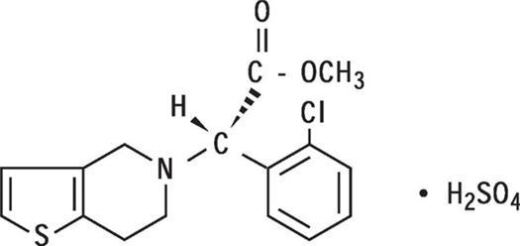 Plavix🏭 Sanofi-Aventis U.S. LLC
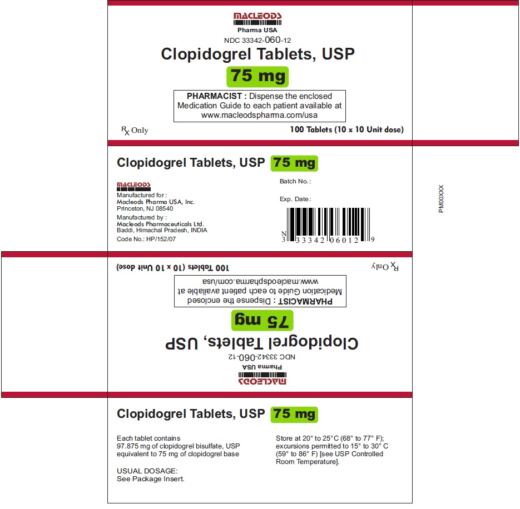 Clopidogrel🏭 Macleods Pharmaceuticals Limited
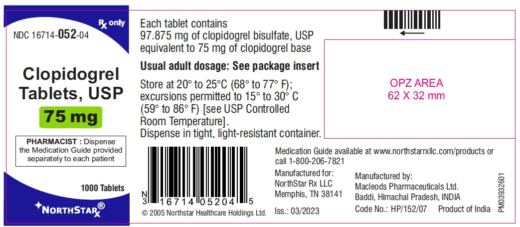 Clopidogrel🏭 Redpharm Drug
✅ What it is used for
- Non-ST-elevation acute coronary syndrome (unstable angina/NSTEMI) to reduce the rate of myocardial infarction and stroke, whether managed medically or with coronary revascularization; given together with aspirin.
- Acute ST-elevation myocardial infarction (STEMI) managed medically, to reduce the rate of MI and stroke; given together with aspirin.
- Recent MI, recent stroke, or established peripheral arterial disease, to reduce the rate of MI and stroke.
🧪 Active ingredient
The active ingredient is clopidogrel (as bisulfate). It is a prodrug converted in the body by liver enzymes, mainly CYP2C19, into an active metabolite that irreversibly binds to P2Y12 receptors on platelets, blocking their activation and aggregation.
🌿 Benefits
- Reduces the risk of myocardial infarction.
- Reduces the risk of stroke.
📝 How to use
- Taken by mouth.
- The dose and duration are set by your doctor or pharmacist and must not be changed on your own.
- Do not stop taking it without talking to your doctor, as stopping early increases the risk of cardiovascular events.
- If you have elective surgery with a major bleeding risk, tell your doctor, who may ask you to stop the medicine 5 days beforehand.
💊 Dosage forms
- 75 mg film-coated tablets, pink to light-pink, round, debossed with "A 9" on one side and plain on the other.
⚠️ Common side effects
- Bleeding is the most commonly reported adverse reaction (including gastrointestinal bleeding and bleeding at puncture sites).
- Nosebleeds (epistaxis).
- Blood in the urine (hematuria).
- Bruising and hematoma.
🚨 Serious — seek medical help
- Serious bleeding, including life-threatening and fatal bleeding and intracranial hemorrhage.
- Thrombotic thrombocytopenic purpura (TTP) has been reported.
- Hypersensitivity reactions such as anaphylaxis.
⛔ Do not use if
- Active pathological bleeding, such as peptic ulcer or intracranial hemorrhage.
- Hypersensitivity (e.g., anaphylaxis) to clopidogrel or any component of the product.
❗ Warnings & precautions
- Boxed warning: reduced antiplatelet effect in patients with two loss-of-function alleles of CYP2C19 (poor metabolizers). Tests are available, and another P2Y12 inhibitor may be considered.
- Increases the risk of bleeding, especially with anticoagulants, other antiplatelet agents, and chronic NSAID use.
- Avoid omeprazole or esomeprazole because they significantly reduce its antiplatelet activity.
- Premature discontinuation increases the risk of cardiovascular events.
- Cross-reactivity among thienopyridines has been reported.
- Avoid neuraxial blockade during use because of the risk of spinal hematoma.
🔄 Drug interactions
- Omeprazole and esomeprazole: significantly reduce antiplatelet activity; avoid concomitant use.
- Strong CYP2C19 inducers such as rifampin: increase active metabolite levels and may raise bleeding risk; avoid.
- Opioids: decrease clopidogrel exposure; consider a parenteral antiplatelet agent.
- NSAIDs, warfarin, SSRIs and SNRIs: increase the risk of bleeding.
- Other antiplatelet agents: additive increase in bleeding risk.
- Repaglinide (a CYP2C8 substrate): plasma concentrations may increase.
🤰 Pregnancy
Available published data and post-marketing surveillance have not identified a drug-associated risk of major birth defects or miscarriage, and no fetotoxicity was seen in animal studies. Therapy should not be withheld from a pregnant woman because of concerns about fetal effects, as MI and stroke are medical emergencies. Use during labor or delivery increases the risk of maternal bleeding; when possible it is discontinued 5 to 7 days beforehand. Always consult your doctor.
🍼 Breastfeeding
There are no data on its presence in human milk or effects on milk production, and no adverse effects on breastfed infants were observed in a small number of post-marketing cases. Rat studies show the drug and/or its metabolites are present in milk. The doctor weighs the benefits of breastfeeding against the mother's need for the drug.
🧒 Children
Safety and effectiveness in pediatric patients have not been established. The CLARINET trial did not show clinical benefit in neonates and infants with cyanotic congenital heart disease palliated with a systemic-to-pulmonary arterial shunt.
👴 Older adults
No dosage adjustment is necessary in elderly patients. Bleeding risk should be monitored.
🌡️ Storage
Store at 20° to 25°C (68° to 77°F); excursions permitted between 15° to 30°C (59° to 86°F).
⏰ Missed dose
The label gives no specific instructions for a missed dose. Ask your doctor or pharmacist, and do not double the dose on your own.
🆘 Overdose
Overdose may cause bleeding complications. Platelet inhibition is irreversible and lasts for the life of the platelet. Seek medical help immediately; platelet transfusion may restore clotting ability.
💰 Price & brands in your area
🏛️ Official price in Palestine — Ministry of Health price list:
| Product | Company | Pack | Price |
|---|---|---|---|
| CLOPIDEX TAB Clopidogrel (bisulfate) 75 mg/tablet | Beit Jala | 30 tab | 40 ₪ |
| PIDOGREL 75 MG TABLETS (30 TAB) Clopidogrel75MG | Pharmacare Company | 30 TABLETS / BOX | 50 ₪ |
| CLOVIX 75 TAB 30 CLOPIDOGREL (AS HYDROGEN SULFATE) 75 MG | BPC | 30 tab | 50 ₪ |
📍 Find the nearest pharmacy
Your location is used only in your browser to show nearby pharmacies — we don't store it.
Open in Google Maps👨⚕️ For healthcare professionals
Mechanism of action
Inhibits platelet activation and aggregation through irreversible binding of its active metabolite to the P2Y12 class of ADP receptors, blocking ADP binding and subsequent GPIIb/IIIa activation. It is a prodrug requiring CYP450 activation, principally CYP2C19. The effect lasts for the platelet lifespan (7 to 10 days); at 75 mg daily, steady-state inhibition is reached between Day 3 and Day 7 with average inhibition of 40% to 60%, and platelet function returns to baseline in about 5 days after discontinuation.
Labeled dosing
ACS: single 300 mg oral loading dose, then 75 mg once daily (without a loading dose, onset is delayed by several days). Recent MI, recent stroke, or established peripheral arterial disease: 75 mg once daily orally without a loading dose. The dose is determined by the prescribing physician.
- Boxed warning: diminished effect in CYP2C19 poor metabolizers; genetic tests are available and an alternative P2Y12 inhibitor should be considered.
- Avoid concomitant omeprazole/esomeprazole and strong CYP2C19 inducers.
- Discontinue 5 days before elective surgery with major bleeding risk.
- Platelet transfusion within 4 hours of the loading dose or 2 hours of the maintenance dose may be less effective.
- Avoid neuraxial blockade during use; when possible, discontinue 5 to 7 days before labor or delivery.
- Patients with moderate or severe renal impairment showed lower (about 25%) inhibition of platelet aggregation.
- No dose adjustment is needed in the elderly.
🎓 Key points for students
- Clopidogrel is a prodrug that requires activation by CYP2C19.
- Mechanism: irreversible binding to the platelet P2Y12 receptor.
- Effect lasts 7 to 10 days (platelet lifespan).
- Key interaction: omeprazole and esomeprazole reduce its efficacy.
- Most serious adverse effects: bleeding and TTP.
- Boxed warning: CYP2C19 poor metabolizers have a reduced effect.
EME runs your whole clinic: appointments with WhatsApp reminders, patient files, finance & inventory, a patient portal and a members-price medical store — with your data isolated and protected.
Try EME free How we protect your data❓ FAQ
What is clopidogrel used for?
It is used to reduce the risk of heart attack and stroke in patients with acute coronary syndrome, a recent heart attack or stroke, or established peripheral arterial disease.
Can I stop taking it on my own?
No. Stopping early increases the risk of cardiovascular events, so talk to your doctor first.
Does it cause bleeding?
Yes, bleeding is the most commonly reported adverse reaction. Tell your doctor about any unusual or severe bleeding.
Can I take it with stomach-acid medicines?
Avoid omeprazole and esomeprazole because they reduce its effectiveness. Ask your doctor or pharmacist about alternatives.
Is it safe in pregnancy?
Available data have not shown a drug-associated risk, but the decision is up to your doctor, and the drug increases bleeding risk during delivery.
⚕️ For education only — not a substitute for advice from your doctor or pharmacist. Do not start or stop any medicine without advice. Source: official FDA drug label via openFDA (2025-07), simplified. Updated: 2026-11-10.