
💊 Citalopram (Citalopram)
Citalopram is an SSRI antidepressant used to treat major depressive disorder in adults. It is taken once daily with or without food, and your doctor sets the dose that is right for you. It carries a boxed warning about increased suicidal thoughts and behaviors in younger patients.
In Arabic: سيتالوبرام
🏷️ Brand names & manufacturers
Packages shown are US-market (DailyMed). Brands available in Palestine are in the price section below. Celexa🏭 Allergan, Inc.
 Citalopram Hydrobromide🏭 Exelan Pharmaceuticals Inc.
 Citalopram🏭 Cipla USA Inc.
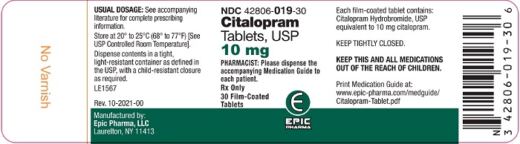 Citalopram🏭 Epic Pharma, LLC
✅ What it is used for
- Treatment of major depressive disorder (MDD) in adults
🧪 Active ingredient
The active ingredient is citalopram (as hydrobromide), a selective serotonin reuptake inhibitor. Its effect is presumed to be related to increased serotonergic activity in the central nervous system.
🌿 Benefits
- Treatment of symptoms of major depressive disorder in adults
📝 How to use
- Taken once daily, with or without food.
- The dose is set by your doctor or pharmacist; do not change it on your own.
- Do not stop suddenly; your doctor will reduce the dose gradually when discontinuing.
- At least 14 days must pass between stopping an MAOI antidepressant and starting citalopram, and vice versa.
💊 Dosage forms
- 10 mg tablets (orange, film-coated, round)
- 20 mg tablets (pink, film-coated, round, scored)
- 40 mg tablets (white, film-coated, round, scored)
⚠️ Common side effects
- Ejaculation disorder (primarily ejaculation delay), the most common reaction
- Nausea
- Dry mouth
- Vomiting
- Dizziness
- Insomnia
- Somnolence
- Agitation
- Asthenia (weakness)
- Sexual dysfunction
🚨 Serious — seek medical help
- Suicidal thoughts or behaviors (especially in younger patients)
- QT prolongation, torsade de pointes, ventricular tachycardia and sudden death
- Serotonin syndrome
- Increased risk of bleeding
- Activation of mania/hypomania
- Seizures
- Angle-closure glaucoma
- Hyponatremia
- Hypersensitivity reactions including angioedema and anaphylaxis
⛔ Do not use if
- Taking MAOIs or within 14 days of stopping them (including linezolid and intravenous methylene blue)
- Taking pimozide
- Known hypersensitivity to citalopram or any inactive ingredient
❗ Warnings & precautions
- Boxed warning: increased risk of suicidal thoughts and behaviors in pediatric and young adult patients; monitor all patients for clinical worsening and suicidality.
- Not approved for use in pediatric patients.
- Avoid in patients with congenital long QT syndrome, bradycardia, hypokalemia or hypomagnesemia, recent acute myocardial infarction, or uncompensated heart failure.
- Monitor electrolytes in patients at high risk for hypokalemia or hypomagnesemia.
- Screen for personal or family history of bipolar disorder, mania, or hypomania before starting.
- Use with caution in patients with seizure disorder.
- Avoid in patients with untreated anatomically narrow angles.
- Adverse reactions may occur on abrupt discontinuation.
🔄 Drug interactions
- MAOIs: contraindicated due to risk of serotonin syndrome.
- Pimozide: contraindicated due to risk of QT prolongation.
- Drugs that prolong the QTc interval: avoid concomitant use.
- CYP2C19 inhibitors: maximum dosage 20 mg daily.
- Other serotonergic drugs (e.g., other SSRIs, SNRIs, triptans, tricyclics, opioids, lithium, buspirone): increased risk of serotonin syndrome.
- Aspirin, NSAIDs, other antiplatelets, warfarin and other anticoagulants: increased risk of bleeding.
🤰 Pregnancy
SSRI use, particularly late in pregnancy, may increase the risk of persistent pulmonary hypertension of the newborn and symptoms of poor neonatal adaptation (respiratory distress, temperature instability, feeding difficulties, hypotonia, tremor, irritability). Exposure in the month before delivery has been associated with a less than 2-fold increase in postpartum hemorrhage risk. Untreated depression in pregnancy also carries risks. Talk to your doctor before use or if you become pregnant.
🍼 Breastfeeding
The label sections provided do not include breastfeeding information; consult your doctor.
🧒 Children
Safety and effectiveness have not been established in pediatric patients and citalopram is not approved for them. Antidepressants increase the risk of suicidal thoughts and behaviors in pediatric patients, and decreased appetite and weight loss have been observed with SSRIs in this group.
👴 Older adults
The maximum recommended dosage in patients over 60 years is 20 mg once daily, as drug exposure and half-life are increased. Elderly patients may be at greater risk of hyponatremia.
🌡️ Storage
Store at 20° to 25°C (68° to 77°F) in a tight, light-resistant container with a child-resistant closure, out of the reach of children.
⏰ Missed dose
The label sections provided do not address missed doses; ask your doctor or pharmacist and do not double the dose on your own.
🆘 Overdose
Overdose may cause seizures (which may be delayed), altered mental status including coma, cardiovascular toxicity (QRS and QTc prolongation, arrhythmias, torsade de pointes), and serotonin syndrome. Seek emergency medical help or contact a Poison Center immediately.
💰 Price & brands in your area
Local prices are currently available for Palestine; more countries are coming. Ask your pharmacist for local price and alternatives.
📍 Find the nearest pharmacy
Your location is used only in your browser to show nearby pharmacies — we don't store it.
Open in Google Maps👨⚕️ For healthcare professionals
Mechanism of action
Mechanism is unclear but presumed to involve potentiation of CNS serotonergic activity via inhibition of neuronal serotonin reuptake. It is a selective SSRI with minimal effects on norepinephrine and dopamine reuptake.
Labeled dosing
Adult initial dosage is 20 mg once daily, which may be increased to a maximum of 40 mg once daily after at least one week. Doses above 40 mg are not recommended due to QT prolongation risk. The maximum is 20 mg daily for patients over 60 years, hepatic impairment, CYP2C19 poor metabolizers, and with concomitant CYP2C19 inhibitors. Individual dosing is determined by the physician or pharmacist.
- Screen for bipolar disorder history before initiating.
- Discontinue if persistent QTc measurements exceed 500 ms.
- Taper gradually when discontinuing.
- Terminal half-life is about 35 hours, steady state is reached within about one week, and absolute bioavailability is about 80% and unaffected by food.
🎓 Key points for students
- Class: selective serotonin reuptake inhibitor (SSRI).
- Indication: major depressive disorder in adults.
- Key serious risks: QT prolongation/torsade de pointes and serotonin syndrome.
- Contraindications: MAOIs, pimozide, hypersensitivity.
- Maximum 40 mg daily; 20 mg in the elderly (>60), hepatic impairment, and CYP2C19 poor metabolizers.
- Boxed warning: suicidal thoughts and behaviors in young patients.
- Most common adverse reaction: ejaculation disorder.
EME runs your whole clinic: appointments with WhatsApp reminders, patient files, finance & inventory, a patient portal and a members-price medical store — with your data isolated and protected.
Try EME free How we protect your data❓ FAQ
What is citalopram used for?
It is used to treat major depressive disorder in adults.
Can I stop citalopram suddenly?
No. The dose should be reduced gradually under your doctor's guidance because abrupt discontinuation may cause adverse reactions.
Should I take it with food?
It is taken once daily and may be taken with or without food.
Is it safe for children?
No. It is not approved for pediatric patients, and antidepressants raise the risk of suicidal thoughts and behaviors in young people.
What are the main side effects?
Common ones include ejaculation disorder, nausea, dry mouth, dizziness, insomnia and somnolence. Contact your doctor right away if you have suicidal thoughts, palpitations, or fainting.
⚕️ For education only — not a substitute for advice from your doctor or pharmacist. Do not start or stop any medicine without advice. Source: official FDA drug label via openFDA (2024-10), simplified. Updated: 2026-11-11.