
💊 Carvedilol (Carvedilol)
Carvedilol is a prescription alpha-/beta-adrenergic blocking agent used to treat chronic heart failure, left ventricular dysfunction after a heart attack, and high blood pressure. The dose is set by your doctor and monitored closely while it is increased step by step.
In Arabic: كارفيديلول
🏷️ Brand names & manufacturers
Packages shown are US-market (DailyMed). Brands available in Palestine are in the price section below.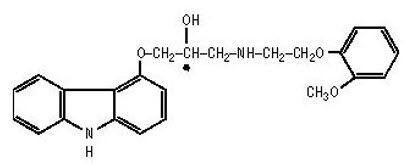 Coreg🏭 Waylis Therapeutics LLC
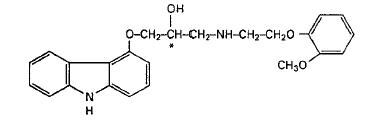 Carvedilol🏭 QPharma Inc
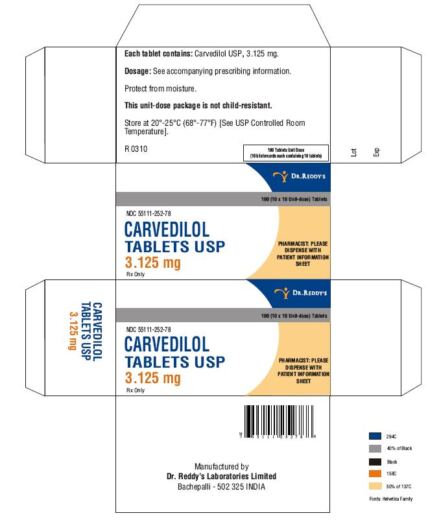 Carvedilol🏭 Dr. Reddy's Laboratories Limited
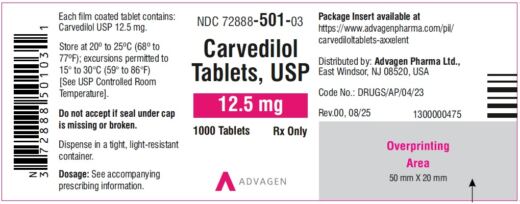 Carvedilol🏭 Advagen Pharma Limited
✅ What it is used for
- Treatment of mild-to-severe chronic heart failure of ischemic or cardiomyopathic origin, usually in addition to diuretics, ACE inhibitors, and digitalis, to increase survival and reduce the risk of hospitalization
- To reduce cardiovascular mortality in clinically stable patients who have survived the acute phase of a myocardial infarction and have a left ventricular ejection fraction of 40% or less (with or without symptomatic heart failure)
- Management of essential hypertension, alone or with other blood pressure medicines, especially thiazide-type diuretics
🧪 Active ingredient
The active ingredient is carvedilol, a nonselective beta-adrenergic blocker with alpha-1 blocking activity. It slows the heart rate, lowers blood pressure, and reduces the workload on the heart.
🌿 Benefits
- Increases survival and reduces hospitalization risk in heart failure
- Reduces cardiovascular death after myocardial infarction with left ventricular dysfunction
- Helps control high blood pressure
- Improved left ventricular ejection fraction in heart failure clinical trials
📝 How to use
- The dose and duration are set by your doctor or pharmacist; do not change them on your own
- Take the tablets with food to slow absorption and reduce dizziness on standing
- Treatment usually starts at a low dose that is increased gradually over weeks depending on tolerance
- Dizziness or lightheadedness may occur within the first hour after dosing when starting or increasing the dose; avoid driving or hazardous tasks during this time
- Do not stop suddenly; whenever possible it should be stopped gradually over 1 to 2 weeks under medical supervision
💊 Dosage forms
- Film-coated tablets: 3.125 mg, 6.25 mg, 12.5 mg, 25 mg
⚠️ Common side effects
- Dizziness
- Fatigue
- Low blood pressure
- Diarrhea
- High blood sugar (hyperglycemia)
- Weakness (asthenia)
- Slow heart rate (bradycardia)
- Weight increase
🚨 Serious — seek medical help
- Severe slow heart rate (below 55 beats per minute), which may require a dose reduction
- Severe low blood pressure or fainting
- Worsening heart failure or fluid retention
- Worsening angina, heart attack, or abnormal heart rhythms after abrupt discontinuation
- Serious allergic reactions (e.g., Stevens-Johnson syndrome, anaphylaxis, angioedema)
- Bronchospasm in some patients
⛔ Do not use if
- Bronchial asthma or related bronchospastic conditions
- Second- or third-degree AV block
- Sick sinus syndrome
- Severe bradycardia (unless a permanent pacemaker is in place)
- Cardiogenic shock or decompensated heart failure requiring intravenous inotropic therapy
- Severe hepatic impairment
- History of serious hypersensitivity reaction to any component or to other medications containing carvedilol
❗ Warnings & precautions
- Do not stop abruptly, especially if you have coronary artery disease
- May cause bradycardia, hypotension, worsening heart failure or fluid retention; dose reduction may be needed
- Beta-blockers should generally be avoided in non-allergic bronchospasm (e.g., chronic bronchitis, emphysema); if necessary, use with caution at the lowest effective dose
- Diabetes: monitor blood glucose, as it may mask symptoms of low blood sugar or worsen high blood sugar
- Avoid driving or hazardous tasks when starting or increasing the dose because of dizziness
🔄 Drug interactions
- CYP2D6 inhibitors (e.g., quinidine, fluoxetine, paroxetine, propafenone) may increase carvedilol levels; rifampin may decrease them
- Catecholamine-depleting drugs (e.g., reserpine, MAO inhibitors) and clonidine may increase the risk of hypotension and severe bradycardia
- Cyclosporine and digoxin levels may increase
- Digitalis glycosides and beta-blockers both slow AV conduction and heart rate, increasing the risk of bradycardia
- Amiodarone may increase carvedilol levels, further slowing heart rate or conduction
- Verapamil- or diltiazem-type calcium channel blockers may affect ECG and/or blood pressure
- Insulin and oral antidiabetic drugs: their effect may be enhanced
- Tell your doctor or pharmacist about all medicines you take
🤰 Pregnancy
Available data are insufficient to determine drug-associated risks to fetal development. Beta-blocker use in the third trimester may increase the risk of hypotension, bradycardia, hypoglycemia, and respiratory depression in the newborn. Animal studies showed no adverse developmental outcomes at clinically relevant doses. Consult your doctor before using during pregnancy.
🍼 Breastfeeding
There are no data on carvedilol in human milk, its effects on the breastfed infant, or on milk production; it is present in the milk of lactating rats. The benefits of breastfeeding should be weighed against the mother's clinical need for the drug and any potential effects on the infant. Consult your doctor.
🧒 Children
Effectiveness in patients younger than 18 years has not been established. In a trial of children with chronic heart failure, there was no significant effect of treatment on clinical outcomes after 8 months.
👴 Older adults
No overall differences in safety or effectiveness were observed between older and younger patients, except dizziness in hypertensive patients (8.8% in the elderly vs 6% in younger patients); greater sensitivity in some older individuals cannot be ruled out.
🌡️ Storage
Store below 30°C (86°F), protect from moisture, keep in a tight, light-resistant container, and keep out of reach of children.
⏰ Missed dose
The label does not give specific instructions for a missed dose; ask your doctor or pharmacist and do not double the dose on your own.
🆘 Overdose
Overdose may cause severe low blood pressure, slow heart rate, cardiac insufficiency, cardiogenic shock, and cardiac arrest; breathing problems, bronchospasm, vomiting, loss of consciousness, and seizures may also occur. Seek emergency medical care or contact a poison control center immediately; treatment is given under intensive-care conditions.
💰 Price & brands in your area
Local prices are currently available for Palestine; more countries are coming. Ask your pharmacist for local price and alternatives.
📍 Find the nearest pharmacy
Your location is used only in your browser to show nearby pharmacies — we don't store it.
Open in Google Maps👨⚕️ For healthcare professionals
Mechanism of action
Racemic mixture: nonselective beta-adrenoreceptor blocking activity resides in the S(-) enantiomer, while alpha-1 adrenergic blocking activity is present in both R(+) and S(-) enantiomers at equal potency. No intrinsic sympathomimetic activity.
Labeled dosing
Take tablets with food. Heart failure: start 3.125 mg twice daily for 2 weeks, then increase to 6.25, 12.5, and 25 mg twice daily at intervals of at least 2 weeks; maintain lower doses if higher doses are not tolerated. LV dysfunction after MI: start 6.25 mg twice daily and increase to 12.5 mg then target 25 mg twice daily after 3 to 10 days; a lower start (3.125 mg) and slower titration may be used. Hypertension: start 6.25 mg twice daily, increasing if needed to 12.5 mg then 25 mg twice daily over 1 to 2 week intervals. Dosage must be individualized and monitored by a physician.
- In heart failure, minimize fluid retention before initiation; treat fluid retention by increasing the diuretic dose
- Reduce the dose if heart rate falls below 55 beats per minute
- Do not increase the dose until symptoms of worsening heart failure or vasodilation have stabilized
- Separating the dosing time from the ACE inhibitor or temporarily reducing the ACE inhibitor dose may help with vasodilatory symptoms
- When stopping concomitant clonidine, discontinue the beta-blocker first
- Taper over 1 to 2 weeks whenever possible; reinstitute promptly if angina worsens
🎓 Key points for students
- Carvedilol is a nonselective alpha-/beta-blocker, a racemic mixture (beta-blockade in S(-); alpha-1 blockade in both enantiomers)
- Indications: chronic heart failure, LV dysfunction post-MI (EF ≤ 40%), and essential hypertension
- Key contraindications: asthma, second/third-degree AV block, sick sinus syndrome, severe bradycardia, cardiogenic shock, severe hepatic impairment
- Abrupt cessation can cause angina exacerbation, MI, and ventricular arrhythmias
- May mask hypoglycemia symptoms and worsen hyperglycemia
- Dizziness is the most common adverse event in heart failure and hypertension
EME runs your whole clinic: appointments with WhatsApp reminders, patient files, finance & inventory, a patient portal and a members-price medical store — with your data isolated and protected.
Try EME free How we protect your data❓ FAQ
What is carvedilol used for?
It is used to treat chronic heart failure, to reduce cardiovascular death after a heart attack with weakened left ventricular function, and to manage high blood pressure.
Should I take carvedilol with food?
Yes. It should be taken with food to slow absorption and reduce dizziness on standing.
Can I stop carvedilol suddenly?
No. Stopping suddenly may worsen angina or cause a heart attack or abnormal heart rhythms. It should be stopped gradually under your doctor's supervision.
What are the common side effects?
Dizziness, fatigue, low blood pressure, diarrhea, high blood sugar, weakness, slow heart rate, and weight increase.
Is carvedilol suitable for people with asthma?
No. Bronchial asthma and related bronchospastic conditions are contraindications.
Does it affect people with diabetes?
It may mask symptoms of low blood sugar or worsen high blood sugar, so glucose monitoring is needed.
⚕️ For education only — not a substitute for advice from your doctor or pharmacist. Do not start or stop any medicine without advice. Source: official FDA drug label via openFDA (2026-05), simplified. Updated: 2026-11-11.