
💊 Apixaban (Eliquis)
Apixaban (Eliquis) is an anticoagulant from the factor Xa inhibitor class. It is used to reduce the risk of stroke and systemic embolism in nonvalvular atrial fibrillation and to prevent and treat venous blood clots. Your doctor or pharmacist determines the right dose for you.
In Arabic: أبيكسابان
🏷️ Brand names & manufacturers
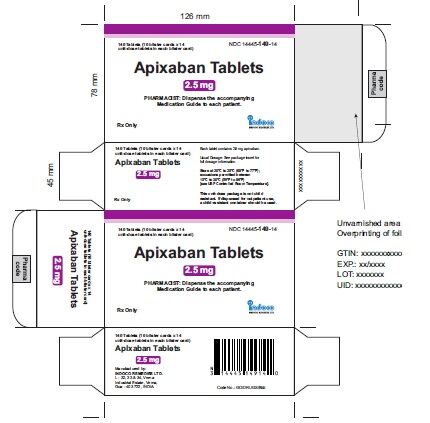 Apixaban🏭 Indoco Remedies LimitedDailyMed
✅ What it is used for
- Reduce the risk of stroke and systemic embolism in adults with nonvalvular atrial fibrillation
- Prevent deep vein thrombosis (DVT), which may lead to pulmonary embolism (PE), in adults after hip or knee replacement surgery
- Treat DVT and PE in adults
- Reduce the risk of recurrent DVT and PE in adults after initial therapy
- Treat venous thromboembolism (VTE) and reduce the risk of recurrent VTE in pediatric patients from birth and older after at least 5 days of initial anticoagulant treatment
🧪 Active ingredient
The active substance is apixaban, a selective factor Xa inhibitor that decreases thrombin generation and blood clot development.
🌿 Benefits
- Reduces stroke risk in nonvalvular atrial fibrillation
- Helps prevent venous clots after joint replacement surgery
- Treats venous clots and pulmonary embolism and lowers the risk of recurrence
📝 How to use
- Taken by mouth, in most cases twice daily, as prescribed by your doctor
- The dose and duration are set by your doctor or pharmacist and should not be changed without advice
- Do not stop the medicine suddenly without your doctor's approval, as this increases the risk of blood clots
- Children's doses are based on body weight and are set by the doctor
💊 Dosage forms
- Tablets 2.5 mg and 5 mg
- Tablets for oral suspension 0.5 mg (pediatric)
- Powder for oral suspension 0.15 mg in a capsule (pediatric)
⚠️ Common side effects
- The most common adverse reactions in adults are related to bleeding
- In children: headache, vomiting, and excessive menstrual bleeding
🚨 Serious — seek medical help
- Serious, potentially fatal bleeding
- Signs of blood loss that should be reported immediately or require an emergency room visit
- Epidural or spinal hematoma that may cause long-term or permanent paralysis
- Severe hypersensitivity reactions such as anaphylaxis
⛔ Do not use if
- Active pathological bleeding
- Severe hypersensitivity to apixaban (e.g., anaphylactic reactions)
❗ Warnings & precautions
- Premature discontinuation without alternative anticoagulation increases the risk of thrombotic events; an increased rate of stroke was seen when switching from Eliquis to warfarin
- Risk of epidural/spinal hematoma with neuraxial anesthesia or spinal puncture, increased by indwelling epidural catheters, concomitant drugs affecting hemostasis, a history of traumatic or repeated punctures, or spinal deformity or surgery
- Use not recommended in patients with prosthetic heart valves
- Use not recommended in patients with triple positive antiphospholipid syndrome
- Use not recommended in severe hepatic impairment
- A reversal agent for apixaban's anti-factor Xa activity (andexanet alfa) is available for adults; the effect can persist for at least 24 hours after the last dose
🔄 Drug interactions
- Combined P-gp and strong CYP3A4 inhibitors (e.g., ketoconazole, itraconazole, ritonavir) raise apixaban levels; the dose is reduced or co-use avoided depending on the dose
- Combined P-gp and strong CYP3A4 inducers (e.g., rifampin, carbamazepine, phenytoin, St. John's wort) lower apixaban levels and should be avoided
- Aspirin, other antiplatelets, other anticoagulants, heparin, thrombolytics, SSRIs, SNRIs, and NSAIDs increase bleeding risk
- Clarithromycin: no dose adjustment needed per pharmacokinetic data
- Tell your doctor or pharmacist about all medicines and herbal products you take
🤰 Pregnancy
Use is not recommended during pregnancy. Data in pregnant women are limited, and treatment may increase the risk of bleeding during pregnancy and delivery. Consult your doctor.
🍼 Breastfeeding
Breastfeeding is not advised during treatment.
🧒 Children
Safety and effectiveness are established for treating VTE and reducing the risk of recurrent VTE in pediatric patients from birth and older. Dosing is weight-based and set by the doctor.
👴 Older adults
No clinically significant differences in safety or effectiveness were observed across age groups. In atrial fibrillation, the dose is 2.5 mg twice daily when at least two apply: age 80 years or older, body weight 60 kg or less, or serum creatinine 1.5 mg/dL or more.
🌡️ Storage
Store at 20°C to 25°C (68°F to 77°F); excursions permitted between 15°C and 30°C (59°F to 86°F).
⏰ Missed dose
The provided label text does not give missed-dose instructions; ask your doctor or pharmacist and do not double the dose on your own.
🆘 Overdose
Overdose increases the risk of bleeding. Activated charcoal may be useful. A reversal agent for anti-factor Xa activity is available. Seek medical help immediately or contact a poison control center.
💰 Price & brands in your area
🏛️ Official price in Palestine — Ministry of Health price list:
| Product | Company | Pack | Price |
|---|---|---|---|
| Quest 2.5 (30 tab) Apixaban 2.5mg | Pharmacare Company | 30 tab | 90 ₪ |
| Quest 5 (30 tab) Apixaban 5mg | Pharmacare Company | 30 tab | 100 ₪ |
| IXABAN 2.5 MG 60 TAB. APIXABAN 2.5 MG / TAB | BPC | 60 TAB | 120 ₪ |
| QUEST 2.5MG TABLET (60 tab) APIXABAN | Pharmacare Company | 60 tabs | 170 ₪ |
| IXABAN 5 MG 60 TAB. APIXABAN 5 MG / TAB | BPC | 60 TAB | 190 ₪ |
| QUEST 5MG TABLET (60 tab) APIXABAN | Pharmacare Company | 60 F.C.Tab | 190 ₪ |
📍 Find the nearest pharmacy
Your location is used only in your browser to show nearby pharmacies — we don't store it.
Open in Google Maps👨⚕️ For healthcare professionals
Mechanism of action
Selective factor Xa inhibitor that does not require antithrombin III; inhibits free and clot-bound FXa and prothrombinase activity, decreasing thrombin generation and thrombus development. No direct effect on platelet aggregation.
Labeled dosing
Nonvalvular AF: 5 mg twice daily; 2.5 mg twice daily if at least two of: age ≥80 years, weight ≤60 kg, serum creatinine ≥1.5 mg/dL. Post hip/knee replacement prophylaxis: 2.5 mg twice daily starting 12–24 hours after surgery, for 35 days (hip) or 12 days (knee). DVT/PE treatment: 10 mg twice daily for 7 days, then 5 mg twice daily. Reduction of recurrent DVT/PE: 2.5 mg twice daily after at least 6 months of treatment. Pediatric dosing is weight-based. Dose is determined by the prescriber.
- Boxed warning: premature discontinuation increases thrombotic events; spinal/epidural hematoma
- PT, INR, and aPTT are not useful for monitoring the anticoagulant effect
- With combined P-gp and strong CYP3A4 inhibitors: reduce dose by 50% in patients on 5 or 10 mg twice daily; avoid with 2.5 mg twice daily
- Avoid combined P-gp and strong CYP3A4 inducers
- Use not recommended with prosthetic heart valves, triple positive antiphospholipid syndrome, or severe hepatic impairment
🎓 Key points for students
- Apixaban is a direct factor Xa inhibitor and does not require antithrombin III
- Main adverse effect is bleeding; andexanet alfa is the reversal agent for adults
- Premature discontinuation without alternative anticoagulation raises thrombotic and stroke risk
- Boxed warning: spinal/epidural hematoma with neuraxial anesthesia
- Key interactions: strong P-gp/CYP3A4 inhibitors and inducers, antiplatelets, NSAIDs
- AF dose is reduced to 2.5 mg twice daily when two of three criteria (age, weight, creatinine) are met
EME runs your whole clinic: appointments with WhatsApp reminders, patient files, finance & inventory, a patient portal and a members-price medical store — with your data isolated and protected.
Try EME free How we protect your data❓ FAQ
What is apixaban used for?
It is used to reduce stroke risk in nonvalvular atrial fibrillation, prevent venous clots after hip or knee replacement, treat DVT and PE and reduce their recurrence, and treat VTE in children after initial therapy.
Can I stop taking it on my own?
No. Stopping early without alternative anticoagulation raises the risk of blood clots and stroke. Always consult your doctor.
What is the most important side effect?
Bleeding, which can be serious. Report signs of blood loss immediately or go to an emergency room.
Can I take aspirin or pain relievers with it?
Aspirin and NSAIDs increase bleeding risk when used with apixaban, so ask your doctor or pharmacist before taking them.
Is it safe in pregnancy and breastfeeding?
Use is not recommended during pregnancy, and breastfeeding is not advised during treatment. Discuss with your doctor.
⚕️ For education only — not a substitute for advice from your doctor or pharmacist. Do not start or stop any medicine without advice. Source: official FDA drug label via openFDA (2026-09), simplified. Updated: 2026-11-10.