
💊 Tranexamic acid (Tranexamic Acid)
Tranexamic acid is an oral antifibrinolytic medicine used to treat cyclic heavy menstrual bleeding in females of reproductive potential. It is available by prescription and should be used under a doctor's supervision.
In Arabic: حمض الترانيكساميك
🏷️ Brand names & manufacturers
Packages shown are US-market (DailyMed). Brands available in Palestine are in the price section below.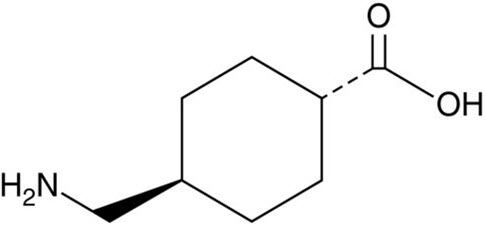 Cyklokapron🏭 Pfizer Laboratories Div Pfizer Inc
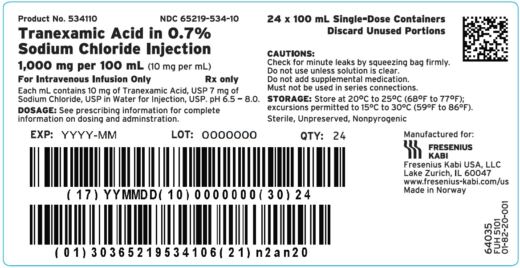 Tranexamic Acid In Sodium Chloride🏭 HP Halden Pharma AS
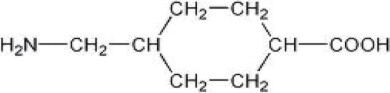 Tranexamic Acid🏭 Avenacy, Inc.
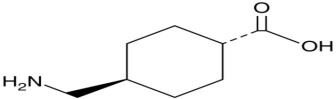 Tranexamic Acid🏭 Sagent Pharmaceuticals
 Tranexamic Acid🏭 Nordic Pharma, Inc.
✅ What it is used for
- Treatment of cyclic heavy menstrual bleeding in females of reproductive potential
🧪 Active ingredient
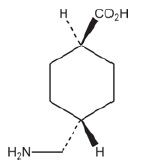
The active ingredient is tranexamic acid, a synthetic lysine amino acid derivative. It reduces the breakdown of fibrin (which stabilizes blood clots) by plasmin, helping preserve clots and reduce bleeding.
🌿 Benefits
- Reduces cyclic heavy menstrual bleeding
📝 How to use
- The dose and duration are set by your doctor or pharmacist; do not change them without consulting them
- Used for a maximum of 5 days during monthly menstruation
- Tablets may be taken with or without food
- Swallow tablets whole; do not chew or break apart
- People with kidney impairment may need a lower dose determined by the doctor
💊 Dosage forms
- 650 mg tablets: white to off-white, oval-shaped, uncoated, debossed with "A41" on one side
⚠️ Common side effects
- Headache
- Sinus and nasal symptoms
- Back pain
- Abdominal pain
- Musculoskeletal pain
- Joint pain
- Muscle cramps
- Migraine
- Anemia
- Fatigue
🚨 Serious — seek medical help
- Venous or arterial blood clots, including retinal artery or vein occlusion
- Visual or ocular symptoms (stop the medicine immediately and see an eye specialist)
- Severe allergic reaction (stop the medicine and seek immediate medical attention)
- Ligneous conjunctivitis
- Cerebral edema and cerebral infarction in patients with subarachnoid hemorrhage
⛔ Do not use if
- Concomitant use of combined hormonal contraceptives
- Active thromboembolic disease (e.g., deep vein thrombosis, pulmonary embolism, cerebral thrombosis)
- History of thrombosis or thromboembolism, including retinal vein or artery occlusion
- Intrinsic risk of thrombosis (e.g., thrombogenic valvular disease, thrombogenic cardiac rhythm disease, or hypercoagulopathy)
- Known hypersensitivity to tranexamic acid
❗ Warnings & precautions
- Endometrial pathology that can cause heavy menstrual bleeding should be excluded before prescribing
- Report any visual or eye symptoms promptly and stop the medicine
- Clot risk may be further increased in women who are obese or smoke, especially smokers over 35 using hormonal contraception
- In case of a severe allergic reaction, stop the medicine and seek immediate medical help
- Patients with kidney impairment require a lower dose
🔄 Drug interactions
- Combined hormonal contraceptives: contraindicated due to increased thrombotic risk
- Factor IX complex concentrates or anti-inhibitor coagulant concentrates: not recommended due to possible increased risk of thrombosis
- All-trans retinoic acid (oral tretinoin): not recommended in acute promyelocytic leukemia due to possible exacerbation of its procoagulant effect
- Tissue plasminogen activators: may decrease the efficacy of both; discontinue tranexamic acid if these are needed
- No formal drug-drug interaction studies were conducted; tell your doctor about all medicines you take
🤰 Pregnancy
This medicine is not indicated for use in pregnant women. There are no available data to evaluate the risk of birth defects, miscarriage, or adverse outcomes, and tranexamic acid crosses the placenta. Animal studies in rats did not identify adverse developmental outcomes. Consult your doctor.
🍼 Breastfeeding
Tranexamic acid is present in breast milk at a concentration of about one hundredth of the corresponding serum concentration. Consult your doctor before use while breastfeeding.
🧒 Children
The medicine is indicated for females of reproductive potential. Efficacy is expected to be the same for post-menarchal females under 17 as for those 17 and older. It is not indicated before menarche.
👴 Older adults
Not intended for use by postmenopausal women.
🌡️ Storage
Store at room temperature 25°C (77°F); excursions permitted between 15°C and 30°C (59°F to 86°F).
⏰ Missed dose
The label does not provide information on missed doses. Follow your doctor's or pharmacist's instructions and do not double the dose without consulting them.
🆘 Overdose
Symptoms of overdose may include nausea, vomiting, diarrhea; low blood pressure (e.g., symptoms on standing); blood clots; visual impairment; mental status changes; myoclonus; or rash. There is no specific treatment; supportive measures are used. Seek medical help immediately.
💰 Price & brands in your area
🏛️ Official price in Palestine — Ministry of Health price list:
| Product | Company | Pack | Price |
|---|---|---|---|
| HEXAKAPRON Amp 500 mg/ml Tranexamic Acid | Teva | 10 Amp | 49 ₪ |
📍 Find the nearest pharmacy
Your location is used only in your browser to show nearby pharmacies — we don't store it.
Open in Google Maps👨⚕️ For healthcare professionals
Mechanism of action
A synthetic lysine derivative that occupies lysine binding sites on plasminogen/plasmin, preventing binding to fibrin and its dissolution, thereby preserving fibrin matrix structure. Antifibrinolytic effects are mediated by reversible interactions at multiple binding sites within plasminogen.
Labeled dosing
General adult dosing with normal renal function: 1300 mg orally three times daily (3900 mg/day) for a maximum of 5 days during monthly menstruation, with or without food; swallow tablets whole. Renal impairment by serum creatinine: above 1.4 to 2.8 mg/dL: 1300 mg twice daily; above 2.8 to 5.7: 1300 mg once daily; above 5.7: 650 mg once daily. The dose is set by the doctor or pharmacist.
- Exclude endometrial pathology before prescribing
- Contraindications: combined hormonal contraceptives, active or prior thromboembolic disease, hypersensitivity
- With visual/ocular symptoms: discontinue immediately and refer for complete ophthalmic evaluation including dilated retinal exam
- No dose adjustment needed in hepatic impairment
- Discontinue if tissue plasminogen activators are required
- To report suspected adverse reactions, contact i3 Pharmaceuticals at 1-844-874-7353 or FDA at 1-800-FDA-1088
🎓 Key points for students
- Synthetic lysine-derived antifibrinolytic
- Occupies plasminogen lysine binding sites to prevent fibrin binding
- Indication: cyclic heavy menstrual bleeding in females of reproductive potential
- Key contraindications: combined hormonal contraceptives and thromboembolic disease
- Key warning: thromboembolism including retinal vessel occlusion
- Dose is reduced in renal impairment based on serum creatinine
EME runs your whole clinic: appointments with WhatsApp reminders, patient files, finance & inventory, a patient portal and a members-price medical store — with your data isolated and protected.
Try EME free How we protect your data❓ FAQ
What is tranexamic acid used for?
It is used to treat cyclic heavy menstrual bleeding in females of reproductive potential.
How long is it taken?
For a maximum of 5 days during menstruation; the dose is set by your doctor or pharmacist.
Can it be used with birth control pills?
No. It is contraindicated with combined hormonal contraceptives because it may increase the risk of blood clots.
What should I do if I have vision problems?
Stop the medicine immediately and see an eye specialist to rule out retinal vessel occlusion.
Can it be used during pregnancy?
It is not indicated for use in pregnant women. Consult your doctor.
Should it be taken with food?
It may be taken with or without food, and tablets should be swallowed whole without chewing.
⚕️ For education only — not a substitute for advice from your doctor or pharmacist. Do not start or stop any medicine without advice. Source: official FDA drug label via openFDA (2026-06), simplified. Updated: 2026-11-15.