
💊 Mebendazole (Vermox)
Mebendazole is an anthelmintic used to treat gastrointestinal infections caused by roundworm (Ascaris lumbricoides) and whipworm (Trichuris trichiura) in patients one year of age and older. It is taken as a chewable tablet, usually as a single dose. Your doctor or pharmacist decides the dose that is right for you.
In Arabic: ميبendazole (ميبيندازول)
🏷️ Brand names & manufacturers
 Vermox🏭 Janssen Pharmaceuticals, Inc.DailyMed
✅ What it is used for
- Treatment of gastrointestinal infection with roundworm (Ascaris lumbricoides)
- Treatment of gastrointestinal infection with whipworm (Trichuris trichiura)
- For patients one year of age and older
🧪 Active ingredient
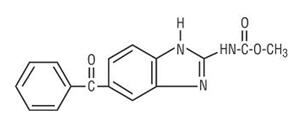
Mebendazole is a benzimidazole anthelmintic. After an oral dose, most of it stays in the gastrointestinal tract, where it acts locally against the worms.
🌿 Benefits
- Treats roundworm and whipworm infections of the gut
- Usually a single dose
- Can be taken with or without food
📝 How to use
- Your doctor or pharmacist sets the dose; do not change it yourself
- Per the label, the usual dose is one 500 mg tablet taken once
- Chew the tablet completely before swallowing; do not swallow it whole
- If chewing is difficult: place the tablet in a spoon with about 2–3 mL of water; within 2 minutes it becomes a soft mass that can be swallowed
- Can be taken with or without food
💊 Dosage forms
- Chewable tablet 500 mg (round, flat, white to yellowish)
⚠️ Common side effects
- Loss of appetite
- Abdominal pain
- Diarrhea
- Gas (flatulence)
- Nausea
- Vomiting
- Rash
🚨 Serious — seek medical help
- Convulsions (reported in infants under 1 year)
- Neutropenia and agranulocytosis (at higher doses and longer durations)
- Stevens-Johnson syndrome / toxic epidermal necrolysis (notably with metronidazole)
- Severe allergic reactions including angioedema and anaphylaxis
- Hepatitis and abnormal liver tests
- Glomerulonephritis
- Hair loss (alopecia)
⛔ Do not use if
- Known hypersensitivity to the drug or any of its ingredients
❗ Warnings & precautions
- Convulsions have been reported in infants under 1 year; safety and effectiveness are not established in this group
- Monitor blood counts if used at higher doses or for prolonged duration
- Avoid use with metronidazole because of the risk of serious skin reactions
- Seek medical help right away for severe rash, swelling, or difficulty breathing
🔄 Drug interactions
- Metronidazole: avoid concomitant use due to the risk of Stevens-Johnson syndrome/toxic epidermal necrolysis
🤰 Pregnancy
Published studies have not reported a clear association between mebendazole and major birth defects or miscarriage, but they cannot rule out risk. Animal studies showed adverse developmental effects. Untreated helminth infection in pregnancy carries risks for mother and fetus. Consult your doctor before use.
🍼 Breastfeeding
The label text provided does not include breastfeeding information; consult your doctor or pharmacist.
🧒 Children
Safety and effectiveness are established in children 1 to 16 years of age. They have not been established under 1 year, and convulsions have been reported in this age group.
👴 Older adults
Clinical studies did not include enough subjects aged 65 and older to determine whether they respond differently from younger subjects.
🌡️ Storage
Store below 30°C with the container tightly closed. Discard unused tablets 1 month after first opening the bottle, and write the discard date on the label when first opened.
⏰ Missed dose
It is usually taken as a single dose; if you did not take it as directed, ask your doctor or pharmacist.
🆘 Overdose
With doses substantially higher than recommended, gastrointestinal symptoms may occur. With high or prolonged dosing, alopecia, reversible transaminase elevations, hepatitis, agranulocytosis, neutropenia, and glomerulonephritis have been reported. There is no specific antidote; seek medical help or a poison center promptly.
💰 Price & brands in your area
Local prices are currently available for Palestine; more countries are coming. Ask your pharmacist for local price and alternatives.
📍 Find the nearest pharmacy
Your location is used only in your browser to show nearby pharmacies — we don't store it.
Open in Google Maps👨⚕️ For healthcare professionals
Mechanism of action
Mebendazole is a benzimidazole anthelmintic. After oral dosing most of the drug remains in the GI tract and acts locally.
Labeled dosing
Adults and patients one year and older: one 500 mg chewable tablet as a single dose, chewed completely before swallowing, with or without food.
- Plasma protein binding 90–95%; volume of distribution 1–2 L/kg
- Extensively metabolized by the liver; impaired hepatic function, metabolism, or biliary elimination may raise plasma levels
- Apparent half-life 3–6 hours; <2% excreted in urine, remainder in feces
- A high-fat meal increases bioavailability
- Monitor blood counts with higher doses or prolonged use
🎓 Key points for students
- Benzimidazole class; pharmacologic class: anthelmintic
- Indicated for Ascaris lumbricoides and Trichuris trichiura
- Avoid combination with metronidazole (SJS/TEN)
- Hematologic effects (neutropenia, agranulocytosis) linked to high doses and long durations
- Convulsions reported in infants under 1 year
EME runs your whole clinic: appointments with WhatsApp reminders, patient files, finance & inventory, a patient portal and a members-price medical store — with your data isolated and protected.
Try EME free How we protect your data❓ FAQ
What is mebendazole used for?
Treating gastrointestinal infections with roundworm and whipworm in patients one year and older.
How is the tablet taken?
Chew it completely before swallowing, with or without food. Your doctor sets the dose.
Is it suitable for infants?
No; safety and effectiveness are not established under 1 year and convulsions have been reported.
Can it be taken with metronidazole?
Concomitant use should be avoided because of the risk of serious skin reactions.
What are the main side effects?
Loss of appetite, abdominal pain, diarrhea, gas, nausea, vomiting, and rash.
⚕️ For education only — not a substitute for advice from your doctor or pharmacist. Do not start or stop any medicine without advice. Source: official FDA drug label via openFDA (2021-10), simplified. Updated: 2026-11-10.