
💊 Haloperidol (Haloperidol)
Haloperidol is an oral medicine used to manage the manifestations of psychotic disorders and to control tics and vocal utterances of Tourette's Disorder. The dose is individualized by the doctor, and it should only be used under medical supervision.
In Arabic: هالوبيريدول
🏷️ Brand names & manufacturers
Packages shown are US-market (DailyMed). Brands available in Palestine are in the price section below.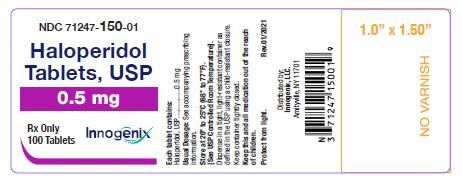 Haloperidol🏭 Innogenix, Inc.
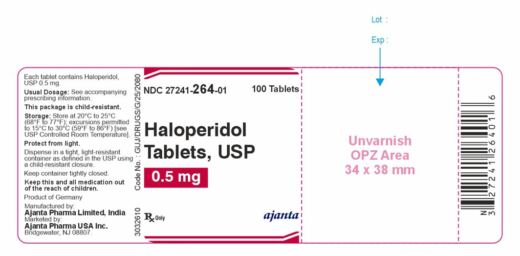 Haloperidol🏭 Ajanta Pharma USA Inc.
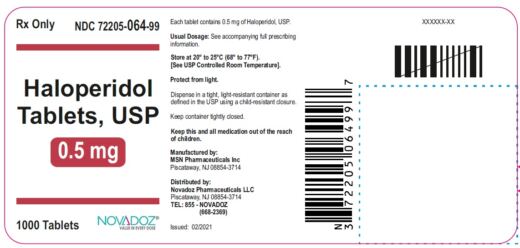 Haloperidol🏭 Novadoz Pharmaceuticals LLC
✅ What it is used for
- Management of manifestations of psychotic disorders
- Control of tics and vocal utterances of Tourette's Disorder in children and adults
- Treatment of severe behavior problems in children (combative, explosive hyperexcitability not accounted for by immediate provocation)
- Short-term treatment of hyperactive children with conduct disorders (impulsivity, difficulty sustaining attention, aggressivity, mood lability, poor frustration tolerance)
- In children, the last two uses are reserved for those who failed psychotherapy or non-antipsychotic medications
🧪 Active ingredient
The active ingredient is haloperidol, the first of the butyrophenone series of major tranquilizers. Its precise mechanism of action has not been clearly established.
🌿 Benefits
- Helps control manifestations of psychosis
- Reduces tics and vocal utterances in Tourette's Disorder
- Helps control severe behavioral disorders in children after other treatments have failed
📝 How to use
- Taken by mouth as tablets, usually two or three times daily as directed by the doctor
- The dose is set by the doctor or pharmacist and should not be changed on your own, as the amount needed varies considerably between patients
- The doctor considers age, severity of illness, prior response to antipsychotics, concomitant medications and disease states
- Once a satisfactory response is achieved, the dose is gradually reduced to the lowest effective maintenance level
- Do not stop abruptly; gradual withdrawal under medical supervision is advisable
💊 Dosage forms
- Tablets: 0.5 mg, 1 mg, 2 mg, 5 mg, 10 mg and 20 mg
⚠️ Common side effects
- Extrapyramidal symptoms (EPS) such as Parkinson-like symptoms and akathisia, often in the first few days and more frequent at higher doses
- Tachycardia
- Low or high blood pressure
- Sedation
🚨 Serious — seek medical help
- QT prolongation, ventricular arrhythmias (Torsades de pointes) and sudden death
- Tardive dyskinesia: potentially irreversible involuntary movements of the tongue, face, mouth or jaw
- Dystonia: neck muscle spasm, throat tightness, swallowing or breathing difficulty, tongue protrusion
- Withdrawal emergent neurological signs after abrupt discontinuation
- Persistent EPS, which may require discontinuing the drug
⛔ Do not use if
- Severe toxic central nervous system depression or comatose states from any cause
- Hypersensitivity to the drug
- Parkinson's disease
❗ Warnings & precautions
- Increased risk of death in elderly patients with dementia-related psychosis; not approved for this use (boxed warning)
- Sudden death, QT prolongation and Torsades de pointes reported; higher than recommended doses appear to carry higher risk
- Particular caution with other QT-prolonging conditions: electrolyte imbalance (especially hypokalemia and hypomagnesemia), QT-prolonging drugs, underlying cardiac abnormalities, hypothyroidism, familial long QT syndrome
- Tardive dyskinesia may be irreversible; risk rises with longer treatment duration and higher cumulative dose
- Children, debilitated and geriatric patients may need lower doses and slower adjustment
🔄 Drug interactions
- Drugs that prolong the QT interval (particular caution is advised)
- Antiparkinson drugs such as benztropine or trihexyphenidyl are used to control EPS; always tell your doctor about all medicines you take
🤰 Pregnancy
The provided label sections contain no pregnancy information; consult your doctor before use during pregnancy.
🍼 Breastfeeding
The provided label sections contain no breastfeeding information; consult your doctor before use while breastfeeding.
🧒 Children
Used in children aged 3 to 12 years (weight 15 kg to 40 kg) as directed by a doctor; not intended for children under 3 years. Therapy begins at the lowest possible dose and is increased gradually according to response. Use for behavior disorders and hyperactivity is reserved for children who failed psychotherapy or non-antipsychotic medications.
👴 Older adults
Geriatric and debilitated patients may require lower doses and more gradual adjustments. Elderly patients with dementia-related psychosis face an increased risk of death, and the risk of tardive dyskinesia is higher, especially in elderly women.
🌡️ Storage
Store at 20° to 25°C (68° to 77°F). Protect from light. Keep out of reach of children.
⏰ Missed dose
The label does not give instructions for a missed dose; ask your doctor or pharmacist, and do not double the dose on your own.
🆘 Overdose
Symptoms may include severe extrapyramidal reactions, hypotension and sedation; the patient may become comatose with respiratory depression and a shock-like state, with a risk of ECG changes. Seek emergency medical care immediately. There is no specific antidote; treatment is supportive.
💰 Price & brands in your area
🏛️ Official price in Palestine — Ministry of Health price list:
| Product | Company | Pack | Price |
|---|---|---|---|
| PERIDOL 5 MG 20 TAB HALOPERIDOL | BPC | 20 tab | 18 ₪ |
📍 Find the nearest pharmacy
Your location is used only in your browser to show nearby pharmacies — we don't store it.
Open in Google Maps👨⚕️ For healthcare professionals
Mechanism of action
The precise mechanism of action has not been clearly established per the label. Haloperidol is a butyrophenone-series typical antipsychotic.
Labeled dosing
Oral adult initial dosing: moderate symptoms 0.5 mg to 2 mg b.i.d. or t.i.d.; severe symptoms 3 mg to 5 mg b.i.d. or t.i.d.; geriatric or debilitated 0.5 mg to 2 mg b.i.d. or t.i.d.; chronic or resistant 3 mg to 5 mg b.i.d. or t.i.d. Up to 100 mg daily may be necessary in some cases. Dosage is individualized by the prescriber.
- Children 3 to 12 years: start at 0.5 mg/day, increase by 0.5 mg every 5 to 7 days; psychotic disorders 0.05 to 0.15 mg/kg/day; nonpsychotic behavior disorders and Tourette's 0.05 to 0.075 mg/kg/day
- Little evidence that behavior improvement is enhanced by doses above 6 mg per day in children
- After response, gradually reduce to the lowest effective maintenance level
- Switchover from injectable: the parenteral dose in the preceding 24 hours may serve as an initial estimate, with careful clinical monitoring
- In overdose, monitor ECG and vital signs; epinephrine should not be used
🎓 Key points for students
- Typical antipsychotic of the butyrophenone class
- Boxed warning: increased mortality in elderly patients with dementia-related psychosis
- Key adverse effects: EPS, dystonia, tardive dyskinesia, QT prolongation and Torsades de pointes
- Contraindications: severe CNS depression or coma, hypersensitivity, Parkinson's disease
- Overdose: supportive care, gastric lavage and activated charcoal, avoid epinephrine
EME runs your whole clinic: appointments with WhatsApp reminders, patient files, finance & inventory, a patient portal and a members-price medical store — with your data isolated and protected.
Try EME free How we protect your data❓ FAQ
What is haloperidol used for?
It is used to manage manifestations of psychotic disorders, to control tics and vocal utterances in Tourette's Disorder, and for certain severe behavior problems in children after other treatments have failed.
Can I stop haloperidol suddenly?
No. Involuntary movements may appear after abrupt withdrawal, so gradual withdrawal under your doctor's supervision is advisable.
What are the main side effects?
Movement-related symptoms such as stiffness, tremor and restlessness, changes in blood pressure and heart rate, and possibly delayed involuntary movements that may be permanent. Tell your doctor promptly about any concerning symptoms.
Who should not take haloperidol?
People with Parkinson's disease, severe central nervous system depression or coma, or hypersensitivity to the drug.
Is it suitable for elderly patients with dementia?
No. It is not approved for dementia-related psychosis and increases the risk of death in this group.
⚕️ For education only — not a substitute for advice from your doctor or pharmacist. Do not start or stop any medicine without advice. Source: official FDA drug label via openFDA (2024-11), simplified. Updated: 2026-11-11.