
💊 Febuxostat (Febuxostat)
Febuxostat is an oral medicine that lowers high uric acid levels in adults with gout. It is used when the response to a maximally titrated dose of allopurinol is inadequate, when allopurinol is not tolerated, or when allopurinol treatment is not advisable. It carries a boxed warning about a higher rate of cardiovascular death in gout patients with established cardiovascular disease.
In Arabic: فيبوكسوستات
🏷️ Brand names & manufacturers
Packages shown are US-market (DailyMed). Brands available in Palestine are in the price section below.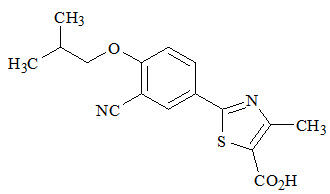 Uloric🏭 Takeda Pharmaceuticals America, Inc.
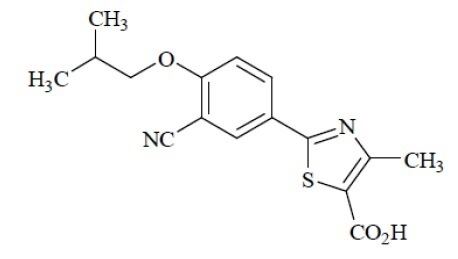 Febuxostat🏭 Aurobindo Pharma Limited
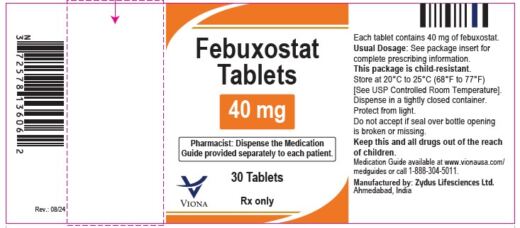 Febuxostat🏭 Zydus Lifesciences Limited
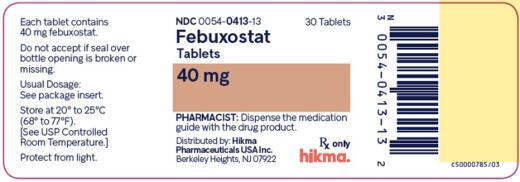 Febuxostat🏭 Hikma Pharmaceuticals USA Inc
✅ What it is used for
- Chronic management of hyperuricemia in adults with gout who have an inadequate response to a maximally titrated dose of allopurinol, are intolerant to allopurinol, or for whom allopurinol treatment is not advisable.
- Not recommended for the treatment of asymptomatic hyperuricemia.
🧪 Active ingredient
The active ingredient is febuxostat, a xanthine oxidase inhibitor that works by decreasing serum uric acid.
🌿 Benefits
- Lowers serum uric acid in patients with gout.
- A treatment option for patients who do not respond to, cannot tolerate, or are not suited to allopurinol.
📝 How to use
- The dose is set by your doctor or pharmacist; do not change it without consulting them.
- Taken by mouth once daily.
- Can be taken with or without food, and with or without antacids.
- Your doctor may check your serum uric acid level about two weeks after starting treatment to assess response.
- Your doctor may prescribe flare prophylaxis (an NSAID or colchicine) when treatment starts to reduce gout flares; this may be helpful for up to six months.
💊 Dosage forms
- Tablets 40 mg (round, light green to green, biconvex, debossed "54 554").
- Tablets 80 mg (round, light green to green, biconvex, debossed "54 244").
⚠️ Common side effects
- Liver function abnormalities
- Nausea
- Joint pain (arthralgia)
- Rash
- Dizziness
- Diarrhea
🚨 Serious — seek medical help
- Cardiovascular death (higher rate than allopurinol in gout patients with established CV disease)
- Hepatic failure, sometimes fatal (postmarketing reports)
- Serious skin and hypersensitivity reactions, including Stevens-Johnson syndrome, DRESS, and toxic epidermal necrolysis
- Increase in gout flares when starting treatment
⛔ Do not use if
- Patients being treated with azathioprine or mercaptopurine.
❗ Warnings & precautions
- Boxed warning: gout patients with established cardiovascular disease treated with febuxostat had a higher rate of CV death than those treated with allopurinol; the doctor weighs risks and benefits.
- Gout flares may occur when starting treatment; if a flare occurs, febuxostat need not be discontinued and the flare is managed concurrently.
- If liver injury is detected, interrupt febuxostat promptly and assess the patient; do not restart if liver injury is confirmed and no other cause is found.
- Discontinue if serious skin reactions are suspected.
- No studies in severe hepatic impairment; use caution.
- Not recommended in secondary hyperuricemia (e.g., Lesch-Nyhan syndrome, malignant disease, organ transplant recipients).
- Not recommended for asymptomatic hyperuricemia.
🔄 Drug interactions
- Azathioprine and mercaptopurine: contraindicated, as febuxostat may increase their plasma concentrations and cause severe toxicity.
- Theophylline: febuxostat altered its metabolism; use with caution.
- No interaction studies with cytotoxic chemotherapy have been conducted, and no safety data are available.
- No clinically significant interactions with colchicine, naproxen, indomethacin, hydrochlorothiazide, warfarin, or desipramine; these may be used concomitantly.
🤰 Pregnancy
Limited data in pregnant women are insufficient to inform a drug-associated risk. No adverse developmental effects were observed in animal studies at high exposures. Consult your doctor before use during pregnancy.
🍼 Breastfeeding
The provided label text does not include sufficient information on breastfeeding. Consult your doctor before use while breastfeeding.
🧒 Children
Safety and effectiveness in pediatric patients have not been established.
👴 Older adults
No dose adjustment is necessary in elderly patients. No clinically significant differences in safety or effectiveness were observed, though greater sensitivity in some older individuals cannot be ruled out.
🌡️ Storage
Protect from light. Store at 20° to 25°C (68° to 77°F).
⏰ Missed dose
The provided label text does not address this. Ask your doctor or pharmacist about a missed dose, and do not double the dose on your own.
🆘 Overdose
No overdose was reported in clinical studies. In case of overdose, manage with symptomatic and supportive care. Seek emergency care or contact a poison center immediately.
💰 Price & brands in your area
Local prices are currently available for Palestine; more countries are coming. Ask your pharmacist for local price and alternatives.
📍 Find the nearest pharmacy
Your location is used only in your browser to show nearby pharmacies — we don't store it.
Open in Google Maps👨⚕️ For healthcare professionals
Mechanism of action
Xanthine oxidase inhibitor that decreases serum uric acid; not expected to inhibit other enzymes of purine and pyrimidine synthesis and metabolism at therapeutic concentrations. 24-hour mean serum uric acid reduction was 40% to 55% at 40 mg and 80 mg daily. Apparent mean terminal half-life is approximately 5 to 8 hours.
Labeled dosing
Label adult dosing: 40 mg or 80 mg once daily, starting at 40 mg once daily. If sUA is not below 6 mg/dL after two weeks, 80 mg once daily is recommended. The dose is determined by the prescriber. Limit to 40 mg once daily in severe renal impairment; no adjustment needed in mild to moderate renal or hepatic impairment.
- Flare prophylaxis with an NSAID or colchicine is recommended on initiation and may be beneficial for up to six months.
- Target sUA (<6 mg/dL) testing may be performed as early as two weeks after initiation.
- In the CARES study, febuxostat was non-inferior to allopurinol for MACE but had a higher rate of CV death.
- Postmarketing hepatic failure reports: interrupt on suspected liver injury and do not restart if confirmed without alternate etiology.
🎓 Key points for students
- Class: xanthine oxidase inhibitor.
- Indication: chronic hyperuricemia in gout after allopurinol failure, intolerance, or unsuitability.
- Boxed warning: cardiovascular death.
- Contraindicated with azathioprine and mercaptopurine due to toxicity risk.
- Use caution with theophylline (XO substrate).
- Common adverse effects: liver function abnormalities, nausea, arthralgia, rash.
- Give flare prophylaxis (NSAID or colchicine) when starting therapy.
EME runs your whole clinic: appointments with WhatsApp reminders, patient files, finance & inventory, a patient portal and a members-price medical store — with your data isolated and protected.
Try EME free How we protect your data❓ FAQ
What is febuxostat used for?
It lowers uric acid in adults with gout, when allopurinol is inadequate, not tolerated, or not advisable.
Can I take it with food?
Yes, it can be taken with or without food, and with or without antacids.
Can gout flares increase when I start it?
Yes, flares can occur at the start. You need not stop the medicine, and your doctor may prescribe preventive treatment to reduce them.
What is the most important warning?
Gout patients with established cardiovascular disease had a higher rate of cardiovascular death than with allopurinol, so your doctor will decide if it is right for you.
Which medicines must not be used with it?
Azathioprine and mercaptopurine are contraindicated. Tell your doctor about all your medicines, especially theophylline.
⚕️ For education only — not a substitute for advice from your doctor or pharmacist. Do not start or stop any medicine without advice. Source: official FDA drug label via openFDA (2020-08), simplified. Updated: 2026-11-15.