
💊 Famotidine (Famotidine)
Famotidine is a histamine-2 receptor antagonist used to treat duodenal ulcer, gastric ulcer, gastroesophageal reflux disease (GERD), and pathological hypersecretory conditions such as Zollinger-Ellison syndrome. It works by reducing stomach acid secretion. The dose must be set by your doctor or pharmacist.
In Arabic: فاموتيدين
🏷️ Brand names & manufacturers
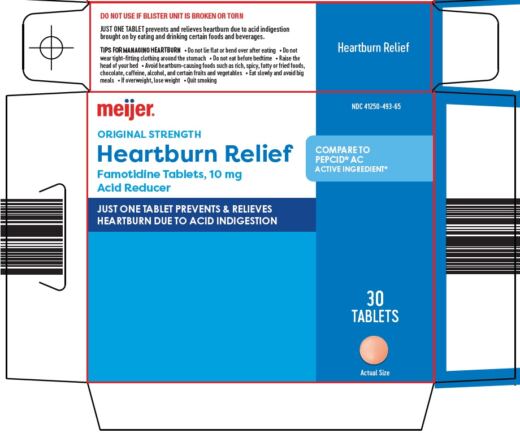 Heartburn Relief🏭 Meijer Distribution IncDailyMed
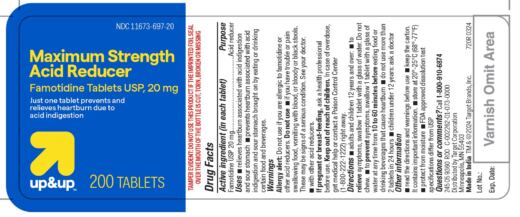 Maximum Strength Acid Reducer🏭 TARGET CORPORATIONDailyMed
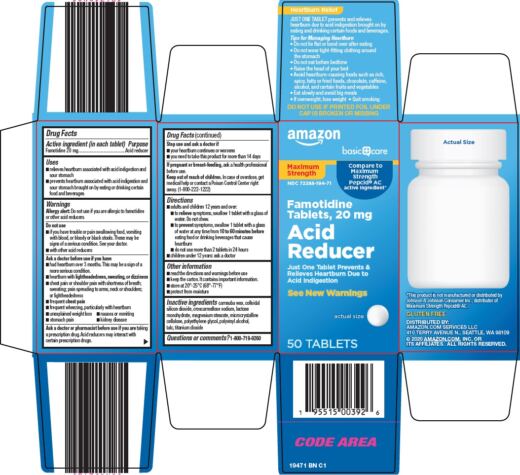 Basic Care Acid Reducer🏭 Amazon.com Services LLCDailyMed
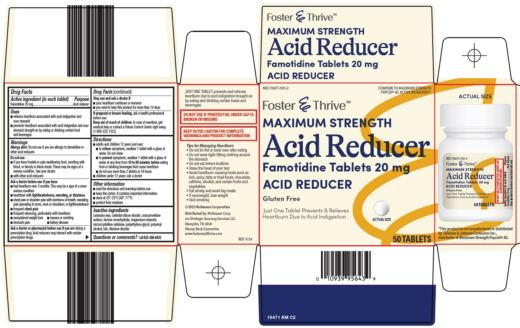 Foster And Thrive Acid Reducer🏭 Strategic Sourcing Services LLCDailyMed
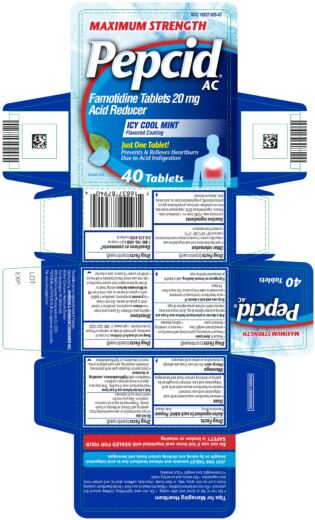 Maximum Strength Pepcid Ac Icy Cool Mint🏭 Kenvue Brands LLCDailyMed
✅ What it is used for
- Treatment of active duodenal ulcer in adults
- Treatment of active gastric ulcer in adults
- Treatment of symptomatic nonerosive GERD in adults
- Treatment of erosive esophagitis due to GERD, diagnosed by biopsy, in adults
- Treatment of pathological hypersecretory conditions (e.g., Zollinger-Ellison syndrome, multiple endocrine neoplasias)
- Reduction of the risk of duodenal ulcer recurrence
- Treatment of peptic ulcer disease and GERD with or without esophagitis and ulcerations in pediatric patients 1 year of age and older
- Treatment of GERD in pediatric patients from birth to less than 1 year of age
🧪 Active ingredient
The active ingredient is famotidine, a competitive inhibitor of histamine-2 receptors that reduces both the acid concentration and volume of gastric secretion.
🌿 Benefits
- Reduces stomach acid, helping ulcers heal
- Relieves GERD symptoms
- Reduces the risk of duodenal ulcer recurrence
📝 How to use
- The dose and duration are determined by your doctor or pharmacist based on your condition, age and kidney function; do not change them yourself.
- Take once daily before bedtime, or twice daily in the morning and before bedtime, with or without food.
- The product is a powder for oral suspension that is constituted as directed before dispensing; the prepared concentration is 8 mg/mL.
- Discard unused constituted suspension after 30 days.
💊 Dosage forms
- Powder for oral suspension: 400 mg; when constituted, each 5 mL contains 40 mg of famotidine (cherry-mint flavor)
⚠️ Common side effects
- Headache
- Dizziness
- Constipation
- Diarrhea
🚨 Serious — seek medical help
- Confusion, delirium, hallucinations, disorientation, agitation, seizures or lethargy (especially in elderly patients and those with renal impairment)
- Severe allergic reactions such as anaphylaxis, angioedema, facial edema or urticaria
- Arrhythmia, AV block or prolonged QT interval
- Cholestatic jaundice or hepatitis
- Blood disorders (agranulocytosis, pancytopenia, leukopenia, thrombocytopenia)
- Rhabdomyolysis
- Interstitial pneumonia
- Severe skin reactions such as Stevens-Johnson syndrome/toxic epidermal necrolysis
⛔ Do not use if
- History of serious hypersensitivity reactions (e.g., anaphylaxis) to famotidine or other H2 receptor antagonists
❗ Warnings & precautions
- CNS adverse reactions (confusion, hallucinations, seizures, lethargy) can occur in elderly patients and patients with moderate or severe renal impairment; dosage reduction is recommended in renal impairment.
- Symptomatic response does not preclude gastric malignancy; evaluation should be considered in adults with a suboptimal response or early symptomatic relapse after treatment.
- In elderly patients, use the lowest effective dose and monitor renal function.
- Safety and effectiveness for pathological hypersecretory conditions and reduction of duodenal ulcer recurrence have not been established in pediatric patients.
🔄 Drug interactions
- Drugs dependent on gastric pH for absorption: famotidine may reduce their absorption and effectiveness; concomitant use with dasatinib, delavirdine mesylate, cefditoren and fosamprenavir is not recommended.
- See the prescribing information of other pH-dependent drugs such as atazanavir, erlotinib, ketoconazole, itraconazole, ledipasvir/sofosbuvir, nilotinib and rilpivirine for administration instructions.
- Tizanidine (CYP1A2 substrate): famotidine may substantially increase tizanidine levels, causing hypotension, bradycardia or excessive drowsiness; avoid concomitant use if possible, otherwise monitor.
🤰 Pregnancy
Available data with H2-receptor antagonists, including famotidine, in pregnant women are insufficient to establish a drug-associated risk of major birth defects, miscarriage or adverse maternal or fetal outcomes. Animal studies showed no adverse developmental effects. There are no adequate and well-controlled studies in pregnant women, so use during pregnancy only if clearly needed and as directed by your doctor.
🍼 Breastfeeding
There are limited data on the presence of famotidine in human breast milk, and no effects on the breastfed infant were reported. Consult your doctor before use while breastfeeding.
🧒 Children
Safety and effectiveness of famotidine for oral suspension have been established in pediatric patients 1 year to less than 17 years for peptic ulcer disease and GERD, and from birth to less than 1 year for GERD. They have not been established for peptic ulcer disease in children under 1 year. In a study of infants under 1 year, agitation was observed in some patients and resolved when famotidine was discontinued. Dosing is weight-based and set by the doctor.
👴 Older adults
Elderly patients, particularly those with impaired renal function, may be at greater risk of adverse reactions, and CNS adverse reactions have been reported. Use the lowest effective dose and monitor renal function.
🌡️ Storage
Store the dry powder and the constituted suspension at 25°C (77°F); excursions permitted to 15–30°C (59–86°F). Protect from freezing. Discard unused constituted suspension after 30 days. Keep in a tight, light-resistant container.
⏰ Missed dose
The label does not give instructions for a missed dose; ask your doctor or pharmacist and do not double the dose on your own.
🆘 Overdose
Adverse reactions in overdose are similar to those at recommended doses. Treatment is symptomatic and supportive: remove unabsorbed material from the GI tract, monitor the patient, and provide supportive therapy. Famotidine is eliminated by hemodialysis. Seek medical help immediately.
💰 Price & brands in your area
🏛️ Official price in Palestine — Ministry of Health price list:
| Product | Company | Pack | Price |
|---|---|---|---|
| GASTREX 40 MG TAB FAMOTIDINE 40 | BPC | 30 tab | 24 ₪ |
| ACIDEX COMPLETE TABLETS *50 Famotidine10 mg , 165 mg of Magnesium Hydroxide, and 800 mg of Calcium Carbonat | Pharmacare Company | 50 tab/box (5 tab/blister) | 48 ₪ |
📍 Find the nearest pharmacy
Your location is used only in your browser to show nearby pharmacies — we don't store it.
Open in Google Maps👨⚕️ For healthcare professionals
Mechanism of action
Famotidine is a competitive inhibitor of histamine-2 receptors, suppressing both acid concentration and volume of gastric secretion, while pepsin secretion changes in proportion to volume output. Antisecretory onset is within one hour, with a dose-dependent maximum effect in 1–3 hours; duration of inhibition at 20 mg and 40 mg is 10–12 hours.
Labeled dosing
Adults with normal renal function: active DU 40 mg once daily or 20 mg twice daily (up to 8 weeks); active GU 40 mg once daily (up to 8 weeks); symptomatic nonerosive GERD 20 mg twice daily (up to 6 weeks); erosive esophagitis due to GERD 20 mg or 40 mg twice daily (up to 12 weeks); pathological hypersecretory conditions starting at 20 mg every 6 hours, adjusted to patient needs, maximum 160 mg every 6 hours; reduction of DU recurrence risk 20 mg once daily (1 year or as clinically indicated). Final dosing is determined by the prescriber, with dose adjustment in renal impairment.
- Administer once daily before bedtime or twice daily in the morning and before bedtime, with or without food.
- Constituted suspension concentration is 8 mg/mL (40 mg per 5 mL).
- Pediatric peptic ulcer disease (1 to <17 years): start 0.5 mg/kg once daily or 0.25 mg/kg twice daily, may increase; maximum 40 mg per day.
- Pediatric GERD: birth to <3 months 0.5 mg/kg once daily (may increase to 1 mg/kg); 3 months to <1 year 0.5 mg/kg twice daily (may increase to 1 mg/kg); 1 to <17 years 0.5 mg/kg twice daily, maximum 40 mg twice daily.
🎓 Key points for students
- Famotidine is an H2 antagonist acting by competitive inhibition of histamine-2 receptors, reducing gastric acid secretion.
- Most common adverse reactions: headache, dizziness, constipation, diarrhea.
- Risk of CNS adverse reactions is higher in elderly patients and those with renal impairment due to higher blood levels; dose adjustment is required.
- It reduces absorption of pH-dependent drugs and may raise tizanidine levels (weak CYP1A2 inhibitor).
- It is removed by hemodialysis due to low plasma protein binding.
- Symptomatic response does not exclude gastric malignancy.
EME runs your whole clinic: appointments with WhatsApp reminders, patient files, finance & inventory, a patient portal and a members-price medical store — with your data isolated and protected.
Try EME free How we protect your data❓ FAQ
What is famotidine?
It is a histamine-2 receptor antagonist that reduces stomach acid, used for ulcers, GERD and pathological hypersecretory conditions.
When should I take famotidine?
Take it once daily before bedtime or twice daily (morning and before bedtime), with or without food. Your doctor or pharmacist sets the dose and frequency.
What are the common side effects?
Headache, dizziness, constipation and diarrhea. Tell your doctor right away if you experience confusion, hallucinations, seizures or an allergic reaction.
Can elderly patients or those with kidney problems use it?
They may be at higher risk of nervous system effects, so the lowest effective dose is used with dose adjustment and kidney monitoring under medical supervision.
Does famotidine interact with other medicines?
Yes. It can reduce absorption of pH-dependent drugs and raise tizanidine levels. Tell your doctor about all medicines you take.
⚕️ For education only — not a substitute for advice from your doctor or pharmacist. Do not start or stop any medicine without advice. Source: official FDA drug label via openFDA (2022-09), simplified. Updated: 2026-11-11.