
💊 Bupivacaine (Bupivacaine Hydrochloride, Bupivacaine Hydrochloride And Epinephrine)
Bupivacaine is an amide-type local anesthetic given by injection to produce local or regional anesthesia or analgesia. It is indicated in adults for surgery, dental and oral surgery procedures, diagnostic and therapeutic procedures, and obstetrical procedures. It is administered by or under the supervision of experienced clinicians, and a formulation combined with epinephrine is available to prolong its effect.
In Arabic: بوبيفاكايين (هيدروكلوريد البوبيفاكايين)🏷️ Brand names & manufacturers
Packages shown are US-market (DailyMed). Brands available in Palestine are in the price section below.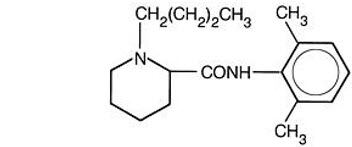 Exparel🏭 Pacira Pharmaceuticals, Inc.
 Bupivacaine🏭 Jiangsu Hengrui Pharmaceuticals Co., Ltd.
✅ What it is used for
- Local or regional anesthesia or analgesia for surgery in adults
- Dental and oral surgery procedures
- Diagnostic and therapeutic procedures
- Obstetrical procedures (with the label's warnings regarding the 0.75% concentration)
🧪 Active ingredient
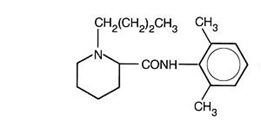
The active ingredient is bupivacaine hydrochloride, an amide local anesthetic that blocks the generation and conduction of nerve impulses, so pain sensation is lost in the injected area. Epinephrine (in the combination product) is a vasoconstrictor that slows absorption into the general circulation and so prolongs the active tissue concentration.
🌿 Benefits
- Provides effective local or regional anesthesia for surgical and diagnostic procedures
- Duration of anesthesia is longer than with other commonly used short-acting local anesthetics
- Adding epinephrine slows absorption and prolongs the active tissue concentration
📝 How to use
- This medicine is given by injection only (infiltration, perineural, epidural, caudal, retrobulbar) by a clinician or under their supervision.
- The dose, concentration and presentation are determined by the doctor according to the type of procedure and the patient's condition; it must not be self-determined.
- It is not for intrathecal use.
- Aspiration for blood is performed before each dose to avoid intravascular injection.
💊 Dosage forms
- Injection solution 0.25% (2.5 mg/mL) in single-dose and multiple-dose vials
- Injection solution 0.5% (5 mg/mL) in single-dose and multiple-dose vials
- Injection solution 0.75% (7.5 mg/mL) in single-dose vials (bupivacaine alone)
- Bupivacaine combined with epinephrine (1:200,000) in 0.25% and 0.5% strengths
⚠️ Common side effects
- Nausea and vomiting
- Dizziness and drowsiness
- Restlessness and anxiety
- Tinnitus and blurred vision
- Tremors and chills
- Low blood pressure due to loss of sympathetic tone
🚨 Serious — seek medical help
- Convulsions, unconsciousness and respiratory arrest (CNS toxicity)
- Cardiac arrhythmias, bradycardia and cardiac arrest
- Cardiac arrest with difficult resuscitation when the 0.75% concentration is used for epidural anesthesia in obstetrical patients
- Underventilation or apnea after unintentional intrathecal injection (total or high spinal)
- Methemoglobinemia
- Chondrolysis with intra-articular infusion (unapproved use)
- Allergic-type reactions including anaphylaxis
- Respiratory arrest following retrobulbar block
⛔ Do not use if
- Obstetrical paracervical block anesthesia (fetal bradycardia and death)
- Intravenous regional anesthesia (Bier block)
- Known hypersensitivity to bupivacaine, to any amide-type local anesthetic, or to other components of the product
❗ Warnings & precautions
- Boxed warning: cardiac arrest with difficult resuscitation or death has been reported with bupivacaine for epidural anesthesia in obstetrical patients, mostly with the 0.75% concentration, which is not recommended for obstetrical anesthesia.
- Monitor cardiovascular and respiratory vital signs and state of consciousness after injection; oxygen and resuscitative equipment must be immediately available.
- Toxic effects of local anesthetics are additive when more than one is used.
- Solutions with antimicrobial preservatives (multiple-dose vials) should be avoided for epidural or caudal anesthesia.
- The epinephrine-containing product contains sodium metabisulfite, which may cause allergic-type reactions and asthmatic episodes in susceptible people.
- Unintended intravascular or intrathecal injection may cause serious systemic toxicity.
- In moderate to severe hepatic impairment, consider increased monitoring for systemic toxicity.
🔄 Drug interactions
- Other local anesthetics: toxic effects are additive
- MAO inhibitors and tricyclic antidepressants (with the epinephrine-containing product): may produce severe, prolonged hypertension; concurrent use should generally be avoided
- Ergot-type oxytocic drugs: may cause severe, persistent hypertension or cerebrovascular accidents
- Nonselective beta-adrenergic antagonists (with the epinephrine-containing product): may cause severe hypertension and bradycardia
- Drugs associated with methemoglobinemia such as nitrates, nitrites, antimalarials, anticonvulsants and some antibiotics: increased risk of methemoglobinemia
- Potent inhalation anesthetics: serious dose-related cardiac arrhythmias may occur with epinephrine-containing preparations
🤰 Pregnancy
There are no available data on use in pregnant women to inform the risk of adverse developmental outcomes. In animal studies, embryo-fetal lethality was seen in rabbits and decreased pup survival in rats. Local anesthetics rapidly cross the placenta and can cause varying degrees of maternal, fetal and neonatal toxicity. It is contraindicated for obstetrical paracervical block anesthesia. The doctor decides whether its use is appropriate.
🧒 Children
The product is approved for use in adults. Administration in pediatric patients younger than 12 years is not recommended. Continuous infusions in pediatric patients have been reported to result in high systemic levels and seizures.
👴 Older adults
Patients 65 years and over, particularly those with hypertension, may be at increased risk for hypotension during anesthesia, and may reach maximal spread of analgesia and motor blockade more rapidly. Lower doses may be required, and monitoring renal function may be useful.
🌡️ Storage
Store at 20–25 °C (excursions permitted between 15 and 30 °C). The epinephrine-containing product must be protected from light and must not be autoclaved. Do not use if the solution is discolored or contains a precipitate. Discard unused portions of single-dose vials.
⏰ Missed dose
Not applicable, as the medicine is given once by the doctor or under their supervision during the procedure and is not taken by the patient.
🆘 Overdose
Overdose or unintended intravascular/intrathecal injection may present with convulsions, hypoxia, cardiac arrhythmias, cardiac arrest and respiratory arrest. First steps are a patent airway and effective ventilation with 100% oxygen, treatment of convulsions, and evaluation and support of circulation. This is an emergency managed immediately by the medical team.
💰 Price & brands in your area
Local prices are currently available for Palestine; more countries are coming. Ask your pharmacist for local price and alternatives.
📍 Find the nearest pharmacy
Your location is used only in your browser to show nearby pharmacies — we don't store it.
Open in Google Maps👨⚕️ For healthcare professionals
Mechanism of action
Bupivacaine blocks generation and conduction of nerve impulses, presumably by increasing the threshold for electrical excitation, slowing propagation of the impulse and reducing the rate of rise of the action potential. Loss of nerve function proceeds in order: pain, temperature, touch, proprioception, skeletal muscle tone. Epinephrine is a vasoconstrictor that slows systemic absorption and prolongs the active tissue concentration.
Labeled dosing
Concentration and dose vary by type of block (see section 2.2 of the full label). For epidural or caudal anesthesia, avoid preservative-containing solutions (multiple-dose vials). A 3 mL test dose of 0.5% with epinephrine 1:200,000 (without antimicrobial preservative) is recommended before caudal and lumbar epidural blocks when clinical conditions permit. Not for intrathecal use. Dosages are carefully adjusted by or under the supervision of experienced clinicians.
- Boxed warning: the 0.75% concentration is not recommended for obstetrical anesthesia and should be reserved for surgical procedures requiring a high degree of muscle relaxation and prolonged effect.
- Aspirate for blood or CSF (where applicable) before each dose; a negative aspiration does not ensure against intravascular injection.
- Mixing or prior/intercurrent use of other local anesthetics is not recommended due to insufficient data.
- Ensure oxygen, cardiopulmonary resuscitative equipment and drugs, and personnel for managing toxic reactions are immediately available.
- Solutions without epinephrine may be autoclaved; solutions containing epinephrine may not.
🎓 Key points for students
- Long-acting amide local anesthetic that blocks nerve conduction.
- Order of function loss: pain, temperature, touch, proprioception, muscle tone.
- Epinephrine is a vasoconstrictor that prolongs effect and reduces systemic absorption.
- Key risk: systemic cardiac and CNS toxicity, especially after unintended intravascular injection.
- Contraindications: obstetrical paracervical block, Bier block, hypersensitivity to amide anesthetics.
- The 0.75% concentration is not recommended for obstetrical epidural anesthesia due to cardiac arrest risk.
- Caution with epinephrine combination in patients on MAO inhibitors, tricyclics or nonselective beta-blockers.
EME runs your whole clinic: appointments with WhatsApp reminders, patient files, finance & inventory, a patient portal and a members-price medical store — with your data isolated and protected.
Try EME free How we protect your data❓ FAQ
What is bupivacaine and what is it used for?
It is a local anesthetic given by injection to numb a specific area of the body or relieve pain in adults during surgery and dental, diagnostic, therapeutic and obstetrical procedures.
Can I use it myself?
No. It is given only by a doctor or under the supervision of experienced clinicians, and the dose is set by the doctor according to the procedure and your condition.
What are the main side effects?
The most common relate to the nervous system and heart, such as nausea, dizziness, drowsiness, anxiety, tinnitus and low blood pressure. Rarely, serious effects such as convulsions, heart rhythm problems and allergic reactions can occur.
Can it be used during childbirth?
It may be used in some obstetrical procedures at the doctor's discretion, but the 0.75% concentration is not recommended for obstetrical anesthesia because of the risk of cardiac arrest, and it is contraindicated for paracervical block.
Is it suitable for children?
It is approved for use in adults, and use in children younger than 12 years is not recommended.
⚕️ For education only — not a substitute for advice from your doctor or pharmacist. Do not start or stop any medicine without advice. Source: official FDA drug label via openFDA (2026-03), simplified. Updated: 2026-11-15.