
💊 Azathioprine (Azathioprine)
Azathioprine is an oral immunosuppressant used as an adjunct to prevent rejection in kidney transplantation and to reduce signs and symptoms of active rheumatoid arthritis. It carries a boxed warning for increased risk of malignancy and must be used under a doctor's supervision.
In Arabic: أزاثيوبرين
🏷️ Brand names & manufacturers
Packages shown are US-market (DailyMed). Brands available in Palestine are in the price section below.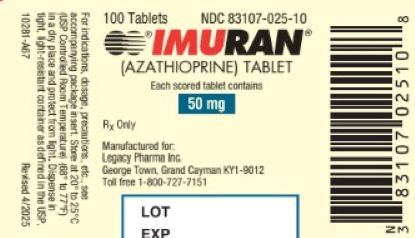 Imuran🏭 Legacy Pharma USA Inc.
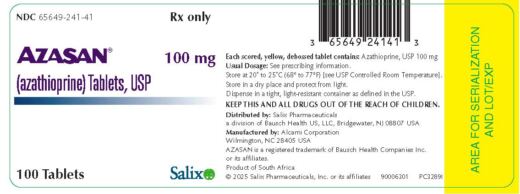 Azasan🏭 Salix Pharmaceuticals
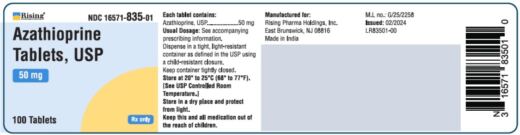 Azathioprine🏭 Rising Pharma Holdings, Inc.
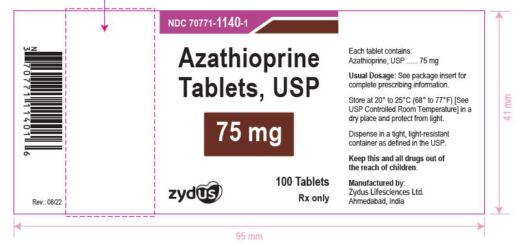 Azathioprine🏭 Zydus Lifesciences Limited
✅ What it is used for
- Adjunct to help prevent rejection of a transplanted kidney (renal homotransplantation)
- Treatment of active rheumatoid arthritis to reduce signs and symptoms
🧪 Active ingredient
The active ingredient is azathioprine, an imidazolyl derivative of 6-mercaptopurine. It acts as an immunosuppressive antimetabolite that interferes with nucleic acid synthesis, reducing immune system activity.
🌿 Benefits
- Helps prevent rejection of a transplanted kidney
- Reduces signs and symptoms of active rheumatoid arthritis, with response usually seen after several weeks (typically 6 to 8 weeks)
📝 How to use
- Taken by mouth; the dose and duration are set by your doctor or pharmacist according to your condition.
- In rheumatoid arthritis it is usually given daily, as a single dose or divided twice daily.
- Taking it in divided doses and/or after meals can often reduce stomach upset.
- Do not change the dose or stop the medicine on your own; regular blood tests may be required.
- Your doctor may test for TPMT and NUDT15 deficiency and adjust the dose accordingly.
💊 Dosage forms
- Tablets: 25 mg, 50 mg, 75 mg and 100 mg
⚠️ Common side effects
- Low white blood cell count (leukopenia)
- Nausea and vomiting, sometimes with diarrhea, fever, malaise and muscle aches
- Infections (more frequent in kidney transplant patients)
🚨 Serious — seek medical help
- Severe bone marrow suppression: thrombocytopenia, anemia, pancytopenia
- Increased risk of malignancy such as lymphoma and skin cancer, and rare, often fatal hepatosplenic T-cell lymphoma (HSTCL)
- Liver toxicity (raised alkaline phosphatase, bilirubin, transaminases) and rare, life-threatening hepatic veno-occlusive disease
- Hypersensitivity pancreatitis (vomiting with abdominal pain)
- Secondary infections due to bone marrow suppression
⛔ Do not use if
- Hypersensitivity to the drug
- Use for rheumatoid arthritis in pregnant women
- Rheumatoid arthritis patients previously treated with alkylating agents (cyclophosphamide, chlorambucil, melphalan or others), due to a prohibitive risk of malignancy
❗ Warnings & precautions
- Boxed warning: chronic immunosuppression increases the risk of malignancy, including post-transplant lymphoma.
- Limit exposure to sunlight and UV light with protective clothing and a high-protection-factor sunscreen.
- Severe leukopenia, thrombocytopenia, anemia and pancytopenia may occur; blood counts need monitoring, and TPMT/NUDT15 testing may be considered after severe bone marrow toxicity.
- The drug has mutagenic potential in both men and women.
- Use at the lowest effective dose; do not raise to toxic levels because of threatened rejection.
- Oliguric patients or those with renal dysfunction may clear the drug more slowly and usually need lower doses.
- Safety and efficacy for Crohn's disease and ulcerative colitis have not been established.
🔄 Drug interactions
- Allopurinol: reduce the azathioprine dose to approximately 1/3 to 1/4 of the usual dose
- Febuxostat: concomitant use is not recommended
- Aminosalicylates (sulphasalazine, mesalazine, olsalazine): use with caution
- Co-trimoxazole and other drugs affecting leukocyte production: may cause exaggerated leukopenia
- ACE inhibitors: reported to induce anemia and severe leukopenia
- Warfarin: azathioprine may inhibit its anticoagulant effect
- Ribavirin: reported to cause severe pancytopenia and may increase azathioprine myelotoxicity
🤰 Pregnancy
Azathioprine can cause fetal harm. It should be avoided during pregnancy whenever possible and used only after careful weighing of benefit versus risk. It must not be used to treat rheumatoid arthritis in pregnant women. Intrahepatic cholestasis of pregnancy has been reported, and the drug should be discontinued if it develops. Tell your doctor immediately if you become pregnant during treatment.
🍼 Breastfeeding
Use in nursing mothers is not recommended. Azathioprine or its metabolites are transferred at low levels into breast milk. A decision should be made to stop nursing or the drug, considering the importance of the drug to the mother.
🧒 Children
Safety and efficacy in pediatric patients have not been established.
👴 Older adults
The provided label text contains no specific information for elderly patients.
🌡️ Storage
Store at 20°C to 25°C (68°F to 77°F) in a dry place and protect from light.
⏰ Missed dose
The label text provides no specific instructions for a missed dose; consult your doctor or pharmacist and do not double the dose on your own.
🆘 Overdose
Very large doses may lead to marrow hypoplasia, bleeding, infection and death. In one reported case of a large single ingestion, nausea, vomiting and diarrhea were followed by mild leukopenia and mild liver function abnormalities, which normalized within 6 days. Seek emergency medical help immediately after an overdose.
💰 Price & brands in your area
Local prices are currently available for Palestine; more countries are coming. Ask your pharmacist for local price and alternatives.
📍 Find the nearest pharmacy
Your location is used only in your browser to show nearby pharmacies — we don't store it.
Open in Google Maps👨⚕️ For healthcare professionals
Mechanism of action
Azathioprine is an immunosuppressive antimetabolite converted to 6-mercaptopurine and then to 6-thioguanine nucleotides (6-TGNs), whose incorporation into DNA contributes to its cytotoxicity. 6-MP is inactivated by TPMT-mediated methylation and xanthine oxidase oxidation; NUDT15 converts 6-TGNs to inactive monophosphates. Genetic polymorphisms in TPMT and NUDT15 affect toxicity risk.
Labeled dosing
Renal transplantation: initial dose usually 3 to 5 mg/kg daily at the time of transplant, with maintenance usually 1 to 3 mg/kg daily. Rheumatoid arthritis: initial dose about 1.0 mg/kg (50 to 100 mg) daily as a single dose or twice daily; if response is unsatisfactory, increase from 6 to 8 weeks in 0.5 mg/kg steps every 4 weeks up to a maximum of 2.5 mg/kg/day. Dosing is individualized by the prescriber.
- Consider TPMT and NUDT15 testing in patients with severe bone marrow toxicity; consider alternative therapy in homozygous deficiency and dose reduction in heterozygous deficiency.
- With xanthine oxidase inhibitors and low/absent TPMT activity, a further dose reduction or alternative therapy should be considered.
- Oliguric patients, especially after cadaveric transplant, usually need lower doses.
- In RA, response takes 6 to 8 weeks, an adequate trial is at least 12 weeks, and combined use with DMARDs cannot be recommended.
- Proper handling and disposal procedures for this immunosuppressive antimetabolite should be considered.
🎓 Key points for students
- Class: purine antimetabolite immunosuppressant (nucleic acid synthesis inhibitor).
- Boxed warning: malignancy risk (post-transplant lymphoma; HSTCL in IBD patients).
- Principal toxicities: hematologic and gastrointestinal, plus infection and malignancy risk.
- Role of TPMT and NUDT15 in myelosuppression risk and dose adjustment.
- Key interaction: allopurinol (reduce dose to 1/3–1/4); febuxostat not recommended.
EME runs your whole clinic: appointments with WhatsApp reminders, patient files, finance & inventory, a patient portal and a members-price medical store — with your data isolated and protected.
Try EME free How we protect your data❓ FAQ
What is azathioprine used for?
It is used as an adjunct to prevent rejection of a transplanted kidney and to treat active rheumatoid arthritis to reduce signs and symptoms.
How long does it take to work in rheumatoid arthritis?
Therapeutic response usually occurs after several weeks, typically 6 to 8, and an adequate trial is at least 12 weeks.
Does azathioprine increase cancer risk?
Yes. Chronic immunosuppression increases the risk of malignancy, particularly lymphoma and skin cancer, so sun protection and regular medical follow-up are important.
Can it be used during pregnancy?
It should be avoided during pregnancy whenever possible and must not be used to treat rheumatoid arthritis in pregnant women. Your doctor will weigh benefit versus risk.
Will I need tests during treatment?
Yes. Your doctor may order blood tests to monitor blood counts and liver function, and may test TPMT and NUDT15 activity.
⚕️ For education only — not a substitute for advice from your doctor or pharmacist. Do not start or stop any medicine without advice. Source: official FDA drug label via openFDA (2024-08), simplified. Updated: 2026-11-15.