
💊 Albendazole (Albendazole)
Albendazole is a prescription anthelmintic used to treat infections caused by larval forms of tapeworms. It is indicated for parenchymal neurocysticercosis and for cystic hydatid disease of the liver, lung, and peritoneum. The dose and duration are set by your doctor or pharmacist, and treatment requires monitoring of blood counts and liver enzymes.
In Arabic: ألبيندازول
🏷️ Brand names & manufacturers
Packages shown are US-market (DailyMed). Brands available in Palestine are in the price section below.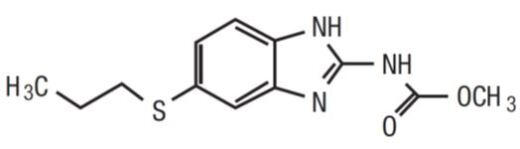 Albenza🏭 Amneal Pharmaceuticals LLC
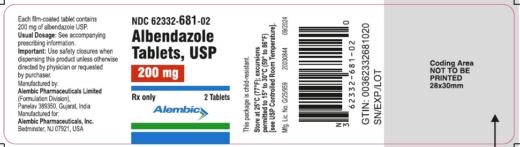 Albendazole🏭 Alembic Pharmaceuticals Inc.
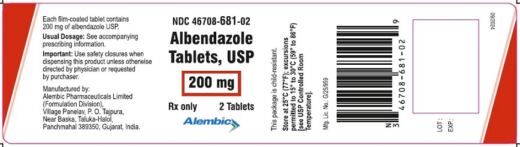 Albendazole🏭 Alembic Pharmaceuticals Limited
✅ What it is used for
- Treatment of parenchymal neurocysticercosis due to active lesions caused by larval forms of the pork tapeworm, Taenia solium
- Treatment of cystic hydatid disease of the liver, lung, and peritoneum, caused by the larval form of the dog tapeworm, Echinococcus granulosus
🧪 Active ingredient
The active ingredient is albendazole, a benzimidazole anthelmintic. It is rapidly converted in the liver to its active metabolite, albendazole sulfoxide, which is responsible for its systemic anthelmintic activity.
🌿 Benefits
- Treats infection with larval forms of the pork tapeworm in the brain
- Treats hydatid cysts in the liver, lung, and peritoneum
📝 How to use
- The dose and duration are set by your doctor or pharmacist based on your condition and weight; do not change them without advice
- Take albendazole with food
- Tablets may be crushed or chewed and swallowed with a drink of water
- For hydatid disease, treatment is given in cycles with drug-free intervals as prescribed by your doctor
- For neurocysticercosis, your doctor may prescribe steroid and anticonvulsant therapy alongside albendazole
- Treatment requires regular blood count and liver enzyme monitoring as directed by your doctor
💊 Dosage forms
- Tablet: 200 mg
⚠️ Common side effects
- Elevated liver enzymes
- Abdominal pain
- Nausea and vomiting
- Headache
- Dizziness and vertigo
- Fever
- Reversible hair loss (alopecia)
- In neurocysticercosis: raised intracranial pressure and meningeal signs
🚨 Serious — seek medical help
- Bone marrow suppression, leukopenia, aplastic anemia, agranulocytosis (fatalities have been reported)
- Hepatitis and acute liver failure
- Stevens-Johnson syndrome and erythema multiforme
- Rhabdomyolysis
- Acute renal failure
- Convulsions and seizures
- Hypersensitivity reactions including rash and urticaria
- Blurred vision
⛔ Do not use if
- Known hypersensitivity to the benzimidazole class of compounds or any component of albendazole
❗ Warnings & precautions
- Blood counts must be monitored at the beginning of each 28-day cycle and every 2 weeks during therapy; discontinue if clinically significant decreases occur
- Patients with liver disease or hepatic echinococcosis are at increased risk of bone marrow suppression and need more frequent monitoring
- Liver enzymes should be monitored before each cycle and at least every 2 weeks; discontinue if clinically significant elevations occur
- Albendazole may cause fetal harm; a pregnancy test is required before treatment in women of reproductive potential
- In neurocysticercosis, cerebral hypertensive episodes, seizures, or focal neurologic deficits may occur after starting therapy; steroid and anticonvulsant therapy is needed
- Examine the patient for retinal lesions before starting therapy for neurocysticercosis
- Women of reproductive potential should use effective birth control during therapy and for one month after the end of therapy
🔄 Drug interactions
- Dexamethasone: raises steady-state albendazole sulfoxide trough concentrations by about 56%
- Praziquantel: in the fed state, increased albendazole sulfoxide maximum concentration and AUC by about 50%
- Cimetidine: increased albendazole sulfoxide concentrations in bile and cyst fluid by about 2-fold
- Theophylline: albendazole induces cytochrome P450 1A; theophylline plasma concentrations should be monitored during and after treatment
- Tell your doctor or pharmacist about all medicines you take
🤰 Pregnancy
Albendazole may cause fetal harm; animal studies showed embryotoxicity and skeletal malformations. It should not be used in pregnant women except where no alternative management is appropriate. A pregnancy test is required before treatment, and effective birth control should be used during therapy and for one month afterward. If pregnancy occurs during treatment, albendazole should be discontinued immediately and the patient informed of the potential hazard to the fetus.
🍼 Breastfeeding
The provided label text does not include information on use during breastfeeding; consult your doctor before use.
🧒 Children
Hydatid disease is uncommon in infants and young children. In neurocysticercosis, the efficacy of albendazole in children appears similar to that in adults. The doctor determines the dose based on the child's weight.
👴 Older adults
In patients aged 65 and older, there was insufficient data to determine whether safety and effectiveness differ from those of younger patients.
🌡️ Storage
Store at 20° to 25°C (68° to 77°F), controlled room temperature.
⏰ Missed dose
The provided label does not give specific instructions for a missed dose; ask your doctor or pharmacist and do not double the dose on your own.
🆘 Overdose
In case of overdose, symptomatic therapy and general supportive measures are recommended; seek medical help or emergency care immediately.
💰 Price & brands in your area
Local prices are currently available for Palestine; more countries are coming. Ask your pharmacist for local price and alternatives.
📍 Find the nearest pharmacy
Your location is used only in your browser to show nearby pharmacies — we don't store it.
Open in Google Maps👨⚕️ For healthcare professionals
Mechanism of action
Albendazole is a synthetic benzimidazole anthelmintic. It is poorly absorbed from the GI tract due to low aqueous solubility and is rapidly converted in the liver to albendazole sulfoxide, the metabolite responsible for systemic activity. Bioavailability is enhanced with a fatty meal (up to 5-fold higher sulfoxide plasma concentrations on average). The sulfoxide is 70% protein bound and widely distributed (bile, liver, cyst wall and fluid, CSF), with an apparent terminal half-life of 8 to 12 hours. Albendazole may induce its own metabolism and induces CYP1A in human hepatoma cells.
Labeled dosing
General adult dosing per the label (weight 60 kg or greater): 400 mg twice daily with meals. For weight under 60 kg: 15 mg/kg/day in divided doses twice daily with meals (maximum 800 mg/day). Hydatid disease: 28-day cycle followed by a 14-day albendazole-free interval, for a total of 3 cycles. Neurocysticercosis: 8 to 30 days. The final dose is determined by the prescribing doctor or pharmacist.
- In neurocysticercosis, give appropriate steroid and anticonvulsant therapy; consider oral or IV corticosteroids during the first week to prevent cerebral hypertensive episodes
- Monitor blood counts at the start of each 28-day cycle and every 2 weeks; monitor transaminases at the start of each cycle and at least every 2 weeks
- Obtain a pregnancy test in women of reproductive potential before therapy and examine for retinal lesions before treating neurocysticercosis
- Monitor theophylline plasma concentrations during and after treatment
🎓 Key points for students
- Class: benzimidazole anthelmintic and CYP1A inducer
- Active metabolite: albendazole sulfoxide, formed in the liver before reaching systemic circulation
- A fatty meal raises bioavailability up to 5-fold, hence administration with food
- Key serious effects: bone marrow suppression (fatalities from granulocytopenia or pancytopenia) and hepatotoxicity
- Important interactions: dexamethasone, praziquantel, cimetidine, theophylline
- Contraindication: hypersensitivity to benzimidazoles or any component
- Requires a pregnancy test before therapy and effective contraception during therapy and for one month after
EME runs your whole clinic: appointments with WhatsApp reminders, patient files, finance & inventory, a patient portal and a members-price medical store — with your data isolated and protected.
Try EME free How we protect your data❓ FAQ
What is albendazole used for?
It treats parenchymal neurocysticercosis and cystic hydatid disease of the liver, lung, and peritoneum.
Should it be taken with food?
Yes, take it with food. Tablets may be crushed or chewed and swallowed with water.
Why are blood tests needed during treatment?
Albendazole can cause bone marrow suppression and raise liver enzymes, so blood counts and liver enzymes are monitored at the start of each cycle and every 2 weeks.
Can it be used during pregnancy?
It may harm the fetus and should not be used in pregnancy unless no alternative is appropriate. A pregnancy test is required first, and effective birth control should be used.
What are the common side effects?
Abdominal pain, nausea, vomiting, headache, dizziness, fever, elevated liver enzymes, and reversible hair loss.
Can I choose my own dose?
No. Your doctor or pharmacist sets the dose and duration based on your condition and weight.
⚕️ For education only — not a substitute for advice from your doctor or pharmacist. Do not start or stop any medicine without advice. Source: official FDA drug label via openFDA (2019-09), simplified. Updated: 2026-11-10.